
“When the pathogen molecule binds to the sensor, a physical or chemical change occurs. The nanosensor converts this alteration into a measurable signal…”
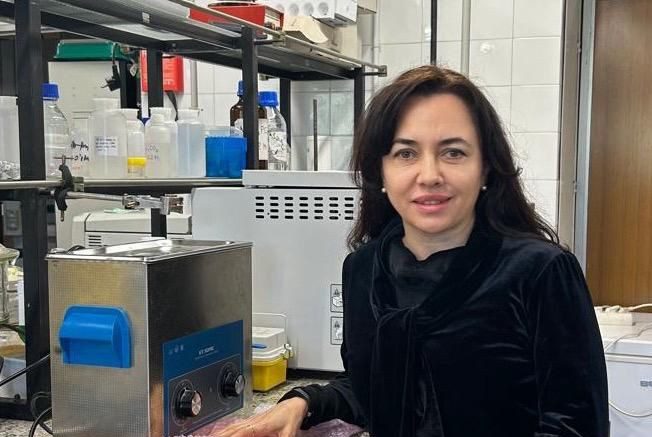
Graciela Ávila Quezada is a professor and researcher at the Faculty of Agrotechnological Sciences of the Autonomous University of Chihuahua – UACH in Mexico, with a M.Sc from UACH and a Ph.D. from Colegio de Postgraduados. In 2026, Quezada received the National Plant Health Award in the Phytosanitary Merit category.
AgriBrasilis – What are the main phytosanitary problems in Mexico?
Graciela Quezada – Mexico possesses a wide diversity of crops, pests, and diseases. Among the main issues are pests regulated due to their importance to agriculture and, consequently, subject to surveillance, prevention, control, or eradication.
In citrus farming, notable issues include huanglongbing (HLB), or greening, caused by bacteria of the genus Candidatus Liberibacter, citrus leprosis, and Citrus tristeza virus (CTV). In cotton, one of the major problems is the boll weevil (Anthonomus grandis).
There is also close monitoring of fruit flies [Editor’s note: among the native species of greatest economic importance are Anastrepha ludens, Anastrepha obliqua, Anastrepha striata, and Anastrepha serpentina].
Mexico ranks among the top 20 countries in the world for phytosanitary epidemiological surveillance systems, thanks to its infrastructure for the early detection of pests and pathogens.
AgriBrasilis – Why are some agricultural diseases diagnosed late?
Graciela Quezada – Farmers and field technicians initially rely on symptoms. The problem is that by the time these symptoms appear, the disease may have already been present in the plant for a long time and spread to nearby plants that do not yet show signs.
Laboratory diagnosis can also take time. It requires collecting a symptomatic plant sample, sending it to the laboratory, processing it, and using various techniques to identify the causative microorganism. However, once it is known to be a fungal disease, control measures can be initiated immediately to try to save the crop.
AgriBrasilis – How can nanotechnology be used in the identification and control of plant pathogens?
Graciela Quezada – There are two possibilities: using nanotechnology to detect the pathogen or to control it.
Nanosensors are small recognition devices. On the surface of these devices, we place molecules capable of recognizing a specific characteristic of the pathogen, such as a protein, an antigen, or a specific sequence of genetic material.
When the pathogen molecule binds to the sensor, a physical or chemical change occurs. The nanosensor converts this alteration into a measurable signal, allowing us to identify the pathogen’s presence.
A widely studied example is Phytophthora infestans, the causative agent of late blight in potatoes and tomatoes. The goal is to detect the pathogen while it is still present in very low concentrations, before the first symptoms appear.
Nanotechnology is also being investigated for control purposes. Nanoparticles can be used as antimicrobial agents or loaded with substances that are released under conditions associated with the pathogen’s presence. This technology is still in the research phase.
AgriBrasilis – Why might biocontrol agents that are effective in the laboratory lose efficiency in the field?
Graciela Quezada – The laboratory offers controlled conditions regarding temperature, humidity, nutrients, and pH. When the microorganism is introduced into the field, however, it must contend with numerous variables.
A microorganism might perform well in acidic soil yet struggle to establish itself when applied to alkaline soil, The same thing can happen due to temperature.
Furthermore, the applied microorganism is not alone. It must compete with the microorganisms already inhabiting the soil or the plant. There is a microbial community whose populations tend toward a state of equilibrium.
Therefore, the challenge lies in ensuring the biocontrol agent survives, establishes itself, and maintains its activity under field conditions.
AgriBrasilis – Which current research areas show the greatest potential for generating practical applications?
Graciela Quezada – One of the areas with the greatest potential is diagnostics integrated into disease management. We detect the pathogen affecting the plant, confirm the result through pathogenicity tests, identify the causative agent, and communicate the diagnosis to the farmer.
We have recently diagnosed foliar and root diseases in bell peppers, as well as trunk and branch diseases in peach trees and grapevines. We publish the results in articles and present them to the production sector.
We also conduct research on nanotechnology for the control of plant pathogens. We work with silver nanoparticles, chitosan, and mesoporous silica. The silica acts as a tiny, porous structure that can be loaded with a fungicide, featuring a sort of “cap” to control its release.
The goal is to develop so-called “smart fungicides” that release the active ingredient in response to a signal associated with the pathogen. This can make the use of these products more efficient and reduce losses caused by rain, solar radiation, or environmental degradation.
AgriBrasilis – What are the limitations to the large-scale adoption of nanotechnology?
Graciela Quezada – The main limitation is that the technology is still in the early stages of development. There are interesting laboratory results and some greenhouse studies, but it remains to be proven that the technology works safely under real-world conditions.
There are also regulatory challenges and questions regarding what happens to the nanoparticles after they are released into the environment.
READ MORE: