
Study Shows Forest Loss Can Increase Flood Risk
Brazil
The Ministry of the Environment and Climate Change has extended until March 2nd the deadline for applications to the public call for proposals to hire a technical consultancy on the certification of carbon credits in Brazil. The study will analyze regulatory, operational, institutional and governance challenges in the carbon market, supporting the formulation of public policies. The initiative is the result of a cooperation agreement with the Ministry of Finance and the National Bank for Economic and Social Development. (MMA)
The Ministry of the Environment and Climate Change has opened the application period for States, the Federal District and Municipalities to submit and update information on solid waste management in the National Information System on Solid Waste Management, through the States and Municipalities Module, by April 30. The data must refer from January 1 to December 31 of the previous year and are required under the National Solid Waste Policy. The update is a necessary condition for accessing federal resources allocated to solid waste management. (MMA)
In 2025, Ibama recorded the highest number of licenses and authorizations issued in the past decade within federal environmental licensing, totaling 850 approvals, a 51% increase compared to 2024, including projects in the road, oil and gas, hydropower, and electricity transmission sectors. (Ibama)
Ibama and the National Forestry Corporation of Chile have formalized a Memorandum of Understanding to cooperate on wildfire prevention, preparedness, and management. The agreement provides for technical exchange, training, information sharing, and mutual support in large-scale events, with a joint biennial work plan and activities subject to budget availability. (Ibama)
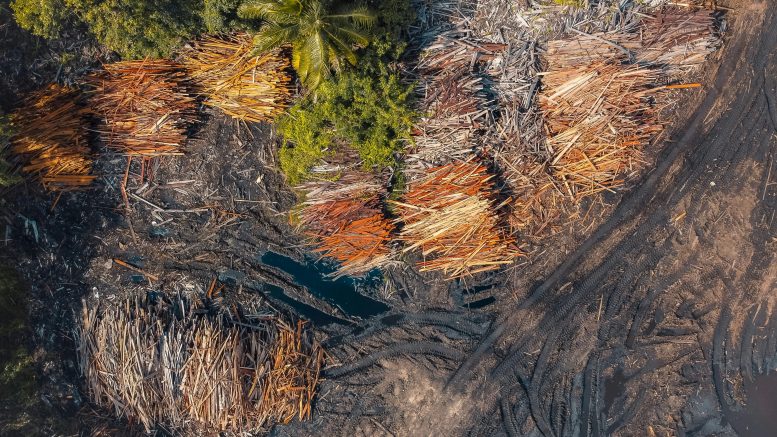
A study involving researchers from the Amazon Environmental Research Institute monitored eight watersheds in the eastern part of the State of Mato Grosso and found that more deforested areas show up to twice the annual water flow, a higher risk of flooding during the rainy season, and reduced streamflow in the dry season. The findings indicate that maintaining at least 50% of native vegetation, especially on sloped areas, can help balance water availability throughout the year. (IPAM)
The Federal Public Prosecutor’s Office filed a public civil action to annul the reduction of the Bom Futuro National Forest in the State of Rondônia, in the Amazon region, and restore its original boundaries, as well as to request that 182,000 hectares be returned to federal ownership. The lawsuit also seeks to have the State of Rondônia ordered to reforest degraded areas, pay US$ 1.95 million in collective moral damages, and to have the Chico Mendes Institute for Biodiversity Conservation assume management of state conservation units to curb new invasions and deforestation. (MPF)
The Secretariat of the Environment and Water Resources of the State of Piauí reported despite the increase in rainfall, the Drought Monitor shows that all 224 municipalities in the state are facing some level of drought as of January 2026. The bulletin indicates 132 cities under moderate drought, 84 under severe drought, and 49 under extreme drought, a condition marked by agricultural losses, pasture impacts, and widespread water scarcity. (SEMARH-PI)
The Ministry of Environment and Climate Change allocated US$ 3.51 million in Payments for Environmental Services to approximately 2,400 farmers in the Legal Amazon region who preserved more than 90,000 hectares of native forest on their properties. The initiative was carried out under the Projeto Floresta+ Amazônia, with support from the United Nations Development Programme. (MMA)
The Secretariat for the Environment and Water Resources of the State of Tocantins reported the protected area, Cantão State Park, recorded a drop of more than 2,000% in the number of wildfire hotspots in 2025, falling from 172 occurrences in 2024 to just eight this year. (Semarh-TO)
The Brazilian Development Bank and the Heineken Group announced an investment of up to US$ 1.9 million in ecological restoration projects across 35 municipalities in the State of Pernambuco, in the recharge area of the Beberibe Aquifer. The initiative, part of the Floresta Viva program and managed by the Brazilian Biodiversity Fund, aims to strengthen water security and expand restoration with native species in the region. (BNDES)
The Conab – National Supply Company, in partnership with the Federal University of Minas Gerais, launched the Parque Cafeeiro Platform, a public and free tool that certifies Brazilian coffee as deforestation-free. The initiative ensures traceability of production, meets the requirements of the European Union Deforestation-Free Products Regulation, and integrates government databases to verify the environmental compliance of production areas. (Conab / UFMG)
State Secretariat for the Environment and Sustainable Development of Goiás presented to the mayors of Barro Alto and Niquelândia the progress of the Conduct Adjustment Term with the mining company Anglo American. So far, 50% of the 240 environmental and socioeconomic obligations have been fulfilled, with an estimated investment of R$ 632 million by 2056. Three Working Groups were created to monitor socio-environmental impacts, regional development, and mine closure planning, ensuring greater transparency and participation of the municipalities. (Semad Goiás)
Ibama in partnership with Chico Mendes Institute for Biodiversity Conservation, launched Operation Maravalha in the State of Pará to combat illegal logging. So far, 26 sawmills have been inspected, including clandestine sites without documentation or proof of the wood’s origin. The operation mobilized over 150 agents and acts across the entire production chain, focusing on conservation units, indigenous lands, and public areas. (Ibama)
The Public Prosecutor’s Office of the State of Paraíba initiated the implementation of the project “Caatinga Resiste,” an initiative that brings together nine state Public Prosecutor’s Offices to strengthen the protection and recovery of the Caatinga biome. Inspection actions were defined for March, focusing on critical areas with a higher incidence of deforestation alerts. The initiative, coordinated by Abrampa, will operate along three main lines: combating illegal deforestation based on data from MapBiomas, a satellite-based platform that monitors land use, and the Rural Environmental Registry; reviewing Vegetation Suppression Authorizations in the Sinaflor system; and mapping priority areas to support measures such as environmental compensation and the creation of protected areas. (MPPB)
The Ibama, in a joint operation with the Federal Police, intercepted four foreign tourists at Guarulhos International Airport, in the State of São Paulo with more than one hundred cacti and around two thousand seeds illegally removed from the State of Rio Grande do Sul. The operation also had the support of the ICMBio and international authorities, under the framework of CITES, the Convention on International Trade in Endangered Species of Wild Fauna and Flora. The seized material will undergo technical examination, and those involved may face administrative and criminal penalties. (Ibama)
The Public Prosecutor’s Office of the State of Mato Grosso do Sul concluded the first phase of the Ecodeliberação Project, an initiative that establishes a new model of participatory and transparent management of the Municipal Environmental Fund in Campo Grande. The initiative also provides that resources derived from civil actions and other environmental agreements be redirected to the fund and applied in a structured manner to environmental preservation and restoration actions. A public area in Vila Margarida, which contains the spring and the Permanent Preservation Area of the Pindaré Stream, was fenced to protect the ecosystem and support environmental regeneration. (MP-MS)
The Government of the State of Paraná received US$ 5.6 million from the World Bank to strengthen environmental management systems and disaster risk alert systems under the Paraná Eficiente Project. The funds will be allocated to the Water and Land Institute and will support the modernization of tools such as the air quality alert system and state mapping databases. (Government of Paraná)
The Government of the State of Rondônia reported the 2026 Brazil nut harvest showed significant growth in the State Extractive Reserves, which are protected areas designated for the sustainable use of natural resources by traditional communities. After two years of lower-than-expected production, technical estimates indicate that output may reach approximately 140,000 tonnes in the Rio Cautário Extractive Reserve, potentially moving more than US$ 193 thousand in the region’s municipalities, reinforcing the importance of sustainable extraction for the socio-bioeconomy. (Government of Rondônia)
The Federal Government revoked Decree No. 12,600/2025, which had provided for the inclusion of the Tapajós, Madeira, and Tocantins rivers, in the Amazon Region, in the National Privatization Program, allowing these rivers to be subject to private concession processes as part of waterway projects for cargo transportation. With the revocation, published in the Official Gazette of the Union, this possibility was canceled, and the rivers are no longer included in the program. (Official Gazette of Brazil, Decree No. 12,856 from 02/23/2026)

Latin America
Nelly Paredes del Castillo has been sworn in as the new Minister of the Environment of Peru. An agronomist with more than 35 years of experience in public management and sustainable development, she previously served as Vice Minister of Environmental Management at the Ministry of the Environment and was Minister of Agrarian Development, in addition to holding positions at the National Forest and Wildlife Service. (Minam)
The Ministry of Environment and Sustainable Development of Colombia announced that hydroelectric and thermoelectric companies located in watersheds affected by heavy rainfall must transfer an additional 2% of their gross energy sales for six months to finance environmental and risk management actions. The measure is part of the state of emergency declared in eight departments, including Antioquia and Córdoba. (MinAmbiente Colombia)
The Government of Chile signed a public-private agreement with ministries, the Production Development Corporation, the BancoEstado bank, Fundación Chile, and the Chilean Wood Corporation to open the carbon credits market to small and medium-sized forest landowners. The initiative aims to promote afforestation and reforestation projects, restore degraded soils, and increase carbon capture, contributing to the country’s goal of achieving carbon neutrality by 2050. (Government of Chile)
The Ministry of Environment and Sustainable Development of Colombia presented progress in the implementation of Participatory Environmental Zoning in municipalities prioritized under the Peace Agreement. During the international conference ICARRD+20, Acting Minister Irene Vélez Torres reported seven processes have already been launched in Caquetá and Guaviare, with an investment exceeding US$ 12.15 million to develop technical planning and land-use management instruments that will define land use and reconcile rural production with environmental conservation in 17 municipalities. (MinAmbiente Colombia)
The Ministry of the Environment of Peru has released the digital platform “Geoquebradas,” a free tool that allows the identification of areas at risk of mudflows and landslides during the rainy season. The platform integrates data from different institutions and provides information at national, regional, and local levels. (Minam)

Read more: