
Soybean Moratorium Enters Trade Dispute Between Brazil and the United States
Brazil
Radar Verde Cerrado 2026 pointed out low socio-environmental performance among meatpackers sourcing cattle in the Cerrado Biome. The assessment covered 262 meatpacking plants, and none reached intermediate, high or very high levels of deforestation-control performance. Marfrig, Masterboi, Minerva and JBS were among the best-rated companies, but the report indicates that the beef supply chain in the Cerrado Biome still needs to advance in traceability, transparency and supplier monitoring. (Imazon; Radar Verde)
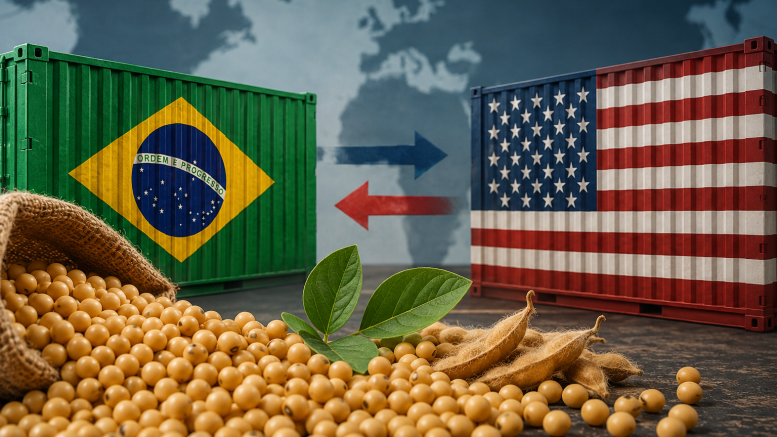
The Soybean Moratorium has entered the trade dispute between Brazil and the USA. In a Section 301 proposal, the Office of the US Trade Representative cited measures by the State of Mato Grosso aimed at removing tax benefits from companies that join voluntary anti-deforestation agreements, such as the Soybean Moratorium. According to the document, the withdrawal of large multinationals from the pact could reduce private incentives to curb soybean-related deforestation. (USTR)
SLC Agrícola says its production is 100% deforestation-free across owned, acquired, leased and joint venture areas. The company has also been expanding environmental monitoring and emissions measurement tools after reporting record net revenue of US$ 1.66 billion in 2025. (SLC Agrícola)
The government of Minas Gerais State will invest approximately US$ 85.31 million in its 2026-2031 State Plan to Combat Forest Fires, launched to strengthen fire prevention and response during the dry season. The funds will support the hiring of brigadiers, leasing of vehicles and aircraft, purchase of equipment, specialized technologies, operational communication and expansion of monitoring structures. The initiative aims to protect rural areas, conservation units, planted forests, crops and livestock amid higher risks of drought and wildfires. (Government of Minas Gerais)
Yara Brasil fertilizer company, JDE Peet’s and Ofi started the first harvest of lower-carbon conilon coffee in Brazil, in farms in the southern region of the State of Bahia and the State of Espírito Santo. The project involves more than 20 farms and combines lower-emission fertilizers, technical assistance, training and production monitoring. According to Yara, the package can reduce the carbon footprint of green coffee by approximately 40% compared with systems using conventional fertilizers. (Yara Brasil; JDE Peet’s; Ofi)
Banco do Nordeste [Brazilian Northeast Bank] allocated US$ 440 million from January to April 2026 to sustainable industrial production projects under Brazil’s New Industry policy. Of the total, US$ 136 million went to sustainable and digital agro-industrial chains, while US$ 52.26 million supported decarbonization, energy transition and bioeconomy initiatives. (BNB)
Brazilian Development Bank launched a public selection process to hire a technical study on carbon credit certification in Brazil. The objective is to map bottlenecks, assess methodological gaps, governance models and ways to reduce certification costs, focusing on smaller-scale projects, local communities, Indigenous peoples, cooperatives, rural settlements and small farmers. (BNDES; MMA; Ministry of Finance)
The Pró-Manguezais Project, coordinated by Brazil’s Federal Public Prosecutor’s Office and the Public Prosecutor’s Office of the State of Alagoas, received the 2026 Hugo Werneck Environmental and Sustainability Award in the Best Biodiversity Initiative category. The project was recognized for its efforts to preserve and restore mangrove ecosystems, which play a strategic role in biodiversity conservation, carbon sequestration and climate change adaptation. (MPF)
Neoenergia Elektro is promoting environmental education and energy efficiency initiatives in Araras, State of São Paulo, through its Mobile Educational Unit. The program allows students to learn about power generation and distribution process and take part in the Vale Luz initiative, which exchanges recyclable waste for discounts on electricity bills. (Neoenergia Elektro)
The Senate’s Environment Committee approved, in the first round of voting, a bill that would allow environmental fines to be converted into environmental preservation services or contributions to conservation funds, with discounts of up to 50% on the penalty amount. The proposal aims to improve the effectiveness of environmental restoration efforts and reduce non-payment of fines and will now move to a supplementary vote. (Senate News Agency)
Climate disasters in Brazil are exacerbated by structural governance failures, including a weak culture of prevention, poor coordination among different levels of government, outdated data and ineffective communication with the public. Based on the 2024 floods in the State of Rio Grande do Sul, research argues climate risk management should be treated as a permanent public policy, with stronger institutional integration and greater investment in prevention. (FGV Direito SP)
State of Mato Grosso do Sul recorded the lowest area of unauthorized deforestation in Brazil over the past seven years. Data show that 75.2% of native vegetation cleared between 2019 and 2025 was carried out with environmental permits, reflecting progress in the state’s efforts to monitor and combat illegal deforestation. (Semadesc/MS; MapBiomas)
Embrapa and Grupo Carrefour Brasil signed a technical cooperation agreement to train farmers and suppliers in areas such as good agricultural practices, post-harvest technology, food safety, traceability, socio-environmental responsibility, loss reduction and sustainability. The initiative connects Embrapa’s e-Campo platform with Grupo Carrefour Brasil’s Jornada da Autonomia platform, aiming to improve qualification across the fruit and vegetable supply chain. (Embrapa; Grupo Carrefour Brasil)
The Federal Accounting Council, Ibracon, Apimec and IBGC are urging Brazil’s Securities and Exchange Commission to reconsider the decision to make sustainability reporting optional for publicly traded companies. The groups argue that the change could reduce the comparability of corporate disclosures, undermine investor decision-making and weaken Brazil’s alignment with international ESG reporting standards. (Federal Accounting Council; Ibracon; Apimec; IBGC)
The government of Amazonas State has declared a 180-day climate and environmental emergency across the state due to forecasts of reduced rainfall, extreme heat and severe drought associated with the El Niño phenomenon between 2026-2027. The measure mobilizes state agencies to implement prevention efforts, wildfire response, river monitoring and actions to mitigate socioeconomic and environmental impacts. (Government of Amazonas)
The government of Tocantins State has launched Consulta CAR, a platform that consolidates environmental information on rural properties registered in Brazil’s Rural Environmental Registry. The tool aims to increase transparency, streamline environmental compliance assessments and provide greater legal certainty for farmers, financial institutions and agribusiness buyers. (Government of Tocantins)
State Court of São Paulo ordered Gol Airlines to pay approximately US$ 963 thousand in collective moral damages after ruling its carbon offset and emissions-neutralization campaigns were misleading. The decision requires the suspension of the initiatives until the company provides auditable documentation proving the environmental effectiveness and traceability of the carbon credits used. (São Paulo Court of Justice)
The Companhia Energética of State of Minas Gerais, a power-generation and distribution company, launched the Agro Solar 24h program, which will invest up to US$ 9.63 million to support the installation of solar power systems combined with battery storage on rural properties in the State of Minas Gerais. The initiative will provide subsidies covering at least 60% of equipment costs, aiming to increase energy autonomy, reduce operating expenses and enhance sustainability in the agricultural sector. (Cemig)
Climate change, shortage of skilled labor and geopolitical risks are among the main challenges facing Brazilian agribusiness in 2026. According to research, 79% of interviewed people have rated climate impacts as high or very high, while pressures related to innovation, ESG, logistics, credit and regulatory adaptation are increasing the need for risk management across the sector. (EY)
The government of Mato Grosso State signed an environmental commitment agreement to eliminate, starting in 2034, the use of native-forest firewood in agroindustrial boilers, including corn ethanol plants. The measure provides for a gradual reduction in consumption, expansion of planted forests and stricter control over the origin of biomass used for energy generation. (Mato Grosso Government)

Latin America
The National Institute of Agricultural Technology of Argentina is measuring the carbon footprint of yerba mate and cassava production systems in the province of Misiones as part of a project involving 328 family farmers and 17 cooperatives. Preliminary results indicate significant potential to reduce emissions through better soil management, fertilization practices and the integration of trees into production systems, while also expanding opportunities in markets that value ESG. (INTA)
The Papa Huella Cero project, led by the Agricultural Research Institute of Chile and funded by the Foundation for Agricultural Innovation, aims to make potato farming in Chile’s La Araucanía region more sustainable. The initiative includes the implementation of 200 agroecological management plans, reduced use of agrochemicals and the adoption of digital tools to support farmers. The program will also measure the environmental impact of crop protection products and promote practices that increase the sector’s resilience to climate change. (INIA Carillanca; FIA)
Grupo Bimbo, based in Mexico, has surpassed 500 thousand hectares of land under regenerative agriculture practices in 2025, a 73% increase compared to the previous year. The initiative aims to improve soil health, promote biodiversity and strengthen the resilience of the agricultural supply chain, with program expansion in Brazil and the UK. (Bimbo Group)
Peru’s Ministry of the Environment identified seven native bean species found in the country, including one endemic species and three wild relatives with potential to support the development of crop varieties more resistant to drought, pests and diseases. (Minam)

READ MORE: