
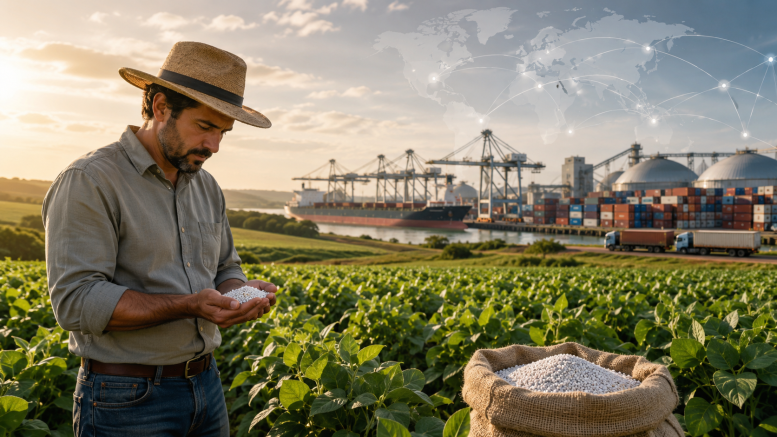
“The recommendation is not to concentrate all purchases at a single point in time, and to invest in safe and reliable suppliers”
Felipe Pecci is the Commercial Vice President at The Mosaic Company – Brazil. He holds a degree in Business Administration from Fundação Armando Alvares Penteado (FAAP) and a postgraduate degree in Business Administration from Insper.
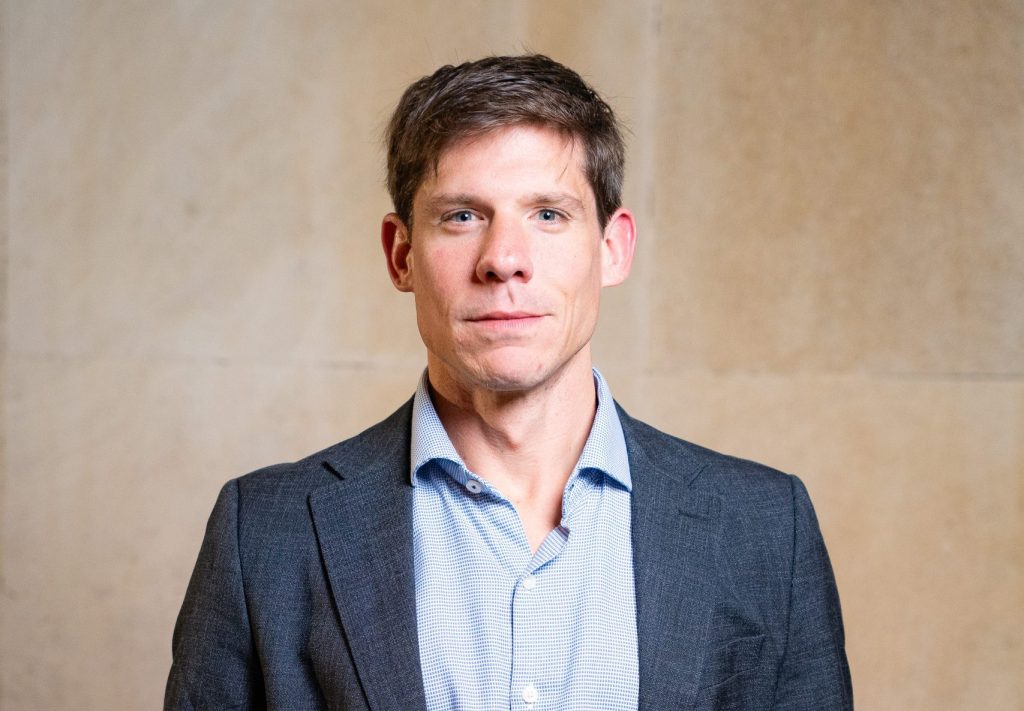
Felipe Pecci, Commercial Vice President at Mosaic
AgriBrasilis – What was your career path before entering the international fertilizer market?
Felipe Pecci – I dedicated the first years of my career to the consulting area of a multinational company. I worked mainly on projects related to receivables securitization, mergers and acquisitions, and market access strategies.
AgriBrasilis – Did working abroad change your perception of the sector?
Felipe Pecci – Yes. Although they are connected by intense global supply flows, the value chains of each region where I have worked carry much of their own culture, economic context, and local possibilities.
Even though I had prepared myself to find differences, only by experiencing these realities was I able to understand the depth of these nuances and how they are capable of shaping different perspectives, angles, and capabilities.
Brazilian agribusiness has a unique dynamism. The sector has recorded accelerated growth, high economic relevance, diverse demand, and strong capacity to adopt and generate technology. For all these reasons, Brazil forms a differentiated talent hub that is increasingly valued globally.
AgriBrasilis – What does Brazil need to learn about the dynamics of the fertilizer market?
Felipe Pecci – More than learning, we need to maintain constant attention to our supply matrix. Brazil combines large agricultural scale, relevant expansion potential, and opportunities for efficiency gains, but remains highly dependent on imports.
We went from around 30 million to more than 40 million tonnes of fertilizers in a decade, with more than 85% of the volume coming from abroad. This increases the sensitivity of the chain and reinforces the importance of ensuring availability at the right time.
The country has been relatively resilient to disruptions, which may soften the perception of risk. In other markets, this risk is treated with more caution. Given the potential of Brazilian agribusiness, the biggest mistake would be to lose productivity due to supply failures.
AgriBrasilis – How is the market reacting to the current geopolitical scenario?
Felipe Pecci – The conflicts in the Middle East have intensified a temporary situation of more compressed margins and less favorable barter ratios for farmers, especially in the case of soybean and corn.
The first practical effect is a delay in fertilizer sales compared to the historical average. This is a natural response to the current scenario, but it can become dangerous as logistics costs tend to increase the more delayed the system becomes.
We are entering June 2026, and fertilizer sales are around 15 percentage points below the same period last year.
At the same time, this is precisely the environment where opportunities emerge. This scenario has driven the search for more technical soil management and complementary solutions, such as bionutrition, focused on maximizing productivity.
AgriBrasilis – What is most important in fertilizer purchasing decisions?
Felipe Pecci – Because they are major drivers of productivity, fertilizers involve many variables and require a well-structured purchasing process.
In the current context, I would list risk management as an essential item. Fertilizer price volatility has increased significantly in recent years with the escalation of geopolitical conflicts. This makes both the timing of purchases and the security of the chosen supply matrix exponentially more important.
The recommendation is not to concentrate all purchases at a single point in time, and to invest in safe and reliable suppliers with the structure needed to navigate more challenging scenarios.
AgriBrasilis – In your opinion, what changes could surprise agribusiness in the coming years?
Felipe Pecci – I will try to move away from the standard answer, which would naturally point to technology, with a focus on artificial intelligence, sustainability, the evolution of financialization, credit tools, and labor challenges. All these are real and important trends, but not necessarily surprising.
I believe the sector may face significant productivity challenges in the coming cycles, across several geographies, not only in Brazil. This results, among other factors, from reduced fertilizer application at times when farmers face tighter margins.
Favorable weather and a possible reserve of nutrients in the soil prevented this consequence from being immediate. However, that reserve has likely already been consumed in many cases. It would only take a somewhat less favorable combination, such as an El Niño event, for productivity deviations to materialize more intensely than many models currently indicate.