
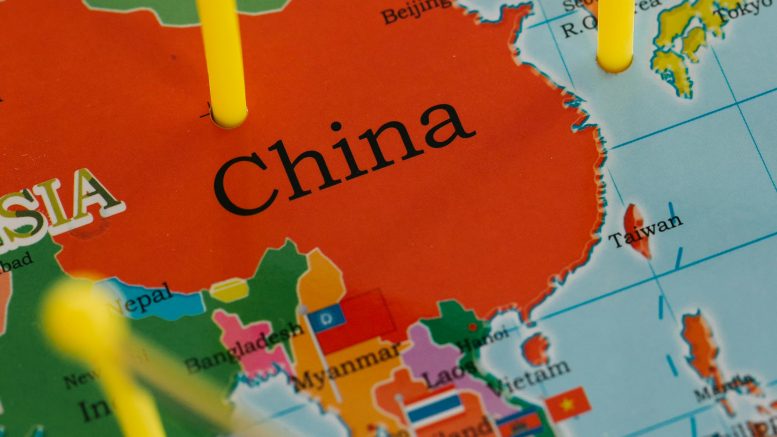
“Each business association, each State government, each large company has its own specific strategy…”
Vladimir Milton Pomar is the CEO of Per Capta, a company focused on business cooperation and exchanges between Brazil and China.
Milton Pomar holds a bachelor’s degree in geography from Santa Cruz State University, and a M.Sc. in State, Government and Public Policy from the Latin American Faculty of Social Sciences.

Milton Pomar, CEO of Per Capta
AgriBrasilis – Who benefits from the US-China trade dispute?
Milton Pomar – Trade disputes of this kind usually harm both sides and benefit countries that sell to both, with advantages in specific products. One example is US agribusiness, which always loses out in such cases because it depends on subsidies to export while competing with products from Brazil, for example.
Agricultural and mineral commodities have their prices set by buyers, which means they are a major trap for farmers — or extractors, in the case of minerals. If the US does not sell its surplus corn and soybean production to China, to which country will they sell? That is the question. If a major supplier is removed from the market through retaliation by a major buyer, the other suppliers will gain little, because that buyer will always use the possibility of “rehabilitating” the one that is “being punished”, as happened in 2020, when China bought three times more from the US than it had in 2019, for example.
AgriBrasilis – What are the consequences of this dispute for Brazil?
Milton Pomar – Brazilian agribusiness faces the highest real interest rate in the world; a historical dependence on imported fertilizers; transportation by trucks instead of trains/railways; a long-standing shortage of storage capacity; and ports whose operating time and costs need to improve significantly. If the sector’s main business leaders had a different vision, we would have already solved a large part of these limiting factors and would also be competitive “beyond the farm gate”. One positive consequence of this dispute will be China’s willingness to invest in the construction of a railway connecting the Matopiba region (Brazil’s agricultural fronier, in the States of Maranhão, Tocantins, Piauí and Bahia) and the State of Mato Grosso to the port of Chancay, in Peru.
AgriBrasilis – Is Brazilian agribusiness’ dependence on China sustainable?
Milton Pomar – No. The exchange value of industrial products in relation to agricultural products is also unsustainable. A simple example is imported fertilizers. However, we should also consider the dependence on high-tech machinery and equipment, for example.
No form of dependence is sustainable, especially not dependence on a buyer that absorbs half or more of soybean exports. When China reduces its purchases, it will break Brazilian agribusiness, because the crop cycle has deadlines, with specific windows for planting, harvesting, sales and loan repayments. A good example is pork: we sold a lot during the sanitary crisis in China’s pig farming sector, but once the pressure ended, demand disappeared.
AgriBrasilis – What bargaining power does Brazil have?
Milton Pomar – None. Brazil does not have, and has never had, a strategy for dealing with China. Each business association, each State government, each large company has its own specific strategy, and in this tangle of strategies China has free rein, because it has a strategy for dealing with Brazil, and its companies and governments strictly follow the guidelines of the central government.
Today, the degree of dependence of the mineral and agribusiness sectors on China is so great that it will be necessary to “reinvent” the relationship in order to gain some bargaining power.
AgriBrasilis – Are China’s sanitary requirements just another form of trade barriers?
Milton Pomar – Sanitary requirements, in any country, are also trade barriers. There is a lot of fraud and contamination in agricultural products shipped in bulk and in containers, transported by sea for 20 to 40 days. If a country does not tighten inspections of what it receives, it will face major sanitary problems. China is strict in order to maintain food safety for its population. It has a huge population, buys a lot, and has to ensure that what it receives is of good quality.
AgriBrasilis – What are the Chinese investments in Brazilian agribusiness?
Milton Pomar – One of the major investments is Cofco’s project in Rondonópolis, State of Mato Grosso, to expand its soybean crushing plant from 4,500 tonnes per day to 10,000 tonnes per day, producing soybean meal, oil and biofuel. The Citic group is producing seeds in Paracatu, State of Minas Gerais. Other companies have invested in logistics to reduce transportation costs and speed up exports, because the strategy is to buy directly from farmers in order to lower costs. The more they control all stages, the more they will be able to save.
We need to attract investment in agroindustries and livestock production: Chinese companies could invest much more in chemical industries, for example, to add value in production regions by transforming soybeans and cassava into numerous products. What is missing are consistent projects and Brazilian businesspeople also willing to invest. Another example is goat and sheep farming, whose meat has a large market in Asia, while, in Brazil, production does not even meet domestic demand.
READ MORE: