
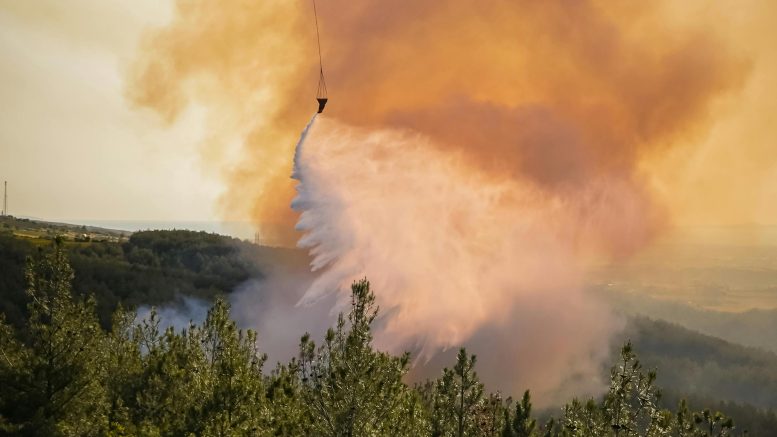
Chile Launches Restoration Plan for Nonguén National Park After Wildfire Damage
Brazil
Brazil and Germany signed agreements to expand cooperation in circular economy and combating environmental crimes. The initiative includes the creation of a bilateral dialogue to promote efficient resource use and the development of sustainable policies, as well as a joint declaration to strengthen efforts against environmental crime. Germany also expressed its intention to invest up to US$ 585 million in the Climate Fund, operated by the BNDES and coordinated by the Ministry of the Environment and Climate Change. (MMA)
Ibama has begun hiring federal brigades to strengthen wildfire prevention and response across the country. The measure provides for the mobilization of around 2,600 firefighters in 2026, with an estimated investment of US$ 17 million, expanding the operations of Prevfogo in strategic and high-risk areas. (Ibama)
The Government of the State of São Paulo launched a public notice offering payments of up to US$ 7,2 thousand per farmer and US$ 50 thousand for organizations to encourage the conservation of the araucaria tree (Araucaria angustifolia). The initiative is part of the Pró-Araucária program and aims to promote environmental restoration, sustainable use and the pine nut value chain, focusing on income generation and the preservation of the threatened species. (Semil-SP)
The Agriculture and Agrarian Reform Committee approved Bill 3,784/2024, which allows farmers to deduct expenses on environmental services from their income tax. The proposal now moves on to the Environment Committee for further review. (Agência Senado)
The Attorney General’s Office announced a new lot of public civil actions against environmental offenders, totaling US$ 71.1 million and requiring the restoration of around 17,000 hectares. The 27 lawsuits are part of the AGU Recover program and include measures such as asset freezes, credit restrictions and the suspension of tax benefits. (AGU)
The Secretariat of Environment and Water Resources of the State of Piauí announced that the Proverde program has already distributed more than 3.6 million native and fruit tree seedlings since 2023. The initiative, which encourages planting by farmers and the general population, supports ecosystem restoration and the expansion of green areas in the state, with a goal of surpassing 4 million seedlings by the end of the year. (Semarh)
The State Secretariat for Environment and Sustainable Development of Goiás has launched a public call to remunerate community brigades for providing environmental services in combating forest fires. The program offers 180 positions in municipalities in northeastern Goiás, with payments of US$ 52,44 per 12-hour shift, covering prevention, monitoring and fire management activities. (Government of Goiás)
A report by the Environmental Military Police of the State of Santa Catarina found out the death of thousands of fish in the Imaruim River was caused by a combination of factors, including acidic water, low oxygen levels and the presence of pollutants. These conditions, worsened by human activity, compromised the animals’ survival and led to a mass die-off. (PMA)
Researchers from the State University of Mato Grosso identified 14 types of emerging contaminants, such as pharmaceuticals, hormones, and pesticides, in rivers in the Pantanal. These substances, linked to improper disposal and human activities, may affect aquatic fauna and pose health risks, driving studies on natural water treatment solutions. (Unemat)
The State Secretariat for the Environment of Mato Grosso reported that the 8th Environmental Conciliation Task Force resulted in more than 100 agreements, totaling around US$ 1.6 million. The initiative also includes the restoration of degraded areas, with nearly 3,000 hectares of forest replacement and 1,200 hectares of Permanent Preservation Areas and Legal Reserve set for recovery. (Secom-MT)
The Public Prosecutor’s Office of Tocantins reached an agreement with Grupo São Miguel to restore more than 3,300 hectares of native vegetation in the Cerrado, in areas of Lagoa da Confusão and Cristalândia. The agreement also includes financial compensation exceeding US$ 439 thousand, to be used for environmental restoration and monitoring in the region. (MPTO)
A study by the Federal University of Acre indicates the expansion of illegal roads in the Amazon region, known as “ghost roads”, has been growing since 1990, driven by deforestation and later reinforced by public investments without proper environmental licensing. These roads facilitate new cycles of deforestation, impact watercourses, and threaten conservation units and public lands in the state. (Ufac)
The Brazilian Development Bank, together with the Brazilian government and German institutions such as KfW and BMZ, signed letters of intent that could result in an investment of around US$ 815 million in green projects in Brazil. The funds will be allocated to the Climate Fund and sustainable mobility initiatives, focusing on reducing greenhouse gas emissions, ecological transition, technological innovation and more efficient transport systems. (BNDES)
The Federal Public Prosecutor’s Office recommended the immediate annulment of environmental licenses and suspension of dredging activities carried out by Alcoa in the Amazon River, in Juruti, State of Pará. According to the agency, the project was improperly licensed as “maintenance,” despite involving the deepening and widening of the riverbed to accommodate larger vessels. Investigations indicate severe socio-environmental impacts, including water contamination, the collapse of artisanal fishing and the silting of lakes. The MPF also highlighted the absence of comprehensive environmental impact studies. The agency has given a 15-day deadline for the company, the Pará State Department of Environment and the Navy to present measures, under penalty of legal action. (MPF)
Be8 announced a partnership with the municipalities of Nonoai and Rondinha, in the State of Rio Grande do Sul, to use Be8 BeVant biofuel in their municipal fleets. The initiative aims to accelerate the energy transition in the public sector, with the potential to significantly reduce greenhouse gas emissions and improve the operational efficiency of the cities. The project follows a model already implemented in the city of Passo Fundo and reinforces the use of renewable solutions in public services across Brazil. (Be8)

Latin America
A solar self-generation project was inaugurated in Soacha, Colombia, by Colgas and Ladrillera Santafé, with an investment of around US$ 4.45 million. The solar plant has a capacity of 5.4 MWp and is expected to reduce the company’s energy consumption by up to 30%, while also preventing the emission of approximately 1,400 tonnes of CO₂. The initiative is part of the industry’s sustainability strategy and represents a significant reduction in operating costs, as energy accounts for about 25% of the company’s cost structure. (Colgas; Ladrillera Santafé)
A study led by the University of Miami found out 98% of environmental commitments disclosed by major meat and dairy companies can be classified as greenwashing. The research, published in Plos One, analyzed 1,233 statements between 2021 and 2024 and concluded that most are vague or not verifiable, with little scientific evidence to support them. (University of Miami; Plos One)
The Ministry of the Environment and Sustainable Development of Paraguay, in partnership with FAO, highlighted the results of the “Paraguay + Verde” project, which has already certified more than 145,000 hectares of Indigenous territories as environmental service areas. The initiative includes processes of Free, Prior and Informed Consultation and Consent, as well as community training and environmental monitoring activities. The project also advances the Land Degradation Neutrality agenda, focusing on combating desertification and soil degradation. (Mades)
The Ministry of the Environment of Peru recognized the winners of the “Emprendedores por Naturaleza 2026” initiative, allocating US$ 1.26 million to finance sustainable bioeconomy projects in protected natural areas. The program supports activities such as nature tourism, coffee, cacao and honey production, sustainable fishing and handicrafts. Since 2020, the initiative has already funded more than 200 projects and benefited thousands of families across the country. (Ministry of the Environment of Peru)
The Ministry of the Environment of Peru launched the “ABD Perú” project, aimed at the conservation and sustainable use of agrobiodiversity in mountain ecosystems, focusing on the valorization of native crops and the strengthening of food security in high-Andean communities of Cusco. The initiative, funded by the Kunming Biodiversity Fund with an investment of US$ 999,994 thousand seeks to preserve genetic resources, strengthen seed banks and revalue traditional knowledge from rural communities. (Ministry of the Environment of Peru)
More than 25% of Unesco-listed sites could reach critical tipping points of collapse by 2050 due to climate change, according to a new report released by the organization. The study warns that global warming threatens glaciers, coral reefs and biodiversity, potentially causing irreversible losses in ecosystems designated as World Heritage sites. These protected areas are home to about 10% of the world’s population and play an important role in carbon storage and biodiversity conservation. (Unesco)

READ MORE: