
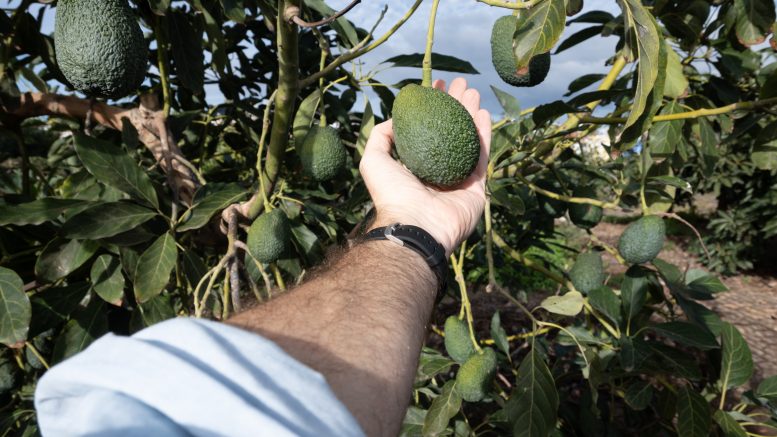
Record Harvest of Peruvian Hass Avocados

The National Food Safety and Quality Service, the authorities from Entre Ríos, and the production sector have unified strategies for biosecurity and epidemiological surveillance in order to prevent the introduction of Highly Pathogenic Avian Influenza (HPAI) into the province, following confirmed outbreaks in wild and commercial birds in Buenos Aires, Córdoba, and Río Negro. The current scenario, which caused the temporary suspension of Argentine poultry exports in February 2026, requires strict compliance with Resolution 1699/2019, focusing on strengthening sanitary management and early warning systems. Although Entre Ríos has no active cases, it remains on constant alert due to its economic importance. (Senasa)
The National Food Safety and Quality Service has issued Resolution 233/2026, which eliminates the requirement to present municipal and provincial permits as a prerequisite for procedures before the agency, aiming for the deregulation and administrative simplification of the Argentine productive sector. The measure seeks to reduce costs and documentary redundancies by strictly limiting the agency’s scope to its sanitary defense competencies and avoiding jurisdictional overlaps. It is crucial to highlight that this simplification does not exempt producers and companies from complying with local hygiene, safety, and land-use regulations; rather, it shifts direct responsibility for compliance to the stakeholders, removing the need to present such documents to the national body to facilitate trade and production flows. (Senasa)

A survey conducted between November and December 2025 projects an optimistic scenario for the 2025/26 harvest in São Paulo, highlighted by corn, whose production is expected to jump 38% driven by gains in both acreage and productivity. Soybean also show an estimated growth of 11%, reaching 4.57 million tonnes with record yields, while coffee production despite a slight decrease in area – expects a harvest of 4.7 million bags of 60 kg due to increased efficiency, especially in the Franca region. (Agência SP)
The Ministry of Agriculture highlighted Brazil’s strategic role in global food security, with record exports of US$ 169.2 billion in 2025 and an unprecedented grain harvest estimated at 353.4 million tonnes for 2025/26. Under the leadership of Minister Carlos Fávaro and with technological support of Embrapa, the country serves 10% of the world’s population, leading markets such as coffee, soybean, and orange juice. The strengthening of the sector is sustained by a US$ 98.2 billion Harvest Plan, policies of guarantee of minimum prices, and a rigorous agricultural defense system. (Mapa)
The São Paulo State Secretariat of Agriculture and Supply has consolidated an ecosystem to support dairy farming, present in 94% of the state’s municipalities, integrating marketing, technical assistance, and credit. The highlight is the São Paulo Program for Social Interest Agriculture, which moved US$ 5.6 million in 2025 and is projected to reach US$ 9.5 million in 2026. Additionally, the CATI Leite project focuses on improving management and productivity, while the Leite Agro SP credit line enables technological modernization. (Agência SP)
The Brazilian Development Bank (BNDES) has approved US$ 38 million in financing for Veracel Celulose, earmarked for the planting, management, and conservation of 22.7 thousand hectares of eucalyptus across eleven municipalities in Southern and Far Southern of Bahia State until 2028. Aligned with the New Brazil Industry (NIB) guidelines, the operation aims to strengthen the bioeconomy and sustainable pulp production, expanding the sector’s export capacity. The project reinforces the strategic partnership between the bank and the company, which is responsible for an annual production average of 1.1 million tonnes of pulp. (BNDES)
The record data for the State of Mato Grosso do Sul’s 2025/2026 harvest was presented, forecasting the crushing of 52 million tonnes of sugarcane to produce 5 billion liters of ethanol and 2.1 million tonnes of sugar. The state consolidates its position as Brazil’s 2nd largest corn ethanol producer (accounting for 44% of its internal mix) and the 4th largest exporter of bioelectricity. (State Secretariat for Environment, Development, Science, Technology, and Innovation)
Published an interministerial ordinance establishing guidelines for the granting of up to US$ 13.3 million in economic subsidies for paddy rice from the 2025/2026 harvest, aiming to ensure the minimum prices set by the Minimum Price Guarantee Policy. The measure will be operationalized by Conab through auctions of the Equalizer Premium Paid to Rural Producers and the Product Flow Premium, with reference values established at US$ 12.14 / 50 kg bag for the States of Rio Grande do Sul and Santa Catarinaa, and US$ 15.23 / 60 kg bag for other regions and the state of Paraná. (Official Gazette of Brazil, Interministerial Ordinance No. 38 of 03/24/2026, MAPA)
The second corn crop in the State of Paraná faces a scenario of irregularity and risk due to the delayed sowing and the combination of high temperatures with scarce rainfall. While the south and west have already completed planting, the north and northwest are still finalizing implementation, benefiting from more favorable initial conditions in Maringá. However, the weather forecast through the end of March 2026 indicates the maintenance of temperatures above 30°C and low rainfall volumes, threatening the physiological development of the plants and increasing the risk of significant losses in final productivity. (Inmet)
President Luiz Inácio Lula da Silva has signed Law 15356/26 into effect, authorizing the Operations Guarantee Fund to back credit lines for the National Program for Strengthening Family Farming. The measure allocates up to US$ 95.1 million to expand financing access for family farmers. Started from Bill 2213/25, the initiative aims to reduce banking risk and facilitate loans for production costs and investment, particularly for producers who face difficulties providing traditional collateral. (Agência Câmara de Notícias)
Ministry of Agriculture delivered machinery and equipment to eleven municipalities in the State of Santa Catarina, totaling an investment of US$ 969 thousand through parliamentary amendments. The action aims to strengthen rural infrastructure and facilitate the transport of agricultural production. During the ceremony, it was highlighted the direct impact on the productive sector’s competitiveness and the quality of life for rural communities in Santa Catarina. (MAPA)
The bulletin of the Permanent Council of Applied Agrometeorology of the State of Rio Grande do Sul indicates an 84.6% probability of transitioning to El Niño during the 2Q 2026, forecasting irregular rainfall in April and a trend toward above-average precipitation in May and June. Given the thermal variability and increased humidity, technical guidelines recommend the immediate harvest of summer crops, staggered winter sowing using disease-resistant cultivars, and strict ventilation management for greenhouse vegetables. In fruit and forestry sectors, the focus should be on monitoring accumulated chilling hours and adjusting the planting schedule to mid-May. (EMATER RS)
During Expocanas event, an agreement for tax exemption for the installation of a processing unit by MS Grãos Nuts, was formalized , a US$ 5.7 million investment scheduled to begin operations in January 2029. This announcement reflects the meteoric rise of peanuts in the State of Mato Grosso do Sul, which became Brazil’s second-largest producer in the 2024/2025 harvest with 56 thousand tonnes and a 203% surge in planted area, reaching 21.26 thousand hectares. Driven by technological use in sugarcane renovation areas, the crop was highlighted by Secretary Jaime Verruck as a strategic pillar for the state’s industrialization and agricultural diversification. (State Secretariat for Environment, Development, Science, Technology and Innovation)
The 19th edition of the State of Rondônia Agricultural Bulletin, published by Embrapa, highlights the recovery of coffee production in 2026 in the state, with a forecasted harvest of 2.7 million bags of 60 kg and the highest average productivity in Brazil. Overall, grain production is expected to grow by 3.1%, totaling 5.6 million metric tons across an area of 1.3 million hectares; soybeans remain the primary crop, despite a sharp 42% drop in rice production and a reduction in the area dedicated to cassava. (Embrapa)


The Ministry of Agriculture and Rural Development coordinated a working group with rice producers from Norte de Santander to strengthen the sector and present progress in support programs. The meeting included the participation of key entities, highlighting that, during the government of Gustavo Petro, credits exceeding US$ 111.9 million were granted to 3,596 beneficiaries. In addition to simplifying requirements for the Direct Support Program and implementing financial mechanisms like FONSA, the government rieterated its commitment to sustainability and food security. (Ministry of Agriculture and Rural Development)
The Ministry of Agriculture and Rural Development identified an annual increase of 14.59% in the price of live cattle as of January 2026, which represents 53% of production costs and directly impacts the final consumer. The analysis points out the imbalance in domestic supply is exacerbated by the excessive slaughter of females of reproductive age and the strategic export of 39% of males between 1 and 2 years old, which exceeds the herd’s natural replacement capacity. To contain inflationary pressures and ensure food security, the government plans to implement measures such as restrictions on the slaughter of females. (Ministry of Agriculture)

In March 2026, regulatory agencies from Mexico and the USA reaffirmed the Food Safety Alliance, aiming to ensure the safety of fresh and minimally processed foods. The strengthening of this technical, scientific, and traceability cooperation comes after bilateral agri-food trade jumped from US$ 50 billion to US$ 73 billion over the last five years, driven by Mexican exports of avocado, tomato, strawberry, and bell pepper. (Government of Mexico)
According to a report from the Foreign Agricultural Service from the USDA, the Mexican avocado industry projects exponential growth for 2026, with production estimated at 2.8 million tonnes and exports at 1.31 million tonnes, driven by record US demand. Despite a stable planted area of 267.9 thousand hectares, productivity is rising through the adoption of pressurized irrigation, while the sector implements new labor and environmental certifications. (FreshFruit)


The Peruvian agro-industry concludes the 2025-2026 season consolidating its global leadership in exports of table grape, with a new projected record of over 83 million boxes. The grape sector has undergone a varietal transformation where white seedless varieties now account for 61% of shipments. Despite this success, the industry faces risks such as excessive dependence on the US market, growing competition from China and Kenya, and new European Union sustainability requirements for recycled packaging by 2030. (FreshFruit)
The Ministry of Agrarian Development and Irrigation of Peru, through the Agroperú Fund, has granted over US$ 40.5 million across 9,251 loans as of March 2026, benefiting approximately 9,203 small-scale farmers. The initiative focuses on financing inputs and seeds for farmers organized into associations, requiring proof of land ownership and a minimum credit rating, while also offering agricultural insurance against climate risks. To expand the program’s reach, the government is conducting in-person workshops and technical training sessions via Agrobanco. (Midagri)
Peru’s agricultural exports reached a historic milestone by surpassing US$ 15 billion by the end of 2025, consolidating products such as blueberries, grapes, and avocados in demanding markets like the European Union. This performance is sustained by the rigorous work of the National Agricultural Health Service (Senasa). (Midagri)
The ProHass association projects a record harvest of 773 thousand tonnes of Peruvian Hass avocados for 2026, representing a 7% growth compared to the previous year. Despite the adversities caused by El Niño in the northern part of the country, which resulted in fruit drop and smaller commercial sizes, the industry maintains an upward trend. To sustain this expansion and protect the product’s international reputation, the organization has established rigorous guidelines for the season, including controls for residues and heavy metals, as well as a ban on exporting fruit with less than 22% dry matter. (FreshFruit; ProHass)

The Office of Agricultural Statistics (DIEA), from the Ministry of Livestock, Agriculture, and Fisheries (MGAP), released a report revealing that 1,718 land purchase and sale transactions were completed in 2025. These operations covered 259,000 hectares for a total amount exceeding US$ 1.08 billion. Although the commercialized area decreased by 31% compared to the previous year, the average value per hectare reached a historical record of US$ 4,178/ha. (DIEA, MGAP)
