
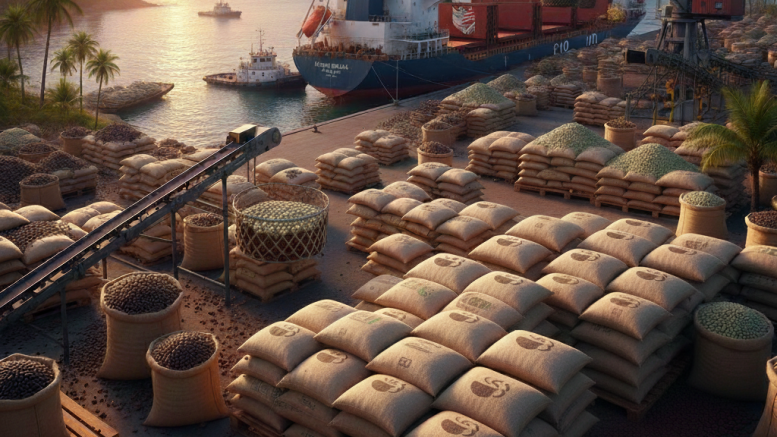
“We deeply regret the manner and neglect shown by public authorities regarding the flow of Brazilian harvests…”
Eduardo Heron is the technical director at the Brazilian Coffee Exporters Council – Cecafé and holds a degree in computer science from the Carioca University.
AgriBrasilis – With the end of U.S. tariffs on coffee, what are the prospects for Brazil?
Eduardo Heron – Considering the size of the American coffee market for Brazil and observing that the U.S. is the largest consumer of the product in the world and that we have about 30% of that market share, the exemption of tariffs for Brazilian coffee was, without a doubt, very positive.
This statement is based on the fact that roasters resumed purchasing Brazilian coffee soon after the tariff exemption, highlighting that the Brazilian product is responsible for the sweetness, body and acidity in the American blend.
Therefore, the perspectives are very positive, with Brazil continuing as the principal coffee supplier and the U.S. leading the imports of our product.
AgriBrasilis – Who gained space in the United States? How can this market be recovered?
Eduardo Heron – Our preliminar assessment does not suggest an immediate replacement of the Brazilian product, as we are talking about an additional tariff imposed in just three and a half months – about 112 days.
Our assessment is based on the increase in imports of Brazilian coffee by the U.S., which registered a 34% increase last year, achieving the record volume of 8.1 million bags imported of our product. Therefore, the U.S. was well supplied with Brazilian coffee.
Furthermore, even with the additional tariff, it should be noted that the U.S. has not stopped importing Brazilian coffee, but has reduced their purchases.
It is also worth highlighting that, during this period, the price differentials of Arabica coffees from other origins increased as well, helping to limit the immediate substitution of Brazilian coffee.
We were, of course, very concerned and apprehensive that this suspension of the tariff could last longer, especially given the occurrences of shipment delays and the arrival of the new harvest. Fortunately, this did not happen and by mid-November the Brazilian coffee received a full tariff exemption.
AgriBrasilis – How are the markets of Vietnam and Colombia and what are the consequences for Brazilian exports?
Eduardo Heron – Considering that the Brazilian coffee is responsible for the sweetness, body and acidity in the american blend, that there wasn’t a short term substitute and that those nations did not increase expressively their sales for the U.S., we understand that the scenario remains similar, with minor variations, but it is still premature to make a precise diagnosis of the impacts on market share, because the tariff exemption occurred on November 20th. We will be monitoring this scenario in the coming months to have a clearer opinion on such potential impacts.
AgriBrasilis – How are the coffee sales in Brazil and how should this affect the exports in the coming months?
Eduardo Heron – We received reports of various exporters indicating that the American roasters have returned to buy Brazilian coffee, right after the exemption. This is great news!
However, with the future market exhibiting significant volatility, presenting periods of inverted market and considering that after January we are entering the off-season cycle, we believe that those factors can influence the exports performance.
AgriBrasilis – What are the expectations related to the next harvest and prices?
Eduardo Heron – Despite favorable weather conditions in some coffee-producing regions, which contributed to improved productivity, it is still premature to make an accurate assessment of Brazil’s production at this time.
Regarding prices, we believe they are likely to remain at elevated levels, as there is no global oversupply of coffee and climatic adversities will continue to be the main ‘trigger’ guiding prices.
AgriBrasilis – How can exports be streamlined in 2026 and new bottlenecks avoided?
Eduardo Heron – We deeply regret the manner and neglect shown by public authorities regarding the flow of Brazilian harvests, especially agribusiness shipments, which account for 49% of national exports, as there are still several bottlenecks that will continue to undermine the country’s competitiveness and foreign exchange generation due to the exhaustion of Brazil’s port infrastructure.
As an example, we cite the largest port in Latin America—the Port of Santos—which, despite consecutive records in cargo handling, urgently lacks additional yard and berth capacity for containerized cargo, as well as a third access road for trucks to the Santos lowlands, a second access ramp to the primary area and incentives for the diversification of transport modes.
This scenario of exhausted port infrastructure in Santos results in coffee shipments not being carried out, lower foreign exchange inflows and leads exporting companies to face challenges due to added logistical costs arising from high levels of vessel delays, cargo rollovers, detention charges, pre-stacking and additional storage.
With the recent decision by the TCU (Brazilian Federal Court of Accounts), which maintained the restriction on the participation of shipping lines in the Tecon Santos 10 auction without a data basis or supporting evidence, and in contradiction to the principles of competition and free market, the process is expected to be judicialized. The auction, awaited for more than ten years, is likely to remain a point of uncertainty and to maintain challenges for the consolidation of container shipments at the Port of Santos.
Cecafé will continue working jointly with other agribusiness entities, providing public authorities with indicators and technical data on the need and urgency to move forward swiftly in expanding port capacity and logistical infrastructure.
Read More: