
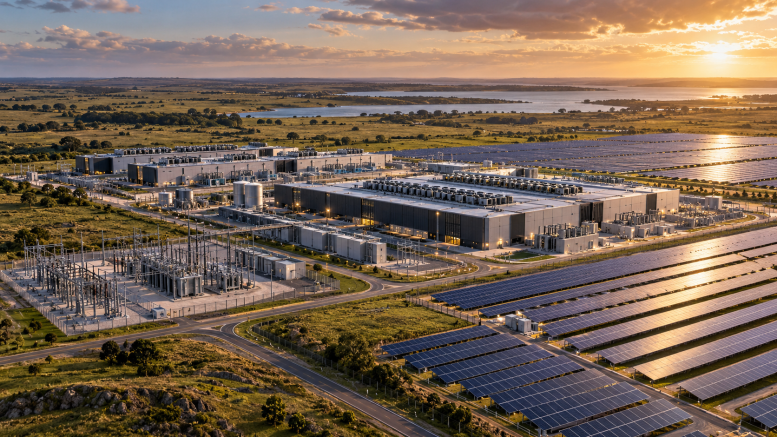
Uruguay Plans US$ 5.7 Billion Data Center Campus With 350 MW of Solar Generation
Brazil
Government of Amapá launched a tender for the concession of ten Forest Management Units in Amapá State Forest. The project, structured with the Brazilian Development Bank (BNDES), covers more than 600 K hectares and foresees for approximately US$ 126.9 million in private investment, plus approximately US$ 33.7 million for local development and forest protection. (BNDES; Government of Amapá)
Brazilian Development Bank (BNDES) approved approximately US$ 49.6 million from the Climate Fund for Belterra to establish agroforestry systems on 4 K hectares of degraded land in the Amazon, in the States of Pará and Mato Grosso. Total investment will reach approximately US$ 59.9 million, mainly for sustainable cocoa production. (BNDES)
ARCHIMED, an investment firm, acquired a major stake in Genetica Bioscience, a company based in Chapecó, State of Santa Catarina, that develops biological solutions for wastewater treatment, biogas production and crop protection. Rise Investment joined as a minority co-investor. Transaction value was not disclosed. (ARCHIMED)
Water and Land Institute will invest approximately US$ 7.8 million in 13 agroecology projects in agrarian reform settlements across 21 municipalities in the State of Paraná. Initiatives include restoration of springs, recovery of Permanent Preservation Areas and Legal Reserves, erosion control and rainwater harvesting systems. Funds originate from environmental compensation related to the 2000 oil spill at the Presidente Getúlio Vargas Refinery. (IAT; Government of Paraná)
Sanepar began a project to commercialize reclaimed water produced from wastewater treatment for industrial use in the State of Paraná. The company partnered with GS Inima to develop technical and economic studies, pilot projects and subsequent expansion in industrial hubs with high water demand. The initiative aims to reduce industrial consumption of drinking water and expand circular economy practices in sanitation. (Sanepar; Government of Paraná)
The area of Brazil affected by drought increased from 67% in August to 75% in September. Drought intensified in 14 states, mainly in the North and Northeast, while the three states in the South remained drought-free. Ten states recorded drought across 100% of their territory. (ANA)
New data on wildfires in the State of Amazonas: an IPAM survey identified 5.6 K hotspots in 19 municipalities in the Manaus region from October 4th to October 14th, compared with 149 in the same period of 2025. The federal government continues firefighting operations in the state, where it had previously reported 337 extinguished occurrences, with 462 firefighters and 13 aircraft mobilized. (IPAM; MMA)
Federal Police and Ibama carried out an operation against illegal logging, processing, storage and trade of timber in the State of Pará. Five search and seizure warrants were executed in Anapu and São Domingos do Araguaia, including at three sawmills and one timber-sector establishment. The investigation seeks to determine the possible use of timber extracted from federal public forests. (Federal Police; Ibama)
Ministry of Finance opened a public consultation for the Brazilian Sustainable Taxonomy, second edition, designed to guide investment toward activities compatible with ecological transformation. The update includes criteria related to biodiversity protection and restoration, sustainable land use, circular economy and reduction of regional inequalities. (Ministry of Finance)
Ministry of Environment and Climate Change released the first national inventory of atmospheric emissions from stationary industrial sources, with data from 2017 to 2023. For 2023, the database includes information from 11.6 K facilities in 2.4 K municipalities and covers particulate matter, nitrogen and sulfur oxides, volatile organic compounds and black carbon emissions. (MMA)
Amazon Fund allocated US$ 29.3 million to the National Institute for Space Research (INPE) to expand monitoring of the six Brazilian biomes through the SIM-Biomas project. The initiative will integrate systems such as Prodes and Deter, expand the use of artificial intelligence and create short-term indicators for risks of deforestation, degradation and wildfires. (BNDES; INPE)
Brazil recorded the lowest deforestation rates in the historical series for the Amazon and Cerrado. From August 2025 through July 2026, deforestation in the Amazon fell 41.8% to 3.34 K km², the lowest level since 1988; in the Cerrado, it declined 23.8% to 5.52 K km², the lowest level since 2001. (INPE; MMA)
Ministry of Environment and Climate Change selected ten municipalities across the five regions of Brazil to receive funding under ArborizaCidades. Each project will receive approximately US$ 200 K to US$ 400 K to expand urban tree cover, particularly in vulnerable areas, and reduce the effects of extreme heat. (MMA)
The Agriculture, Livestock, Sustainable Production and Irrigation Secretariat of the State of Rio Grande do Sul began standardizing the use of the AgroTag application to investigate bee mortality and distinguish disease-related cases from those associated with pesticide poisoning. Forty-four veterinarians and agronomists from all 15 regional offices received training in sample collection and data recording. The information will be consolidated into a data panel to support official investigations. (Agriculture Secretariat of the State of Rio Grande do Sul)

Latin America
National Parks Administration of Argentina began a new restoration phase in Lanín National Park, Neuquén Province, aiming to recover 200 hectares of Araucaria araucana forests affected by wildfires. A test conducted on 40 hectares used drones for precision aerial sowing of native seeds, a technology that may be expanded in 2027. (National Parks Administration)
Environmental Superintendence of Chile filed a serious violation against a fishing company in Puerto Montt after inspections identified failures in odor-emission controls at a fish-mortality processing unit. (SMA)
Colombia and Armenia launched the Coalition for Action to Recover Threatened Species (CARES), initially involving 16 governments. The initiative seeks to accelerate measurable actions to prevent extinctions and recover species in their natural habitats, in line with Target 4 of the Kunming-Montreal Global Biodiversity Framework. (Ministry of Environment and Sustainable Development)
Colombia obtained up to approximately US$ 24.7 million in non-reimbursable funding from Germany for ecosystem restoration and biodiversity conservation projects. The Patria Milagro initiative is expected to support nine to 18 projects involving Indigenous, Afro-descendant and farming communities. Colombia will provide an additional approximately US$ 4.0 million, with the first German disbursement expected in 1H27. (Ministry of Environment and Sustainable Development; KfW)
Mexico presented an update to the National Biodiversity Strategy, establishing 47 targets and more than 360 implementation milestones through 2030, with a long-term vision through 2050. The country also reported 215 K hectares under restoration and 50 new federal protected natural areas created during the period covered by its seventh national biodiversity report. (Semarnat; Conabio)
FIRA placed the first Biodiversity Bond of Mexico, worth approximately US$ 88.6 million with a five-year term. It is also the first instrument of its type issued by a government entity in Latin America and will finance biodiversity conservation and restoration, sustainable agriculture, soil health recovery and reductions in excessive fertilizer use. The bond was issued on October 15th and marked at the Mexican Stock Exchange on October 20th. (FIRA; Federal Foreign Office of Germany)
IFC provided US$ 222 million in financing to EDP to develop a 200 MW solar photovoltaic plant in Mexico. The transaction is part of a US$ 444 million global financing package for renewable energy projects of the company. (EDP; IFC)
Ministry of Environment of Panama announced it will mobilize more than 950 people across 66 protected areas from October 30th through November 11th. The operation will include 625 park rangers and enforcement against illegal extraction of natural resources, mining, wildlife trafficking and wildfires, as well as visitor controls. (MiAmbiente)
J.P. Morgan Natural Capital, an investment manager focused on forestland and natural assets, announced an investment of approximately US$ 200 million to develop a sustainable forestry platform in Paraguay, in partnership with Grupo Robinson. The project includes commercial forests, native forest restoration, sustainable timber production and carbon credits. Capital deployment is expected to begin in early 2027. (J.P. Morgan Asset Management)
Peru and Ecuador agreed to expand cooperation to combat illegal, unreported and unregulated fishing and strengthen enforcement and information exchange on fishery resources. The agreement is part of measures defined at the 17th Binational Cabinet of the two countries. (Governments of Peru and Ecuador)
Grupo Enhol, a Spanish renewable energy group, secured US$ 289 million in joint financing for the 467 MWp Illa solar project in southern Peru. Proparco provided US$ 40 million, while Santander structured a US$ 250 million facility. The plant is expected to begin operations in 2027, account for approximately 2.5% of national electricity supply and avoid approximately 369 K tonnes of CO₂ equivalent per year. (Proparco; Grupo Enhol)
Solaria, a Spanish solar energy company, signed an agreement to develop a data center technology campus of up to 500 MW in Uruguay. The project provides for total investment of US$ 5.7 billion, including US$ 200 million for up to 350 MW of dedicated solar photovoltaic generation. The initiative will be developed in two phases, with facilities in Canelones, San José and Florida. (Solaria; Government of Uruguay)

READ MORE: