
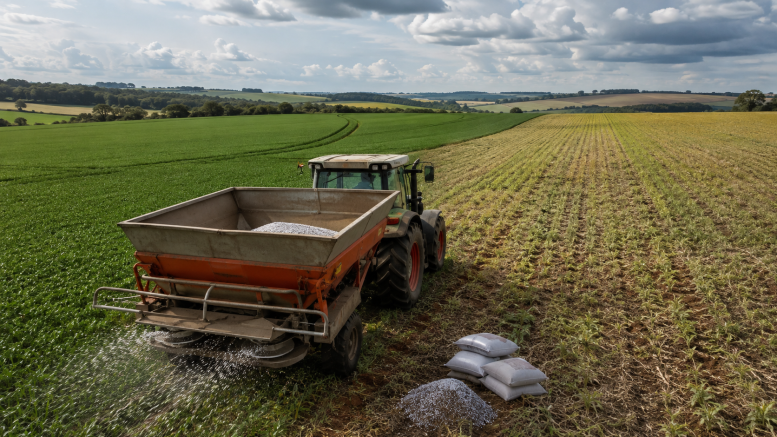
Brazil’s Phosphate Fertilizer Use Could Drop Up to 25% in 2026
Brazil
MAPA extended the deadline for uploading pesticide component registrations by an additional 90 days, including brand names, into the Unified Electronic Information, Petition and Evaluation System – SISPA, bringing the total period to 180 days, counted from May 27th. The Ordinance also established a 150-day period, starting on August 24th, for the migration of technical products with complete dossiers and equivalent technical products, and a 120-day period, starting on October 26th, for formulated products and premixes. (Official Gazette of Brazil, SDA/MAPA Ordinance No. 1676/2026 – published on August 24th, 2026)
As of August 25th, Anvisa published 88 toxicological evaluation approvals in compliance with court decisions: 74 formulated products based on equivalent technical products (FP/ETP), 12 equivalent technical products (ETP) and two formulated products containing active ingredients already registered in Brazil. The most recent approvals were for technical boscalid (Proregistros); technical picoxystrobin (Biorisk); tebuconazole 480 g/L SC (Solus); clomazone (Pilarquim); imazapyr 250 g/L SL (Brilliance); and clethodim (Biorisk). Ibama has not yet released data on environmental evaluation approvals in compliance with court decisions. (AllierBrasil; Official Gazette of Brazil, Res. 3317 to 3320 and 3342 to 3343 – published on 08/24 and 08/25/26, Anvisa)
MAPA launched a 45-day public consultation on control procedures for imports and exports of pesticides, fertilizers, seeds and seedlings. The draft introduces green, yellow and red risk-management channels for pesticide imports and would exempt analytical standards, raw materials, inert ingredients, additives and adjuvants from Ministry consent through the Single Foreign Trade Portal, except technical products and active ingredients, while retaining inspection monitoring. (Official Gazette of Brazil, Ordinance SDA/MAPA No. 1673/2026, MAPA)
MAPA has authorized José Victor Torres Alves Costa, General Coordinator for Pesticides and Related Products, to participate in the Brazil-Argentina Bioinputs Mission in Buenos Aires from August 24th to 27th. The agenda includes the “Brazil-Argentina Dialogue on Bioinputs” seminar and a technical visit to the Gorina Experimental Station, with costs covered by CropLife Brasil. (Official Gazette of Brazil, Dispatches of August 21st, 2026 – published on 08/24/26, MAPA)
ICL is investing US$ 6.8 million at a Suzano facility in the State of São Paulo, Brazil, to expand and modernize specialty fertilizer production. Approximately US$ 4.4 million is being allocated to triple granulation capacity and US$ 2.2 million to a new foliar fertilizer packaging system. The projects include automation, robotics and micro agglomeration technology. (ICL)
The bioinputs market in Brazil reached approximately US$ 1.35 billion in 2025 and could reach US$ 1.93 billion by 2030, an estimated 46% increase, according to data from the Brazilian biological industry association Anpii Bio released by Embrapa. The figures include biocontrol products, bioinoculants, nutrient mobilizers and biofertilizers. The number of companies producing bioinputs increased from 81 in 2019 to 209. (Embrapa; Anpii Bio)
MAPA and the police have seized approximately 217 tonnes of adulterated fertilizers, valued at approximately US$ 125 K, in the State of Mato Grosso. The establishment was not registered at the Ministry and inspectors found labeling and traceability irregularities, as well as indications of product manipulation with unauthorized components and use of third-party packaging. (MAPA)
Embrapa identified cultivar BRS A705 and genotype BGA 6914 as the most resistant materials to rice planthopper (Tagosodes orizicolus) among those evaluated. Regional outbreaks have happened since 2018 and can cause losses of up to 100%. According to Embrapa, no insecticide is registered by MAPA for control of the pest in Brazil. (Embrapa)
A study by Embrapa and the Federal University of Acre recorded the soybean thrips (Caliothrips phaseoli) associated with soybean for the first time in the State of Acre, Brazil. The occurrence was identified in the city of Rio Branco during a survey of pests and natural enemies in a soybean field and adjacent forest remnant. (Embrapa; UFAC)
João Augusto Silvatti was appointed as Head of Strategic Marketing for Rovensa Next in Brazil, with responsibility for growth, portfolio priorities, competitive positioning, product management, pricing, market intelligence and innovation. He previously served as Regional Marketing leader at Ihara. (Rovensa Next)
Researchers from Embrapa, Esalq/USP, Guizhou University and Oregon State University warn that calendar-based applications of biological control agents without pest monitoring or action thresholds could reproduce problems associated with excessive insecticide use. The researchers call for biological-control-specific action thresholds within IPM programs. (Embrapa; Esalq/USP; Guizhou University; Oregon State University)
According to Reginaldo Minaré, executive director of the Brazilian Bioinputs Association, well-designed regulation of Bioinputs Law No. 15070/2024 could increase annual bioinputs market growth in Brazil from an average of approximately 15% in recent years to 30%–35%. Minaré said bureaucratic requirements and slow, costly registration procedures could create barriers for smaller companies and reduce investment. (ABBINS)
Biological nitrogen fixation is used on approximately 85% of soybean area in Brazil and eliminates the need for chemical nitrogen fertilizers in the crop. According to Embrapa, the substitution generated approximately US$ 28 billion in savings in the latest harvest and avoided approximately 280 million tonnes of CO₂e emissions. (Embrapa)
More than 40 million doses of inoculants for grasses are sold annually in Brazil, according to Embrapa. In corn, these products do not fully replace nitrogen fertilizers but can increase nutrient-use efficiency and, under certain conditions, reduce nitrogen topdressing by up to 25%. (Embrapa)
Fertilizers combining a mineral matrix with microorganisms do not have yet a specific regulatory category in Brazil, according to Mosaic. The technology is already commercialized in the USA and Canada and is undergoing registration in other markets. The company says adoption in Brazil requires rules for registration, quality control and verification of microorganism survival in the mineral matrix. (Embrapa; The Mosaic Company)
Brazil Potash reported the Brazilian Supreme Court rejected on August 18th a petition by the Federal Public Defender’s Office seeking to suspend construction permits and other development activities at the Autazes Potash Project in the State of Amazonas. According to the company, previous rulings by the Federal Regional Court of the 1st Region remain in effect and project development continues. Brazil Potash plans initial capacity of up to 2.4 million tonnes of potash per year, equivalent to approximately 20% of current demand in Brazil, according to company estimates. (Brazil Potash)
Silvia Andrade Martinuzzo was appointed as head of Licensing Operations at Syngenta’s seeds business in Brazil, while Vinícius Andrade took over Supply Chain Management in the country. (Syngenta)
MAPA called for a 60-day public consultation on August 22nd regarding a proposal to establish the National Program for Prevention and Control of citrus canker, caused by Xanthomonas citri subsp. citri. (Official Gazette of Brazil, Ordinance SDA/MAPA No. 1672/2026; MAPA)
Bioma, a Brazilian biological products company, launched a fungicide with metabolic extract and lysed cells of Pseudomonas fluorescens CCT 8242. The product was registered for control of anthracnose (Colletotrichum truncatum) and target spot (Corynespora cassiicola). According to the company, it is the first fungicide in the country based entirely on microbial metabolites. (Bioma)
Brazil’s National Commission of Port Authorities recommended preferential berthing and unloading at public ports for mineral fertilizers and other crop nutrients intended for the 2026/27 season. Port authorities should seek to allow these shipments to berth within 24 hours of the vessel’s arrival notice. The six-month measure was adopted amid supply risks associated with disruptions to urea, ammonia, sulfur and phosphate trade routes. (Official Gazette of Brazil, Conaportos Resolution No. 3/2026 – published on 08/20/26)
The Interministerial Council for the “Brasil Soberano Plan” allocated US$ 388 million of the US$ 2.62 billion in federal funding to fertilizer manufacturers. On August 25th, Vice President Geraldo Alckmin announced that the sector will receive US$ 777 million in total financing under the “Brasil Soberano 3” Plan, which totals approximately US$ 3.59 billion, including US$ 971 million from BNDES. Investment and working-capital credit lines will be reviewed by the National Monetary Council on August 26th. (Official Gazette of Brazil, Resolution No. 1 – published on August 24th, 2026; ANDA)
Fecoagro, a federation of agricultural cooperatives in the State of Santa Catarina, reduced the 2026 fertilizer production forecast by 12%, from 520 K tonnes to 458 K tonnes, and lowered expected industry revenue from approximately US$ 206 million to US$ 173 million. The organization attributed the revision to lower demand for fertilizers, disruptions to global raw material supplies and uncertainty among farmers over summer crop planting. (Fecoagro)
The State of Rio Grande do Sul created exclusion zones for the use and spraying of pesticides containing 2,4-D in designated areas of Dom Pedrito, Sant’Ana do Livramento and Jaguari. Normative Instruction No. 08/2026, issued by the Secretariat of Agriculture of Rio Grande do Sul – SEAPI and published on August 24th, prohibits products containing 2,4-D within these areas. On properties partially covered by the exclusion zones, applications may only be made outside the restricted areas, subject to georeferencing, prior notification to SEAPI and a specific agronomic prescription. The rule takes effect 60 days after publication. (Official Gazette of Rio Grande do Sul, SEAPI Normative Instruction No. 08/2026)
ESALQ/USP research showed that infection of the sugarcane borer (Diatraea saccharalis) by Fusarium verticillioides alters the insect’s sexual communication and mating preferences. Males were more attracted to odors from infected females, which also showed greater acceptance of infected males. The study also identified a small change in a minor component of the sex pheromone and indicates that fungus-insect interactions may affect pest-management strategies based on chemical communication. (ESALQ/USP)
Embrapa and Efense developed a process for industrial-scale production of bioinsecticides based on blastospores of Beauveria bassiana and Cordyceps javanica. Production was scaled up to 1,200-L bioreactors, with average yields of 1.8–2.8 billion colony-forming units/mL. The formulations achieved 70%–93% mortality of fall armyworm (Spodoptera frugiperda) and whitefly (Bemisia tabaci) in laboratory and greenhouse trials and reduced B. tabaci populations in soybean during two cropping seasons. (Embrapa; ACS Agricultural Science & Technology)
Eduardo Monteiro, Mosaic’s country manager in Brazil, year, up from estimates a 20%–25% year-over-year decline in phosphate fertilizer application in Brazil in 2026. According to the executive, Brazil’s dependence on imported fertilizers is expected to exceed 90% this85% in 2025, due to lower domestic production. Monteiro also said reduced technology use could lower average agricultural productivity by 6%–7%. Mosaic reported in the 2Q26 that it is idling commodity fertilizer production in Brazil amid high sulfur costs and reduced availability. (The Mosaic Company; S&P Global)
Brazil has 6.075 million tonnes of fertilizers scheduled for import in August, according to shipping agency Williams Brasil, based on data from August 1st to 24th. The Port of Santos, State of São Paulo, accounts for 2.587 million tonnes and the Port of Rio Grande, State of Rio Grande do Sul, for 873.5 K tonnes. The volume comes amid Brazil’s high dependence on imported fertilizers and recent measures to prioritize unloading of these inputs at ports. (Williams Brasil)

Latin America
Renato Assis de Carvalho was appointed as the Vice President and Head of Crop Protection Research and Development at Bayer for Latin America, responsible for the regional research and development strategy. (Bayer)
Mike Frank will step down as CEO of UPL Corporation on August 31st. Jai Shroff, Chairman and Group CEO of UPL, will take over leadership of the global crop protection business. Ashish Dobhal was appointed Divisional President for the Americas, covering Brazil, Latin America and North America. (UPL)
Argentina confirmed the red palm weevil (Rhynchophorus ferrugineus) at a property 7 km from Colonia Elía, Entre Ríos, near Uruguay, where the pest has already been detected. The National Service for Agrifood Health and Quality of Argentina activated a contingency plan including intensified monitoring and restrictions on movement of plant material to delimit the focus and prevent spread. (Senasa)
Argentina identified a new bacterial rot disease affecting pears and apples (Rahnella aceris) in the Alto Valle region. The National Institute of Agricultural Technology of Argentina detected the disease in fruit kept in cold storage for two to eight months during the 2024 and 2025 postharvest seasons, with higher incidence in D’Anjou pears and cases also found in Packham’s pears and Red Delicious apples. All four pear varieties subsequently tested were susceptible. (INTA)
Argentina maintains a sanitary alert for the small hive beetle (Aethina tumida), a pest absent in the country. According to the National Service for Agrifood Health and Quality, all suspected samples analyzed to date have tested negative. The agency maintains border controls and an active surveillance network in areas considered potential entry points for the pest. (Senasa)
Argentina fined in US$ 29.6 K and ordered the shutdown of a facility in Rosario del Tala, Entre Ríos, where authorities identified 2,493 empty pesticide packages stored without environmental authorization or adequate containment measures. (Entre Ríos Environment Secretariat, Resolution No. 464/2026)
Corteva Agriscience appointed Marcelo Neves as Seeds & Traits License Director for Brazil and Paraguay. Neves has more than 20 years of experience in seeds, crop protection and biotechnology and previously held positions at Bayer and Monsanto. (Corteva)
The Agriculture and Livestock Service of Chile will begin enforcing new requirements for fertilizers and biostimulants on August 28ᵗʰ under Law No. 21349 and the implementing regulation. Manufacturers, importers, distributors and exporters will be required to comply with labeling, composition and quality requirements, including product identification and traceability, minimum nutrient contents, maximum contaminant limits and tolerances for analytical results. SAG also submitted amendments to three complementary resolutions for public consultation ahead of the new requirements taking effect. (SAG)
SQM, a Chilean fertilizer and mining company, updated the company’s investment plan to approximately US$ 3 billion for 2026–2028, with approximately 20% allocated to the Iodine and Plant Nutrition Division. Specialty Plant Nutrition revenue reached US$ 322.9 million in the 2Q26 (+24%), with sales volumes increasing 14%. Results were released on August 18th. (SQM)
The Secretariat of Agriculture and Rural Development of Mexico reported 97% progress in the distribution of free fertilizers to sugarcane farmers in 2026. More than 60 K tonnes of plant nutrition inputs have been delivered for approximately 200 K hectares across 15 states, benefiting 136.4 K farmers. Veracruz accounted for 24.55 K tonnes and 41% of beneficiaries reached. (Secretariat of Agriculture and Rural Development)
Paraguay started a review of the regulatory framework for bioinputs, with a technical evaluation conducted by the National Service for Plant and Seed Quality and Health in cooperation with the Agricultural Research Institute of Chile. The project seeks to strengthen rules, controls and technical capabilities for agricultural bioinputs, with a specific focus on the regulation of microbial biopesticides. (Senave)
The Ministry of Agriculture of Paraguay warned that above-normal rainfall associated with El Niño could increase fungal disease and pest pressure in crops, while also increasing nutrient losses through leaching and erosion. The government is preparing a contingency plan to reduce impacts on agricultural production in the coming months. (MAG)
The National Agricultural Research Institute of Uruguay – INIA warned of the spread of multiple herbicide-resistant Brassica rapa populations, including resistance to glyphosate, ALS inhibitors and synthetic auxins such as 2,4-D and MCPA. The weed, initially a problem in winter crops, is now also affecting soybean and corn. INIA also reported confirming over the past year glyphosate-resistant Echinochloa and Eleusine indica resistant to glyphosate and haloxyfop. (INIA)

READ MORE: