
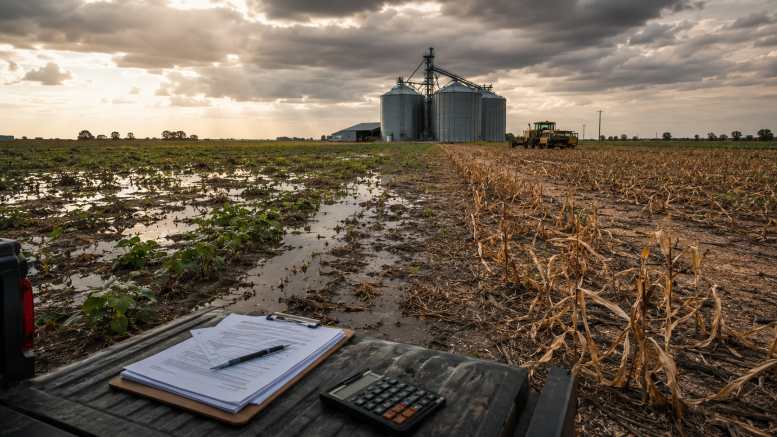
“The impact of El Niño depends on factors such as crop, phenological stage, soil, climate history, planting window…”
Vitor Ozaki is the CEO at Picsel and associate professor at Esalq/USP, an agronomist from the University of São Paulo, with a Ph.D. in applied economics from USP and postdoctoral studies at Esalq/USP. At Picsel, Ozaki leads the company’s technology, data and risk intelligence strategy focused on insurers, reinsurers, banks and other agribusiness agents.

Vitor Ozaki, CEO at Picsel
AgriBrasilis – Is it possible to measure the risks of El Niño?
Vitor Ozaki – It is possible to map the impacts of El Niño on climate, but directly measuring its effects on agricultural productivity is still challenging, especially due to the lack of quality data on a national scale and at the farm level.
In Brazil, the phenomenon affects regions differently. In the South, especially in Rio Grande do Sul and Santa Catarina, there tends to be a higher accumulated volume of rainfall, although this does not necessarily mean good distribution throughout the crop season. In the North and Northeast, the opposite occurs, with lower rainfall volumes and greater risk of drought. In the Center-West and Southeast, the effects on precipitation are more variable, but there is greater exposure to high temperatures, irregular rainfall, and severe weather events.
Even so, productivity depends heavily on crop management, technology, planting date, soil type, and agricultural planning. Even nearby plots within the same farm can show different results under the same El Niño conditions.
AgriBrasilis – Which crops and regions require more attention?
Vitor Ozaki – All crops can be affected, mainly by irregular rainfall and higher temperatures. The South, North, and Northeast regions require special attention, but the Center-West and Southeast also face risks.
In the South, higher rainfall volumes can cause delays in planting and harvesting, lower sunlight exposure, excess moisture, and greater disease pressure. Soybeans and corn may face operational problems, while winter crops, such as wheat, although exposed to a lower risk of frost, may lose quality due to rainfall close to harvest.
In the North and Northeast, especially in Matopiba, the main risk is water deficit. Irregular or delayed rainfall can compromise soybean planting and reduce the second-crop window, exposing second-crop corn to a higher risk of losses caused by drought.
In the Center-West and Southeast, the impact tends to appear more through high temperatures and heat waves. Soybeans and corn may face heat stress, while perennial crops, such as coffee, may suffer losses during sensitive stages, such as flowering and grain filling.
AgriBrasilis – What preventive measures could farmers adopt?
Vitor Ozaki – The main measure is to treat El Niño not as an isolated forecast, but as a risk scenario to be incorporated into crop planning. This requires reviewing, before planting, the sowing window, choice of cultivars, variety cycle, plant population, fertilization, soil management, drainage, irrigation when available, and harvest strategy.
In the South, the priority should be to reduce the impacts of excess rainfall, with attention to drainage, soil compaction, fungal diseases, the choice of areas less prone to waterlogging, and planning for short planting and harvesting windows.
In regions subject to drought, heat, and water irregularity, the focus should be on preserving water in the soil, adjusting the agricultural calendar, preventing critical crop stages from coinciding with periods of higher risk, and properly sizing the technology package.
It is also essential to assess the financial dimension. Farmers should simulate productivity losses of 10%, 20%, or 30%, analyze their exposure to credit, verify whether insurance covers the most likely risks in their region, and assess whether the operation could withstand a below-expected crop season without compromising the next one.
AgriBrasilis – How do AI and data help measure and price risks?
Vitor Ozaki – AI and data help transform a broad climate risk into a more specific reading of the exposure of each region, crop, farm, and portfolio.
The impact of El Niño depends on factors such as crop, phenological stage, soil, climate history, planting window, water retention capacity, management, and the farmer’s financial situation.
Data-based models make it possible to cross-reference historical series of climate, productivity, soil, remote sensing, agricultural zoning, crop calendar, loss history, and farm-level information. This makes it possible to better estimate the probability of adverse events and their economic impacts. In practice, this analysis helps assess the risk of water deficit during critical soybean stages, excess rainfall during wheat harvest, accumulated exposure in credit or insurance portfolios, and the vulnerability of farmers to an adverse crop season.
In pricing, data make it possible to calculate more precisely the frequency and expected value of losses, the risk of extreme events, and the spatial correlation of losses. They also help design more suitable coverage, avoiding treating different farmers as if they had the same risk. AI does not eliminate uncertainty, but it improves the ability to measure, compare, and update risks.
AgriBrasilis – Are credit and insurance prepared for a riskier crop season? Can El Niño worsen debt and bankruptcy protection (similar to US’ Chapter 11) cases in agribusiness?
Vitor Ozaki – The credit and insurance markets have evolved, but they are still not fully prepared for a riskier crop season. Banks, cooperatives, trading companies, input suppliers, and funds have become more selective, assessing debt levels, guarantees, payment history, and the financial capacity of farmers.
However, many analyses still give insufficient consideration to the specific climate and productive risk of the financed area. Today, the crop season does not support only the farmer’s income. It also supports rural credit, CPRs, barter operations, receivables, CRAs, FIAGROs, and other private financing structures. Therefore, a productivity loss is no longer just an agronomic problem; it has become a credit, cash flow, and portfolio risk for the entire chain.
Agricultural insurance should be a central part of this strategy, but it still has low penetration and, in many cases, coverage that is not very aligned with the reality of each farmer. In an environment of greater climate volatility, protecting the crop also means protecting the financing that depends on it.
El Niño may worsen debt and increase renegotiations or judicial reorganization (bankruptcy procetion) cases, although it is rarely the sole cause. It tends to accelerate existing weaknesses, such as tight margins, high indebtedness, elevated costs, more expensive credit, accumulated liabilities, and low protection against climate risk. When there is a loss of productivity or quality, revenue falls, cash flow comes under pressure, and the difficulty of honoring commitments increases. For this reason, financial planning, insurance, climate monitoring, and the integration of productive data into credit analysis are essential to reduce risks.
READ MORE: