
Brazil
The government of Rio Grande do Sul state has launched a public consultation on a proposed land-use classification framework for the Pampa Biome. The draft of the regulation establishes criteria for analyzing the Rural Environmental Registry (CAR), environmental licensing and native vegetation clearing permits, aiming to standardize procedures while increasing legal certainty and transparency. Public contributions will be accepted until July 16th. (Sema)
The Environmental Council of Ceará State announced that municipalities have been granted an additional 180 days to comply with state environmental regulations governing environmental licensing and enforcement. To qualify for the extension, local governments should submit an Adaptation Work Plan within 30 days of the publication of the new law. (Coema; Government of Ceará)
The Amazon Fund announced a US$ 29.3 million call for proposals to expand access to water in Indigenous communities across the States of Acre, Amazonas and Pará. The initiative is expected to benefit more than 20,800 people in 351 villages through the deployment of water collection, storage and filtration technologies, alongside sustainable livelihood and social inclusion activities. (Ministry of Environment and Climate Change; Amazon Fund)
The Brazilian government launched the Recaatingar Program, an initiative aimed to restore 10 million hectares of degraded land in the Caatinga biome by 2045. As part of the strategy, a US$ 11.7 million call for proposals was announced to support socio-productive restoration projects, funded by the Amazon Fund, BNDES and Banco do Nordeste. (Ministry of Environment and Climate Change)
The Brazilian government announced an extraordinary allocation of US$ 66 million for environmental enforcement, anti-deforestation efforts and wildfire prevention. With the additional funding, the budget for these activities reaches the highest level on record, surpassing the previous record by 24%. (Ministry of Environment and Climate Change)
The United Kingdom donated about US$ 54.5 million, finalizing a total contribution of US$107.2 million, becoming the second largest donor to the Amazon Fund behind Norway, while seven new international partners including the United States, the European Union, Japan, Switzerland, Denmark and Ireland have joined since 2023 to support actions against deforestation and promote sustainable development in the Amazon. (Ministry of the Environment and Climate Change)
The government of São Paulo state launched the São Paulo Forestry Sector Investment Guide, highlighting opportunities to expand forestry activities across the state. The publication emphasizes the availability of approximately 4 million hectares of degraded land suitable for sustainable conversion and reinforces São Paulo’s leadership in the pulp, paper, resin and biomass industries. Available at: https://encurtador.com.br/gUQa. (Agência SP)
A federal court of the State of Alagoas accepted a complaint filed by Brazil’s Federal Public Prosecutor’s Office against Braskem, former executives and technical staff involved in the Maceió land subsidence case. The lawsuit is related to the environmental and socioeconomic impacts attributed to rock salt mining operations, which led to the evacuation of entire neighborhoods in the capital of Alagoas state. (Federal Court of Alagoas)
The government of Rio Grande do Sul state reaffirmed the legitimacy of the environmental licensing process for CMPC’s Natureza Project in Barra do Ribeiro. With planned investments of US$ 5.3 billion, the project is being promoted by the state as strategic for regional development while remaining under review by environmental authorities and procedures related to potential impacts on Indigenous communities. (Government of Rio Grande do Sul)
The government of Minas Gerais state announced US$ 548 million in investments from the Rio Doce Settlement Agreement for municipalities affected by the Fundão dam collapse. The funds will support environmental restoration, water security, ecosystem recovery, flood response measures and assistance for rural producers across the Rio Doce basin. (Government of Minas Gerais)
Embrapa presented the Low-Carbon Wheat Program to the international scientific community during events held in Italy and China. The initiative aims to establish technical criteria for wheat production with lower greenhouse gas emissions and is expected to be launched in the second half of 2026. (Embrapa)
The 2026 Agro-Environmental Investment Forum is expected to detail financing mechanisms to restore up to 40 million hectares of degraded lands in Brazil. The initiative aims to mobilize public, private and international resources to expand agricultural production in already cleared areas, improve soil quality, reduce emissions and ease pressure for new deforestation. (FIAP 2026)
Embrapa is finalizing ProCarbon-Soil, the first model developed for tropical conditions capable of measuring carbon dynamics in agriculture. The tool uses only two measurable variables to estimate soil carbon stocks and stability, with the potential to increase transparency and reliability in carbon credit projects in Brazil. (Embrapa)
Rio Doce State Park in the State of Minas Gerais is implementing the Monitora Program, considered the largest standardized biodiversity monitoring initiative in Latin America. The first results recorded 543 mammals and birds, including threatened species, as well as more than 1,090 fruit-feeding butterflies. The data will support Atlantic Forest conservation efforts and help assess the impacts of climate change on biodiversity. (Agência Minas Gerais)
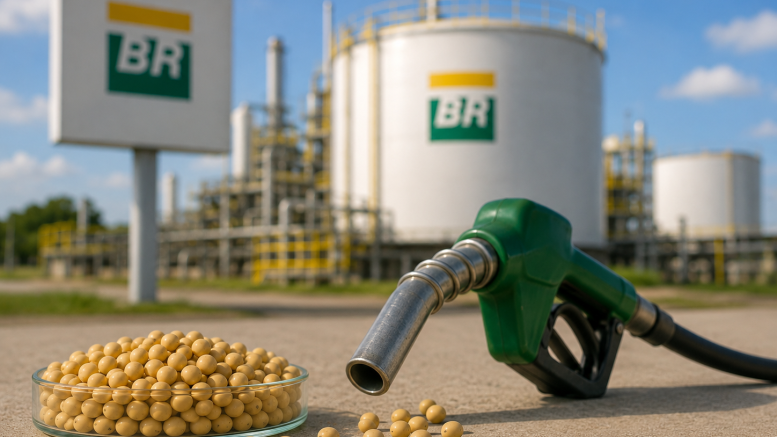
Petrobras produced and commercialized the first lot of sustainable aviation fuel (SAF), totaling 3.8 million liters obtained through co-processing at the Duque de Caxias Refinery. The fuel contains 1% renewable content, made with certified soybean oil supplied by Bunge and was sold to Vibra. The initiative aligns with Brazil’s Fuel of the Future Law, which aims to reduce emissions from domestic aviation. (Petrobras)
BNDES and Heineken Brasil signed a US$ 963,000 partnership to support ecological restoration projects through the Floresta Viva 2 initiative. The funds will be to recover degraded areas with native species and agroforestry systems across the Cerrado, Caatinga, Pantanal, Pampa and Atlantic Forest biomes. Heineken is the first private company to join the program’s new phase. (BNDES; Heineken Brazil)
Eduardo Pimentel, mayor of Curitiba, State of Paraná, was elected vice president for Latin America of C40, a global network of around 100 major cities committed to climate action and sustainable development. With the appointment, Curitiba joins the organization’s steering committee, expanding its role in international discussions on decarbonization, sustainable transport and environmental policies. (Municipal Government of Curitiba)

Latin America
Researchers from Conicet and the National University of Mar del Plata in Argentina received the Dr. José Balseiro Award for developing agricultural biostimulants from the biomass of the invasive seaweed Undaria pinnatifida. Laboratory tests showed a 50% increase in root development, a 27.5% gain in crop productivity and a 50% reduction in losses, highlighting the potential to replace synthetic inputs and support more sustainable agriculture. (CONICET; UNMdP)
The Chilean Superintendence of the Environment imposed a record fine of about US$ 4.2 million on real estate company Alto Maullín for developing a subdivision project near the Maullín River without complying with environmental assessment requirements. Authorities concluded that the company caused impacts including native forest loss and soil degradation and calculated the penalty based on the profits obtained from land sales. (Chilean Superintendence of the Environment)
BanEcuador of Ecuador announced it has US$ 253 million available to address potential impacts of the El Niño phenomenon on agriculture and livestock. The institution estimates that between US$ 8 million and US$ 13 million in loans could be affected by flooding and plans measures such as loan rescheduling, refinancing and debt restructuring for impacted producers. The bank is also preparing to issue its first US$ 10 million green bond to finance sustainable agriculture and renewable energy projects. (BanEcuador)
Researchers from the Technological University of Panama presented a study that enables the sustainable use of sludge generated at the Juan Díaz Wastewater Treatment Plant and the identification of microorganisms with biotechnological potential. The research established an ecological DNA bank and could support the development of biofertilizers, as well as improvements to the country’s sludge management regulations. (UTP)
The Dominican Republic advanced a biodiversity-in-productive-landscapes project that promoted sustainable agriculture, environmental conservation and territorial planning. The initiative trained 2,350 coffee and cocoa producers, increased certified organic cocoa production, supported more than 14,500 hectares under sustainable management and strengthened the protection of strategic ecosystems and climate resilience across the country. (UNDP)

READ MORE: