
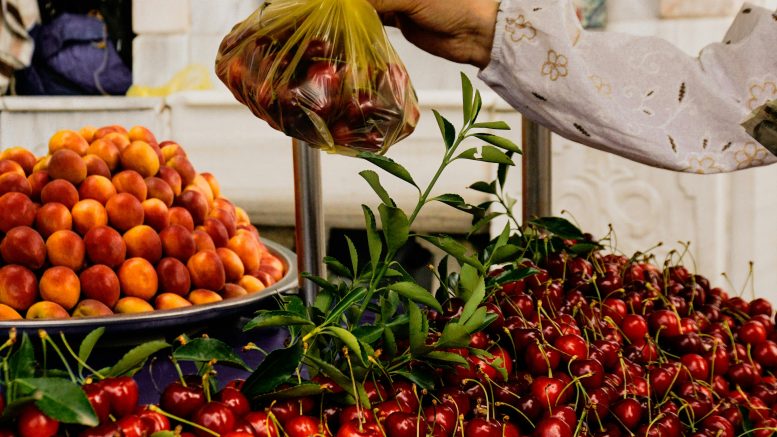
Chile Warns of Structural Crisis in Cherry Industry Linked to Oversupply

Record outflow of dollars from the country, with US$ 876 million in profit remittances abroad in March, the highest in more than 15 years. The reinvestment rate of profits by foreign companies fell to 17%, indicating a greater preference for sending resources abroad rather than reinvesting in the country. (Central Bank)
Rising beef prices are leading consumers to seek cheaper alternatives, including donkey meat. Consumption is still limited, but it reflects the loss of purchasing power. Beef consumption fell by approximately 10% in the 1Q26, reaching its lowest level in two decades. Meat and meat products remain among the main drivers of food inflation. (CICCRA; Indec)
The National Food Safety and Quality Service certified the first honey shipment to the EU under the Mercosur-EU Trade Agreement. The shipment, with 22 tonnes of bulk honey produced in Concordia, Entre Ríos, inaugurated the use of the annual 45 thousand tonnes tariff-free quota, following the elimination of the 17.3% tariff. (Senasa)
Cresud raised US$ 64.2 million in Argentina’s capital markets through two bond series maturing in 2028 and 2030, according to the company. Koneko Research points to short-term pressure on Cresud from higher imported fertilizer prices and low inventories, which could affect margins in its soybean, corn, and cattle operations. (Cresud; Koneko Research)

Brazil enacted the Mercosur Trade Facilitation Agreement, signed with Argentina, Paraguay and Uruguay in 2019. The decree aims to simplify and speed up import, export, and transit procedures for goods, with measures related to transparency, harmonization of procedures, electronic documents, risk management, and cooperation between customs and border authorities. (Presidency of Brazil)
The EU kept Argentina, Paraguay, and Uruguay on the list of countries authorized to export certain animal-origin products to the bloc, while Brazil was excluded from the update for not meeting a sanitary requirement related to the use of antimicrobials in animals. The new rule will apply as of September 3rd, 2026, and may affect Brazilian exporters’ access to the conditions provided under the Mercosur-EU agreement for beef and poultry. According to the Minister of Agriculture of Brazil, André de Paula, the country was surprised by the decision and has started technical and diplomatic talks to clarify the measure, meet European requirements, and avoid disruptions to animal protein exports. (European Commission; MAPA)
Itaú BBA lowered forecast for Brazil’s corn exports in 2025/26 from 44 million to 40 million tonnes, citing strong competition from the USA and Argentina and reduced competitiveness due to the dollar depreciation. The bank expects lower domestic supply, with the second crop estimated at 110 million tonnes and total production at 138 million tonnes, down 2% year-on-year. (Itaú BBA)
Congressman Pedro Lupion, president of the Agricultural Parliamentary Front, criticized the current Harvest Plan [Brazilian Government agricultural financing plan] and advocated for a greater role for private funding mechanisms, amid sector concerns over interest rates, credit availability and investment capacity for upcoming crop seasons. (FPA)
Tria, controlled by asset manager Patria Investimentos, announced the entry into the global sugar trading market, expanding operations beyond the energy sector. The company initially plans to trade white sugar, with complementary operations in raw sugar, while also offering structured credit, pre-harvest financing, hedging programs and access to international buyers in the Americas, Africa and the Middle East. (TRIA)
A Wheat Cultivar Trial evaluated 30 cultivars in 11 municipalities in the States of Rio Grande do Sul and Paraná during the 2025 crop season, with average yields ranging from 80 to 100 bags/ha. The Xiru Capataz cultivar led the ranking, with 100 bags/ha, followed by Borak, with 99 bags per hectare; the results are expected to support technical recommendations and studies on cultivar adaptation to different environments. (Embrapa)


Chile’s cherry industry is facing a structural crisis linked to rapid production growth, dependence on the Chinese market, logistics bottlenecks, and inconsistent quality standards. Sector associations call for greater industry coordination, supply management, and a stronger focus on quality and profitability rather than volume expansion, in order to prevent value losses at destination and returns below production costs for farmers. (Odepa; Frutas de Chile)
Chile to export 580,867 tonnes of fresh apples in 2026, up 2% from the previous season. Gala variety is expected to lead shipments, with 246,510 tonnes and 5% growth, while the Pink Lady is projected to decline by 6%. Survey included 31 companies and covered 78% of the volume exported in 2025. (Frutas de Chile)

Colombia’s Institute of Hydrology, Meteorology and Environmental Studies reported a 61% probability El Niño conditions will develop between late May and June, potentially lasting until the end of the year. Rainfall in May could be up to 70% below normal, mainly in the Andean region, which may increase hydropower generation and energy prices in the country. (Ideam)
Chickpea production remains small and concentrated in specific areas of Boyacá, Cundinamarca, Cauca, and Nariño, with only 14.5 hectares planted and 5.19 tonnes produced per year. Despite the low scale and reliance on imports (13,591 tonnes in 2025, mainly from Canada and Argentina) the National Federation of Cereal, Legume, and Soybean Farmers says that people are interested in resuming cultivation, especially in the Tenza Valley, but calls for public support, technical assistance and incentive policies. (Fenalce)
Arba Colombia, linked to Peru’s Danper group, is expected to export approximately 400 containers of Hass avocado in 2026, approximately 9,500 tonnes, after reaching more than 220 containers exported in 2025. Colombia could become the world’s third-largest avocado exporter, behind Mexico and Peru, supported by year-round production, partnerships with farmers, 250 hectares of owned orchards and gradual expansion into markets such as Europe and the USA. (Arba Colombia)


The country is facing a crisis in the banana sector after Fresh Del Monte announced the shutdown of four farms in the Atlantic Region, leaving more than 850 workers unemployed. The National Banana Corporation attributes the situation to the appreciation of the colón against the dollar, climate impacts, the spread of black sigatoka, caused by the fungus Pseudocercospora fijiensis, and limited availability of products to control pests and diseases, factors that reduced exports by 13 million boxes over the past year. (Corbana)

Cuba is seeking foreign investment for food production in Pinar del Río, amid a food crisis and fuel shortages affecting transportation, distribution and agricultural production. The Chamber of Commerce opened a call for investors in the Los Palacios Grain Agroindustrial Company, aiming to expand local production capacity. (Cuban Chamber of Commerce)

Gruma, one of the world’s largest corn processors, reported sales of US$ 1.625 billion in the 1Q26, up approximately 5% from the same period last year. Net income fell to US$ 100.6 million, compared with US$ 125.9 million a year earlier, while operations outside Mexico accounted for 72% of consolidated sales. (Gruma)
Mexico has reported 1,706 active cases of New World screwworm in 2026, an infestation caused by fly larvae, mostly concentrated in Veracruz, Oaxaca and Puebla. The sanitary crisis continues to pressure Mexico’s livestock sector and the reopening of cattle exports to the USA, while more than one million head of cattle remain backed up in northern Mexico. (Sader; Senasica; USDA)

Sonia Tomassone and Hugo Pastore, representatives of the Paraguayan Chamber of Grain and Oilseed Exporters and Traders – Capeco, were elected president and vice president of the Board of Directors of the VUE Consortium, which oversees Paraguay’s Single Export Window, a digital platform that centralizes export procedures and documents. Capeco also began negotiations with the Taiwan Vegetable Oil Manufacturers Association, led by Yau-Kuen Hung, to resume Paraguayan soybean exports to Taiwan in 2026. (Capeco)
Representatives from the National Animal Health and Quality Service carried out an official visit to the Philippines, focused on sanitary cooperation and strengthening trade relations for livestock products. The mission took place amid Paraguay’s interest in expanding markets for meat and animal-origin products. (Senacsa)

Peru hosted the 2nd Fairtrade Coffee Forum in Lima at a time of strong growth in Peruvian coffee exports. Shipments of unroasted, non-decaffeinated coffee reached US$ 131.3 million in the first two months of 2026, up 71.9% from the same period last year, driven by favorable international prices and demand for high-quality, organic and certified coffees. At the event, Fairtrade International called for certified coffee to increase its share of global trade from the current 30% to 60% by 2036. (Midagri; Fairtrade International)
Pomegranate exports reached US$ 79 million and 27 thousand tonnes in the 1Q26, up 31% in value and 25% in volume compared with the same period in 2025. The fruit was shipped to 32 markets, with strong concentration in Europe, especially the Netherlands, which accounted for 64% of export value; the USA and Canada followed. (Sunat)

The Government authorized farmers included in agricultural emergency areas to use tax credit certificates from the General Tax Directorate to purchase diesel. Decree No. 77/026 allows the assignment of these credits exclusively for fuel purchases from authorized service stations and distributors, capped at 10% of diesel purchases made between March and May of 2025. (Government of Uruguay)
A new foot-and-mouth disease vaccination campaign will be held nationwide in Uruguay, from May 15th to June 15th, for all cattle categories. Vaccine pickup will require a sworn DICOSE declaration (part of Uruguay’s livestock registration and animal movement control system), an updated sanitary form, and a suitable container to maintain the cold chain; the government will strengthen guidance on veterinary drug residues and withdrawal periods. (MGAP)

READ MORE: