
Only 5% of Household Waste Is Recycled in Brazil, Study Finds
Brazil
The National Commission for the Recovery of Native Vegetation approved national guidelines for Assisted Natural Regeneration, establishing technical criteria to accelerate the recovery of native vegetation and reduce degradation factors. The measure is part of the implementation of the National Plan for the Recovery of Native Vegetation and strengthens instruments of environmental restoration policy in the country. (MMA)
A project supported by Ibama has begun restoring springs in the São Francisco River basin, with the planting of native seedlings in the State of Minas Gerais marking the start of the initiative. The project aims to restore 2,000 hectares, with an investment of US$ 5.48 million and benefit around 300,000 people, while contributing to soil, water and Cerrado biome vegetation conservation. (Ibama)
Rodrigo Agostinho resigns as president of Ibama after a tenure marked by institutional rebuilding and progress in the environmental agenda, including reduced deforestation and strengthened staffing. Environmental Protection Director Jair Schmitt will serve as interim president until a new appointment is made. (Ibama)
The Amazon Fund launched the “Conhecer e Reconhecer” award, allocating US$ 488.2 thousand to select 50 initiatives led by Indigenous peoples, Quilombola communities and traditional communities that work to protect territories and forests in the Legal Amazon. The initiative, coordinated in partnership with the Ministry of the Environment and Change of Climate and the National Bank for Economic and Social Development, recognizes projects in areas such as territorial monitoring, environmental restoration and sustainable management. (MMA; BNDES)
Serasa Experian and MBRF (a livestock-sector company focused on socio-environmental compliance in the cattle supply chain) have partnered to monitor more than 44 million hectares in Brazil, ensuring traceability and 100% compliance across operations. The initiative uses satellite data and technical validation to track over 35,000 livestock farmers and meet environmental requirements, including international standards such as the European EUDR regulation. (Serasa Experian; MBRF)
Researchers from the Federal University of the State of Minas Gerais developed a technology that transforms plastic waste into a nanocomposite capable of increasing soil water retention, helping to combat desertification in the semi-arid region of the state. The project, led by the Center for Technology in Nanomaterials and Graphene, uses nanotechnology to convert discarded plastic into a material applied to the soil, reducing pollution and improving fertility in areas with low water availability. The initiative will be tested in municipalities in northern Minas Gerais later in 2026. (UFMG)
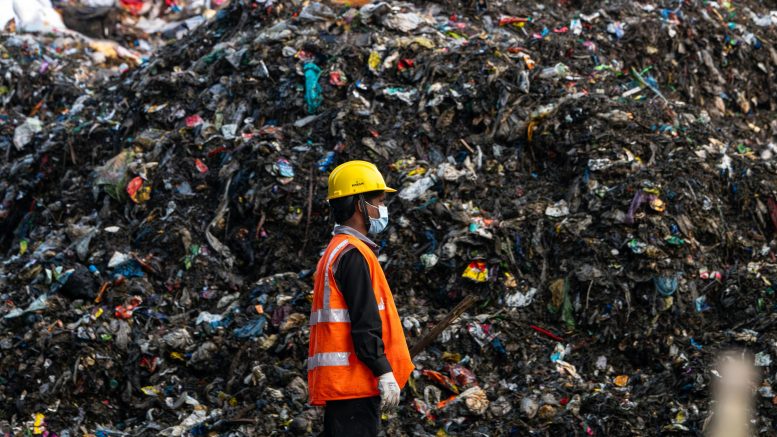
Only 5% of household waste in Brazil is recycled, while about 95% is sent to landfills or dumps, according to a study conducted by Marquise Ambiental. The research received approximately US$ 16.4 million in funding from the National Fund for Scientific and Technological Development and initial data indicate that more than half of the discarded waste consists of organic materials, in addition to recyclables such as plastic, paper and glass. The study also aims to map the potential for transforming this waste into raw materials for industry and includes plans to build a Waste Treatment and Transformation Center in Aquiraz, State of Ceará. (Marquise Ambiental)
A study by the Federal University of São Carlos analyzed changes in riparian Permanent Preservation Areas in the state of São Paulo between 1985 and 2022, showing that environmental legislation and land use have significantly transformed these areas. Over the period, forest formations expanded to cover 49% of APPs, while some areas previously used for agriculture remained under pressure. The study also identified natural regeneration in part of the territory but pointed to the growth of anthropogenic areas, especially in the metropolitan region. (UFSCar)
The National Bank of Economic and Social Development released US$ 4.11 million to restore more than 900 hectares of the Atlantic Forest in Irati National Forest, State of Paraná, focusing on sustainable management and the recovery with native species. The bank also reported that the auction for forest management concessions in the State of Pará raised more than US$ 8.22 million, enabling sustainable use, income generation and socio-environmental investments in the areas. (BNDES)
The state of Tocantins reports the “Foco no Fogo” project has been resumed, focusing on reducing wildfires in critical areas of the state, especially in regions most affected during the dry season. The initiative, coordinated by the Secretariat of Environment and Water Resources, aims to expand environmental education, prevention and enforcement actions against illegal burning, involving both urban and rural communities. Presented data indicate a 34% reduction in burned area compared to 2024, as well as a decrease in deforestation. (Government of Tocantins)

Latin America
The Senate of Chile begins voting on a bill that strengthens and modernizes the enforcement of environmental regulation, focusing on streamlining processes, increasing public participation in the Environmental Assessment Service and reducing project review timelines. The proposal also includes changes to the governance of the environmental licensing system and new tools, such as the assessment of cumulative impacts. (Senate of Chile)
Biologist Tomás Saratscheff is appointed National Director of the Biodiversity and Protected Areas Service (SBAP) in Chile, the agency responsible for the management and conservation of protected areas, following the start of the service’s operations in February 2026. The appointment was made by the government of President José Antonio Kast and is part of the institutional implementation process of the SBAP, with a focus on managing national parks and biodiversity conservation. (Government of Chile)
The Government of Colombia allocates more than US$103.5 million to promote regional sustainable energy projects as part of a national call that funds research, development and innovation initiatives aimed at a just energy transition. The program includes 24 projects focused on renewable energy sources, emerging technologies and social inclusion, strengthening equitable access to clean energy in the country. (Government of Colombia)
The Government of Colombia declared a temporary reserve in the Sierra Nevada de Santa Marta, protecting more than 942,000 hectares considered strategic for biodiversity, water resources and Indigenous communities. The measure bans new mining and hydrocarbon concessions for two years as a preventive action against environmental pressures. (Ministry of Environment of Colombia)
The Government of Ecuador allocated US$450,000 to Amazonian organizations in the province of Zamora Chinchipe to strengthen sustainable production and the bioeconomy in rural areas. The funds, channeled with support from the FAO, will help improve traceability, add value to products such as cocoa, guayusa and Amazonian cinnamon and strengthen the technical and financial capacities of the beneficiary organizations. (Government of Ecuador)
The United Nations Development Programme reports that it supported a workshop aimed at developing indicators for tourism sustainability and biodiversity conservation in Oaxaca de Juárez, Mexico. A total of 38 indicators were developed across economic, environmental, social, governance and mobility areas, which will serve as a basis for monitoring tourism impacts and supporting the advancement of a more sustainable model in the region. (PNUD)
Federal court in Mexico orders the Federal Attorney for Environmental Protection to initiate procedures under the Federal Environmental Liability Law and take urgent measures to contain and repair the damage caused by a hydrocarbon spill in the Gulf of Mexico, which affected coastal areas in Veracruz and Tabasco. The ruling also requires containment, cleanup and protection actions for impacted natural areas. (Mexican Federal Court)
The Norwegian company Statkraft has submitted documents to the National Service for Environmental Certification for Sustainable Investments for the Flug wind project, valued at US$487 million and with a planned capacity of 217 MW, in the Lambayeque region, Peru. The initiative strengthens the expansion of renewable energy sources in Peru’s energy matrix, contributing to the reduction of greenhouse gas emissions and to the energy transition. (Statkraft)
The National Service of Meteorology and Hydrology of Peru warns of a possible global El Niño event and rising temperatures along the Peruvian coast through the end of 2026, with projections of Pacific warming that could increase temperatures by 1°C to 2°C in the northern and central regions of the country. The warm conditions are expected to persist at least until December, with potential intensification if the event develops into a moderate El Niño. (Senamhi)

Read more: