
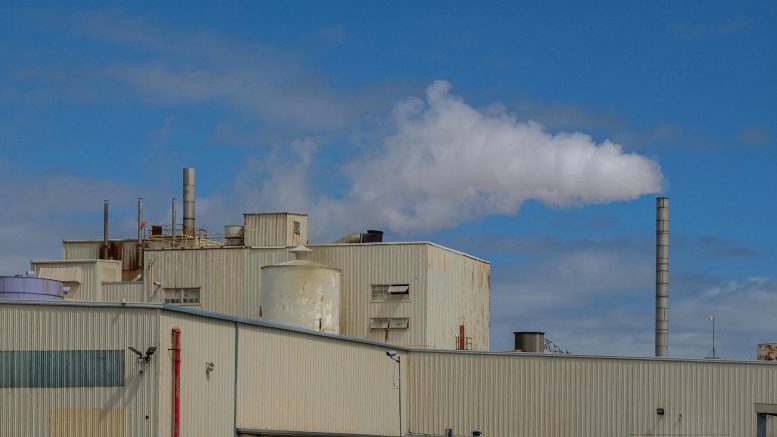
Chile Imposes “Green Tax” on 105 Companies for Exceeding Emissions Limits
Brazil
The Amazon Fund will allocate US$ 68 million to support socio-bioeconomy and innovation projects in the Amazon Region, focusing on production inclusion, strengthening cooperatives and scientific development. The initiative is expected to benefit more than 5,000 families, around 60 cooperatives and support value chains such as açaí, babaçu, Brazilian nuts, and cupuassu, while also boosting science and technology projects in the region. (MMA)
COP15 on migratory species expanded protection for 40 species by adding them to Appendices I and II of the Convention on Migratory Species (CMS), with 16 occurring in Brazil. The conference also approved conservation actions, plans for species such as Amazonian catfish, and strengthened international cooperation to protect migratory routes and habitats. (MMA)
The São Paulo State Government expanded environmental satellite monitoring, increasing territory analysis capacity ninefold and identifying more than 5,300 hectares with vegetation changes between 2023 and 2025. The initiative strengthens enforcement, with 91% of the areas already inspected in the field and enhances the use of geotechnologies for environmental protection. (São Paulo State Government)
The State of Mato Grosso do Sul is advancing in the energy transition implementing an Atvos biomethane plant in the city of Nova Alvorada do Sul, with an investment exceeding US$ 68 million. The facility will have the capacity to produce 28 million cubic meters per harvest, replacing up to 25 million L of diesel/year and reducing CO₂ emissions. (Mato Grosso do Sul State Government)
The Federal Public Prosecutor’s Office and the Public Prosecutor’s Office of the State of Mato Grosso have filed an appeal to ensure the protection of the Reserva Extrativista Guariba-Roosevelt. The agencies seek to annul an agreement that relaxes restrictions and allows private occupation within the area, which is originally designated for sustainable use by extractivist communities. According to the appeal, the decision creates legal uncertainty, threatens traditional rights and may increase environmental pressure on the reserve, which is already facing rising deforestation and risks to isolated Indigenous peoples. (MPF)
The State of Paraná and the Far South Regional Development Bank (BRDE) advanced their pilot biodiversity credits project by signing commitments with seven private reserve areas. The initiative compensates landowners for environmental conservation through the generation of credits, ranking the State as a pioneer in using this economic instrument for preservation. (Government of Paraná)
The Government of the State of Paraná announced the expansion of the Paraná Mais Verde program, aiming to increase by 20% the number of available seedling species by 2027. The initiative is expected to reach around 190 native species produced by nurseries and laboratories of the Water and Land Institute, strengthening environmental restoration and biodiversity conservation efforts. The plan includes the incorporation of endangered and high ecological value species, as well as partnerships to expand production and technical knowledge. (Government of Paraná)
The Supreme Federal Court of Brazil ruled, in the judgment of ADI 7394 (a legal action that challenges the constitutionality of laws), that the Forest Management Law cannot be interpreted to allow forest concessions on lands belonging to Indigenous peoples, quilombola communities and other traditional groups. The Court established that these areas are for the permanent possession and exclusive use of these populations, prohibiting exploitation by private companies, although partnerships may be allowed under specific conditions. (STF)
The Brazilian Development Bank presented the results of the Union with Municipalities program, which involves investments of US$ 156.7 million to combat deforestation in the Amazon region. The initiative already covers 70 municipalities and includes actions such as land regularization, technical assistance and payments for environmental services, benefiting family farmers and strengthening environmental governance in the region. (BNDES)
The Brazilian Development Bank and The Chico Mendes Institute for Biodiversity Conservation have established a partnership to invest up to US$ 15.4 million in protecting biodiversity in federal conservation units. The initiative includes actions such as island restoration, protection of endangered seabirds, control of invasive species and strengthening environmental management, with five projects already selected in strategic regions across the country. (BNDES)
A report from Imazon indicates deforestation in the Amazon region fell by 42% in February 2026 compared to the same month the previous year, reaching its lowest level for the period in eight years. The deforested area decreased from 119 km² to 69 km², with notable reductions in states such as Pará, Amazonas and Acre, although Roraima recorded an increase. (Imazon)
The Federal Government has started using data from the National Institute for Space Research (Inpe) as a reference for verifying deforestation in the granting of rural credit. The new rule from the National Monetary Council uses information from the Prodes system, a satellite monitoring system that annually maps the loss of native vegetation, to support the environmental compliance analysis of rural properties. Under this measure, financial institutions must verify the occurrence of illegal deforestation in properties larger than four fiscal modules, considering records dated after July 31, 2019. (Government of Brazil)

Latin America
The Ministry of the Environment of Chile announced the Council of Ministers approved three renewable energy projects, unlocking more than US$ 1 billion in investments. The initiatives include wind farms and solar power plants located in the regions of Biobío, Ñuble, Tarapacá and Antofagasta, all connected to the National Electric System through transmission lines, after confirmation of their favorable environmental approval. (MMA)
AES Andes, an electricity power producer and distributor in Chile, had a fine of approximately US$ 190.3 thousand upheld by the courts for failing to reduce sulfur dioxide emissions during an environmental alert episode in Quintero and Puchuncaví in 2023. At the time, pollution levels reached critical thresholds, requiring an 11% reduction in the plant’s emissions under the applicable environmental plan – a measure that was not implemented. The company argued that it had not been formally notified, but the court rejected the claim, stating that the obligation to reduce emissions is automatic once alert levels are reached. (Second Environmental Court of Santiago)
The Superintendence of the Environment of Chile released a list of 105 facilities that exceeded emission limits in 2025 and will have to pay the so-called “green tax.” The tax applies to companies that surpass thresholds for pollutants such as particulate matter, nitrogen oxides, sulfur dioxide, and CO₂, aiming to discourage pollution and promote more sustainable practices. (SMA)
Researchers from the Pontifical Catholic University of Valparaíso, Chile, are developing a project to transform CO₂ into formic acid, a clean fuel, using biotechnology and agricultural waste such as rice husks. The initiative uses a bioelectrocatalytic system that combines enzymes and electricity to convert the gas into energy, within a circular economy approach. The project seeks to turn CO₂, typically treated as a pollutant, into an energy resource. (UCV)
The National Environmental Certification Service for Sustainable Investments (Senace) of Peru reported it reduced environmental evaluation term by up to 46% to accelerate project certification. The improvement was achieved through digital transformation, the use of artificial intelligence, and greater institutional coordination, with progress in sectors such as hydrocarbons, mining, transport, and solid waste. The initiative aims to make processes more agile without compromising technical rigor. (Senace)

Read more: