
Brazil to Unveil Wildlife Collision Map at COP15
Brazil
Government of the State of Acre said that the deforested area in the 2024/25 season totaled about 320 km², 43% below the 572 km² target set in the state prevention and control plan. The government also highlighted Operation Amburana, which in its first stage inspected 94 deforestation alerts, embargoed 684.665 hectares, seized 24 cubic meters of illegal timber and imposed about R$ 3.4 million in fines. (Government of Acre)
Itaúsa Institute said it invested US$ 9.93 million in 55 projects throughout 2025, in partnership with 44 organizations, focusing on transitions related to land and water use, food systems, energy, materials and urban systems. (Itaúsa)
Suzano approved the second issuance of financial settlement Rural Product Notes (CPR-Fs) totaling up to US$ 470 million. The proceeds will be used to support the establishment and management of planted forests as well as the conservation of native forests linked to the company’s operations. (Suzano Papel e Celulose)
Survey on the ESG agenda in Latin America found that 85% of Brazilian companies ranked corporate governance and/or ESG risk management as their top priority in 2025, while 50% still report difficulties in measuring indicators or a lack of internal technical capacity. The study also shows that only 13% of companies in Brazil consider themselves prepared for IFRS S1 and S2, international standards for reporting sustainability-related financial information and climate-related risks. (RSM)
Ministry of Environment and Climate Change allocated US$ 970.9 thousand in payments for environmental services to 368 family farmers in the State of Amapá through the “Floresta+ Amazônia” [Forest+ Amazon] project. The initiative, implemented with the United Nations’ Development Programme, compensates farmers for conserving forest areas totaling 19,100 hectares in this round. (Ministry of Environment)
The Ministry of Environment and Climate Change supported the installation of environmental governance offices in 70 municipalities in the Amazon to strengthen monitoring and control of deforestation and forest fires. The initiative includes technical support, team training and the delivery of more than 1,800 pieces of equipment to local governments. (MMA)
The Ministry of Environment and The Ministry of Transport released the National Road Vehicle Atmospheric Emissions Inventory, covering the period from 1980 to 2024. The report compiles data on pollutants from road transport, including methane and black carbon and shows the evolution of the national fleet, which surpassed 71 million vehicles in 2024. CO₂-equivalent emissions from the sector increased about 8% between 2012 and 2024, totaling 270 million tonnes in 2024. (MMA)
The Ministry of Environment and Climate Change released the draft framework for the Green and Resilient Cities Program, which sets guidelines and targets to strengthen climate adaptation in Brazilian cities. The plan aims to increase adaptive capacity in 35% of municipalities, expand urban green cover by 180,000 hectares by 2035 and gradually boost non-motorized mobility, such as walking and cycling. (MMA)
Ibama and ICMBio seized about 15,000 m³ of sawn timber and imposed US$ 21.36 million in fines in the State of Pará during Operation Maravalha. The operation inspected 70 sawmills, identified irregularities in 53 companies and blocked about 20,000 m³ of forest credits suspected of fraudulent origin. (Ibama)
The Government of the State of São Paulo inaugurated Brazil’s largest biomethane plant in the city of Paulínia, with a nominal capacity of 225,000 m³/day. The facility, named OneBio, is a partnership between Edge and Orizon, produces biomethane from biogas generated from urban solid waste and is part of the state’s biomethane infrastructure, which totals about 700,000 m³/day across nine operating plants. (Semil-SP)
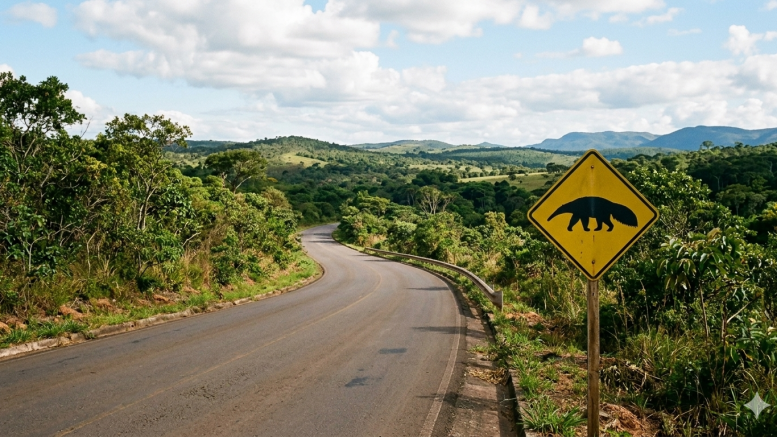
The Public Prosecutor’s Office of the State of Mato Grosso do Sul will launch the Wildlife Collision Map at the COP15 of the Convention on Migratory Species. The georeferenced digital platform identifies critical hotspots of wildlife roadkills on highways and in urban areas. (MPMS)
The Government of the State of Mato Grosso do Sul allocated more than US$ 1.18 million to sustainable projects in the Pantanal Biome through the PSA Bioma Pantanal – PSA Brigades program. The funds were directed to 13 projects run by seven NGOs, focused on wildfire prevention, biodiversity conservation and support for traditional communities in the region. (Semadesc-MS)
The Federal Public Prosecutor’s Office opened an administrative procedure to investigate failures in climatic disaster prevention and response in the municipalities of Juiz de Fora and Ubá, in the State of Minas Gerais, after extreme rainfall hit the Zona da Mata region. The initiative aims to verify the implementation of the National Climate Change Plan and assess whether national guidelines for managing climate-related crises were properly applied. (MPF)
The Federal Public Prosecutor’s Office obtained a court order to freeze US$ 2.2 million in assets belonging to five individuals investigated for illegal mining in the Sete de Setembro Indigenous Territory, located in the municipality of Rondolândia, in the State of Mato Grosso. The measure, related to Operation Olhos Fechados, aims to ensure future compensation for environmental damages caused by illegal mining in the protected area. (MPF)
The Government of the State of Amazonas established the Legal Reserve Credit Bank, a system to register and manage environmental credits generated from the donation of properties located in Conservation Units to the government. The mechanism establishes that each hectare of land donated within these areas generates an Environmental Reserve Quota, which can be used by rural landowners to offset legal reserve deficits on properties located within the same biome. (Sema-AM)
The Amazonas Institute of Environmental Protection issued US$ 111,5 thousand in fines and embargoed 115 hectares during Operation Tamoiotatá 6 in Humaitá, State of Amazonas. The inspection identified deforestation, violation of environmental embargoes and unlicensed agricultural activities along the BR-230. As a result, two embargo orders were issued, prohibiting activities until environmental compliance is achieved. (Ipaam)
The federal government has begun drafting the National Cooling Action Plan, an initiative coordinated by the Ministry of the Environment and Climate Change in partnership with the United Nations Environment Programme to address rising extreme heat in the country. The plan aims to expand access to efficient, low-emission cooling solutions and integrate policies on climate adaptation, energy efficiency and urban planning. (MMA)
The Government of the State of Rio Grande do Sul granted a preliminary license for the construction of a biodiesel plant by the Soli3 cooperative in the municipality of Cruz Alta. The project, announced during the Expodireto Cotrijal 2026, involves an investment of about US$ 240 million and is expected to generate around 250 direct jobs. The plant is projected to begin operations in 2028, with estimated annual revenues of about US$ 423 million. (Sema-RS)
The Supreme Federal Court determined that the federal government must clarify, within ten days, the implementation of environmental policies and the management of resources from the National Environment Fund, within the scope of ADPF 743. The decision seeks to verify possible budget contingencies that could compromise actions to combat deforestation and forest fires in the Amazon and the Pantanal Biomes. The court also ordered the notification of Rural Environmental Registry registrations overlapping with Indigenous lands and conservation units so that inconsistencies can be corrected. (CNM)
Riverside communities and farmers reported legal uncertainty and work restrictions in the Terra do Meio Ecological Station, in the State of Pará, during a hearing at the Senate Human Rights Commission. Representatives of the Chico Mendes Institute for Biodiversity Conservation stated that the protected area has helped reduce land grabbing and deforestation in the region. Residents claim a lack of land tenure regularization and limitations on productive activities, while the environmental agency said that some activities are allowed with prior authorization. (Agência Senado)
The Ministry of the Environment launched the Action Plan to Combat Desertification and Mitigate the Effects of Drought, which includes 175 actions and 38 strategic objectives for the next 20 years. The initiative aims to reduce land degradation, mitigate drought impacts and address the effects of climate change. The plan could benefit about 39 million people in more than 1,600 municipalities susceptible to desertification. (Ministry of Environment)

Latin America
The University of Chile published the Country Report 2025, which concludes that the country’s environmental problems have already surpassed the State’s response capacity. The report analyzes issues such as air quality, water, biodiversity and native forests, and warns about the need for structural changes in public policies and the development model to address the climate crisis. Available at: https://gobierno.uchile.cl/publicaciones/237544/informe-pais-2025 (University of Chile)
Chile’s Environmental Assessment Service and the University of Chile launched the digital platform CarbonSink-Chile, which uses satellite data and mathematical models to estimate carbon stored in natural ecosystems and assess potential impacts of investment projects. The SEA also announced the entry into force of two new guidelines for environmental assessment: one for estimating and reporting climate emissions and another establishing criteria for evaluating birds and bats in energy projects. The measures aim to expand environmental data availability and standardize assessment and mitigation criteria in project evaluations. (SEA Chile)
The Ministry of Environment and Sustainable Development of Colombia announced the renewal of a cooperation agreement with Germany, Norway and the United Kingdom to protect Colombia’s forests until 2030. The partnership recognizes a reduction of more than 30% in deforestation over the past three years compared to 2021 and foresees international cooperation for forest restoration, biodiversity economy initiatives and strengthening environmental monitoring. (Ministry of Environment)
Colombia’s Ministry of Environment adopted a new technical guide to identify and protect aquifer recharge zones in the country. The tool establishes a national methodology to map areas where groundwater recharge occurs, helping guide decisions on land and subsoil use. The document was developed with support from the Colombian Geological Service and the Institute of Hydrology, Meteorology and Environmental Studies. (Ministry of Environment)
Paraguay announced the creation of the Chamber for the Development and Trade of Carbon Credits, the country’s first business entity dedicated to the carbon credit market. The initiative brings together companies from the sector and includes the participation of the Ministry of Environment and the Paraguayan Industrial Union. The new chamber aims to strengthen the legal framework for the generation, registration and commercialization of carbon credits. (Ministry of Environment)
The Ministry of Environment and Natural Resources of the Dominican Republic announced the start of the closed season for several marine species to ensure their reproduction and conservation. The measure temporarily bans the fishing and commercialization of species such as lobsters and different types of crabs between March and June. (Ministry of Environment)

Read more:
Illegal Seeds Market in Brazil Reaches 11% of Soybean Area