
Extreme El Niño Could Cost Latin America 2% of GDP
Brazil
The Brazilian Chamber of Foreign Trade formalized the Socio-Environmental Analysis Report for Export Operations (RASOE), a document issued by the Agro Brasil + Sustentável platform that consolidates environmental, land tenure, territorial and labor data from rural properties to support verification of the origin and legal compliance of agricultural products for export. The instrument may support exporters facing the EU Deforestation Regulation (EUDR), which starts applying on December 30th, 2026 for large and medium-sized operators and on June 30th, 2027 for most micro and small operators. (Camex; Ministry of Agriculture and Foreign Affairs Ministry)
Mombak, a Brazilian carbon removal company focused on forest restoration, secured approximately US$ 39 million from the Brazilian Development Bank – BNDES through the Climate Fund and launched the company’s second fund, targeting US$ 150 million. The new operations could mobilize nearly US$ 190 million for Amazon restoration. The first fund and previous financing have already supported reforestation across 27 K hectares. (Indústria Brasileira de Árvores – Ibá)
Ibá reported that the Brazilian planted tree industry maintains more than 10 million hectares of productive forests. Together with areas conserved by companies, these lands store the equivalent of 5.1 billion tonnes of CO₂. The paper recycling rate reached 59.1% in Brazil. (Indústria Brasileira de Árvores – Ibá)
Rainforest Alliance reported that 50 K hectares of coffee are already certified under the regenerative agriculture standard, in Brazil, representing production of 1 million bags. The organization projects up to 80 K hectares and 1.6 million bags certified by the end of 2026. (Rainforest Alliance)
Drought intensified in 17 States between July and August. The affected area in the State of Amazonas increased from 60% to 94% and in the State of Ceará from 30% to 88%, while the states of Acre, Espírito Santo, Piauí and Roraima and the Federal District recorded drought across 100% of their territories. Drought affected 90% of the Northeast, while the South was completely drought-free. (National Water and Sanitation Agency)
The National Center for Monitoring and Warning of Natural Disasters warned of flood risks in the Taquari, Caí and Sinos river basins in the State of Rio Grande do Sul following accumulated rainfall and forecasts for additional precipitation. Instability also increased flash flood risks in the State of Santa Catarina, while rainfall is expected to continue in the states of Paraná, São Paulo, Rio de Janeiro and Minas Gerais. (Cemaden)
The Chico Mendes Institute for Biodiversity Conservation opened a consultation to update extinction risk evaluations for approximately 190 troglobitic invertebrate species, animals adapted to and dependent on underground environments such as caves. Contributions will be accepted through November 15th and will support the update of the threatened species list. (ICMBio)
The Brazilian Agribusiness Association presented a study prepared by Carbonn Nature estimating potential generation of up to 314.3 million carbon credits by Brazilian agribusiness between 2025 and 2035. In one of the scenarios, authorization to sell 15% of these credits could generate approximately US$ 1.4 billion through ITMOs or US$ 2.1 billion in the international aviation carbon market, although the estimates depend on credit generation, prices, demand and government authorization. (ABAG; Carbonn Nature)
The Brazilian GHG Protocol Program, operated by the Center for Sustainability Studies at Fundação Getulio Vargas, registered 757 organizations participating in the 2026 cycle, up 12%, and approximately 1.45 K inventories covering 2025 emissions. Participating organizations reported 213 million tonnes of CO₂ equivalent in direct emissions. Among respondents to the survey question on targets, 62% reported having voluntary mitigation targets. (Brazilian GHG Protocol Program; FGVces)
Research from the Federal University of Paraná identified a negative correlation between Amazon deforestation and rainfall in the Iguaçu River Basin, in the State of Paraná. The study analyzed data from 2011 to 2023 and records from 64 weather stations, indicating that periods of higher deforestation were associated with lower rainfall in a region important for agriculture, water supply and hydropower generation. (Federal University of Paraná; Brazilian Journal of Biology)
The Brazilian Development Bank approved approximately US$ 35 million to finance two biomethane plants developed by GNR Mauá and GNR Vila Velha, companies formed by MDC Energia and Grupo Lara, in the states of São Paulo and Espírito Santo. The projects represent approximately US$ 48 million in total investment and will have capacity to produce 97 K m³ of biomethane per day from landfill biogas. Output will be sold to Ultragaz under long-term contracts. (BNDES; MDC Energia)
Petrobras began using technical corn oil, a residue from corn processing for ethanol production, as a feedstock for asphalt with renewable content at the Henrique Lage Refinery in São José dos Campos, State of São Paulo. The refinery has produced 95 K tonnes of the product since June, and the feedstock supplied by Inpasa is also used by Petrobras in sustainable aviation fuel and Diesel R. (Petrobras)
The Federal Environmental Compensation Committee approved approximately US$ 86 million for protected areas across 19 states. Resources may finance land tenure regularization, infrastructure, restoration of degraded areas, enforcement, research and monitoring. Approximately US$ 101 million has been authorized in 2026 and allocations since 2023 total approximately US$ 410 million. (Ministry of Environment and Climate Change)
BRK | SANEATINS, a sanitation utility in the State of Tocantins, partnered with Fazenda Regenerativa Fertilizantes Kairós to transform sludge from water and wastewater treatment in fertilizer. The material undergoes sanitization and composting to produce biosolids, reducing waste disposal in landfills. (BRK | SANEATINS)
The Business Front for Agricultural Regeneration, whose network includes 14 K farmers and sector organizations, launched a national campaign to expand regenerative agriculture in Brazil. The initiative identifies access to credit, technical assistance and markets as conditions for scaling practices focused on restoring soils, pastures and degraded areas. (FERA)
The Federal University of Western Pará began developing the Sentinela da Mata project with Embrapii’s Bioforest unit to monitor extractive reserves in the State of Pará and increase traceability across Amazon bioeconomy supply chains. The system will use devices to detect suspicious movements, blockchain records, real-time alerts and future acoustic detection of chainsaws and fires. (Ufopa)
The Federal Highway Police concluded an operation against environmental crimes across nine states in Brazil, seizing approximately 1 K m³ of illegal timber, 135 tonnes of ore and 35 tonnes of shrimp and rescuing 267 wild animals. The operation also involved Ibama, ICMBio and state environmental agencies. (PRF) – tem que falar por completo o que é ICMBIO não só a sigla
A federal court ordered a farmer to restore 145.81 hectares of degraded land within the Marãiwatsédé Indigenous Land, in the State of Mato Grosso, and imposed compensation for collective moral damages. The case involved obstruction of native forest regeneration and continued soybean cultivation after an environmental embargo. (Federal Prosecution Service)

Latin America
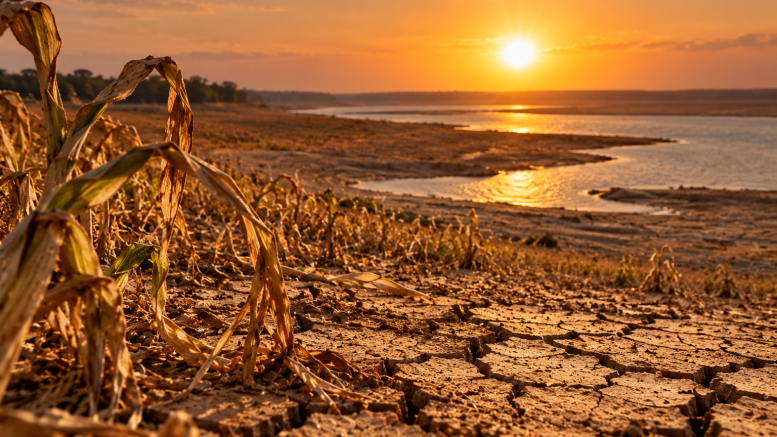
The Economic Commission for Latin America and the Caribbean estimated an extreme El Niño event could cause cumulative losses of at least 2% of GDP in Latin America and the Caribbean over three years and push an additional 4.8 million people into poverty by the end of the decade. Agriculture, fisheries, energy and infrastructure are among the sectors most exposed to the economic impacts. (ECLAC)
Climate Policy Initiative estimated climate finance in Latin America and the Caribbean doubled from US$ 54 billion in 2020 to US$ 108 billion in 2024. Despite the increase, fossil fuel investment reached US$ 95 billion in 2024, more than twice the US$ 43 billion in climate finance directed to energy systems. Agriculture, forestry and land use remain among the areas with the largest financing gaps. (Climate Policy Initiative)
The Global Innovation Lab for Climate Finance opened a new call for financial instruments targeting climate projects in Brazil and Latin America and the Caribbean. Solutions supported by the program have already mobilized more than US$ 5 billion in capital for climate projects across emerging markets. (Global Innovation Lab for Climate Finance)
The National Institute of Agricultural Technology reported that incorporating rapeseed, carinata and camelina into winter crop rotations in Argentina can improve water infiltration, allow earlier field availability and reduce environmental risks. Trials also recorded better results for second-crop soybeans and corn compared with wheat-based sequences. (INTA)
The Corrientes unit of the National Institute of Agricultural Technology, in Argentina, is advancing genetic selection of Nile grass for livestock systems exposed to flooding and excess moisture. Approximately 100 materials are under evaluation, ten advanced to larger plots and five were delivered to farmers for testing, with a focus on faster establishment, vigor and soil cover. (INTA)
The government of Bolivia presented to the World Bank the progress on the new Climate Finance Framework Law and a proposed forest sector reform. The World Bank reaffirmed technical and financial support through the Raíces project, focused on environmental governance and sustainable forest-related value chains. (Bolivia Ministry of Sustainable Production, Environment and Water)
The United Nations Development Programme and the Bolivian government launched a US$ 131.83 million project to protect the Amazon and strengthen communities, covering more than 25 municipalities. (UNDP)
Wildfires affected two protected areas in Colombia. More than 20 hectares of páramo were affected in Los Nevados National Natural Park before the fire was controlled, while approximately 290 hectares had been affected in the Iguaque Fauna and Flora Sanctuary, where the fire remained active as of September 21st. (Colombia National Natural Parks)
The Environmental Superintendency of Chile fined San Fernando Fishing Company and Salmones Captrén after detecting violations involving industrial wastewater treatment and discharge. At Salmones Captrén, chloride discharge into waterways exceeded the permitted limit by more than 4,600%. (Environmental Superintendency of Chile)
Copec EMOAC, an energy solutions and management subsidiary of Chilean energy company Copec, signed an agreement to supply 100% renewable electricity to Weir Minerals operations in Chile. The company estimates that the agreement will avoid approximately 4.64 K tonnes of CO₂ equivalent, supporting decarbonization of the mining equipment manufacturer’s operations. (Copec)
Environmental and naval authorities in Paraguay and Yacyretá launched a special operation along the Paraná River to protect dorado and boga fish during reproductive migration. Enforcement includes fishing licenses, registrations and compliance with minimum permitted capture sizes. (Mades; Yacyretá)

READ MORE: