
Brazil Is Poised to Become a Major Global Carbon Hub
Brazil
Eliana Fontes, researcher at Embrapa and scientific coordinator of the Regenera Cerrado project, presented the initiative’s results at the 17th Brasil AgrochemShow. In one example cited by Fontes, regenerative management had net profitability of approximately US$ 680/ha, compared with US$ 219/ha under traditional management, a difference of approximately US$ 461/ha. (Embrapa; 17th Brasil AgrochemShow)
The supply of Biomethane Guarantee Certificates is to meet the annual target. The market relies on the launch of the ANP platform for traceability and commercial control, a system in which the certificate decouples the environmental attribute from the methane molecule. Any surplus supply from 2026 may be counted toward 2027 targets, thereby incentivizing domestic biomethane production. (StoneX; ANP)
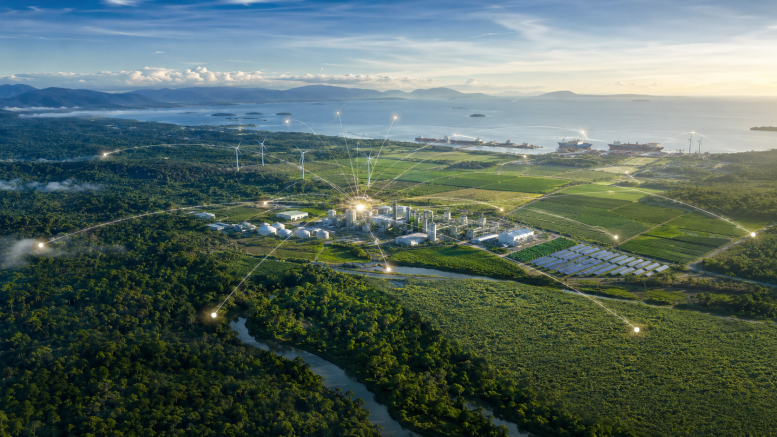
Ministry of Finance’s Extraordinary Secretariat for the Carbon Market stated at the Sustainable Finance Forum that Brazil is poised to become a major global carbon hub. Initial carbon market regulations are currently under discussion for the implementation of the Brazilian Emissions Trading System (SBCE). The second public consultation conducted by the Secretariat, addressing the potential for cross-border carbon credit sales and carbon accounting offsets in line with the Paris Agreement, is scheduled to conclude on August 8th. (Ministry of Finance)
The Supreme Federal Court is to rule in August on congressional decisions impacting the environment; three lawsuits filed by members of the legislative caucus challenge the General Environmental Licensing Law (15.190/25), as well as the “Time Frame” thesis and the Soy Moratorium. (Rádio Senado; STF)
Ministry of the Environment has launched a call for proposals for environmental and territorial management initiatives in the Legal Amazon, with applications open until September 4. The Floresta+ Amazônia project aims to fund initiatives focused on biodiversity conservation, climate change adaptation, and sustainable development, prioritizing the states of Maranhão, Tocantins, Mato Grosso, and Rondônia; the coastal zones of Amapá and Pará; the Marajó Archipelago (PA); and the Lavrado region of Roraima. (MMA)
Federal Public Prosecutor’s Office has signed a Conduct Adjustment Agreement with CSN Mineração S.A. following an investigation into potential environmental irregularities at the Bulk Cargo Terminal in Itaguaí, Rio de Janeiro. In 2024, the company had faced a temporary suspension of operations due to an expired environmental license and irregularities in the handling of iron ore waste. The agreement mandates the allocation of US$ 392.927 to socio-environmental projects in the Rio de Janeiro metropolitan area; these funds will be distributed among five projects selected through a public call for proposals organized by the Federal Prosecutor’s Office in Rio de Janeiro. (MPF)
Federal Police have dismantled an environmental crime ring in the State of Pará, executing 13 search and seizure warrants. The group allegedly sprayed agrochemicals over an area of native forest, causing US$ 92.1 million in damages and destroying approximately 10 thousand hectares of vegetation, including clear-cutting 4 thousand hectares to create pastureland. (Federal police)
Federal Police are executing search and seizure warrants along the Brazil-Argentina border against an organization involved in illegal fishing and hunting within Iguaçu National Park. The group is accused of orchestrating the hunting of wild animals, the capture of endangered species in protected areas, and predatory fishing, using firearms and a network support of informants and lookouts. (Federal Police)
The Brazilian Development Bank (BNDES) and Petrobras selected Systemica, brCarbon and re.green to supply 5 million carbon credits generated by the restoration of degraded land in the Amazon. The projects are to drive US$ 88.2 million in planting investments and support more than 25 million native trees. (BNDES; Petrobras; re.green)
The Ministry of the Environment and Climate Change and the National Development Bank (BNDES) launched a call for proposals to assigning up to US$ 121.3 million to restore 12,500 hectares in the Doce River Basin. Up to five organizations will be selected, with funding linked to the judicial reparation agreement for the Fundão dam collapse. (MMA; BNDES)

Latin America
Argentina is hosting an international event on no-till farming, organized by the Argentine Association of No-Till Farmers. The 34th Aapresid Congress aims to discuss sustainability and technological production for the protection and health of agricultural soils. The event saw the launch of the Technical Guide for the Restoration of Degraded Soils, a joint publication by Syngenta, INTA and Ministry of Agriculture. (Aapresid; Minagri)
Bolivia will host the 1st International Sustainable Agriculture Meeting, organized by the Association of Oilseed and Wheat Farmers, on September 7th and 8th. The event will bring together professionals from Brazil, Argentina, and Bolivia to discuss sustainable technologies and regenerative agriculture management. (Anapo)
Former Minister of Energy and Mines of Colombia, Diego Mesa Puyo, has taken over as CEO of the Global Environment Facility – GEF. Puyo previously worked in the IMF’s Climate Policy Division and spearheaded Colombia’s energy transition projects during his tenure as Minister. The GEF is the largest funder of environmental projects and international conventions regarding biodiversity and climate risks. (GEF)
The loss of Cloud Forests in Mexico could lead to the extinction of wild species with agricultural applications. The Institute of Ecology at the National Autonomous University of Mexico – UNAM projects that wild chayote and other species, which contribute to research on developing cultivars resistant to pests, adverse weather conditions, and diseases, could disappear by 2060 due to ecosystem degradation. (UNAM)
International Maize and Wheat Improvement Center launched the Regional Phytosanitary Surveillance Platform for Latin America in Mexico, aiming to combine georeferenced monitoring, epidemiological modeling, and climate data to anticipate the emergence of diseases and pests. The launch took place during the 4th National Congress on Agri-food Health and Safety, organized in collaboration with the Ministry of Agriculture and the National Health Service, an event dedicated to promoting the sustainability of the country’s agri-food systems. (Minagri; CIMMYT; Senasa)
National Water Commission of Mexico aims to implement a water treatment and distribution plant in the La Laguna region, which contains groundwater with arsenic. The project is designed to purify 6.34 m³/s of water sourcing it from the Nazas River and supply the states of Coahuila and Durango, with a projected distribution of 200 million m³ per year. (Conágua)
Piura River in Peru may not be able to handle the water flow associated with a major El Niño event, states Jorge Salazar, a researcher at the Institute of Hydraulics, Hydrology, and Sanitary Engineering at the University of Piura – UDEP, speaking at the El Niño 2026-2027 Forum. The river has a capacity of 1,900 m³/s, whereas the last two weather events reached 3,900 m³/s (1998) and 3,400 m³/s (2017). (UDEP)

READ MORE: