
Brazil Launches Project to Map and Evaluate Germplasm Banks
Brazil
An article published by Luis Eduardo Pacifici Rangel, Carlos Ramos Venâncio and Lothar Langer Júnior analyzes the possibility of a ban on glyphosate in Brazil following a lawsuit filed by the Labor Prosecutor’s Office against Anvisa and the Federal Government. According to the authors, the debate over a potential ban should consider not only toxicological evaluations, but also agronomic, economic and environmental impacts, especially on no-till farming, weed management and production costs. (CCAS)
Production costs for corn and soybean are expected to increase in the State of Mato Grosso in the 2026/27 season, according to the Institute of Agricultural Economics of the State of Mato Grosso. Corn production costs were estimated at US$ 736.32/ha, up 14.46%, while effective operating costs reached US$ 1,071.41/ha. For soybean, production costs were projected at US$ 836.30/ha, a 3.21% increase, driven by fertilizers, soil amendments and crop protection products. Cotton was the exception, with costs down 1.14%, estimated at US$ 2,064.50/ha. (IMEA)
The Regional Soybean Technical Committee of the State of Bahia confirmed the phytosanitary calendar for the 2026/27 season during Bahia Farm Show. According to the Bahia Agricultural Defense Agency, the soybean fallow period will take place from June 26th to October 7th, while planting will be allowed from October 8th to December 31st. Exceptional sowing from September 25th was also maintained, subject to prior authorization and compliance with phytosanitary requirements for Asian soybean rust control. (Bahia Farm Show)
The Goiás State Agricultural Defense Agency has confirmed new outbreaks of HLB, also known as citrus greening, in commercial orchards in the municipalities of Heitoraí and Cidade Ocidental. The cases were identified during the Annual HLB Phytosanitary Survey and confirmed by the Federal Agricultural Defense Laboratory in Goiás. Infected plants were eradicated under the State Program for HLB Prevention and Complementary Control. (Agrodefesa)
The cotton harvest reached 1.7% of the planted area as of June 12th, according to the National Supply Company. Bahia leads the harvest, with 7% of the area harvested, followed by the States of Mato Grosso do Sul, Goiás, Minas Gerais and Mato Grosso. Boll weevil (Anthonomus grandis) control remains a priority in major producing regions, especially in the State of Mato Grosso. (Conab)
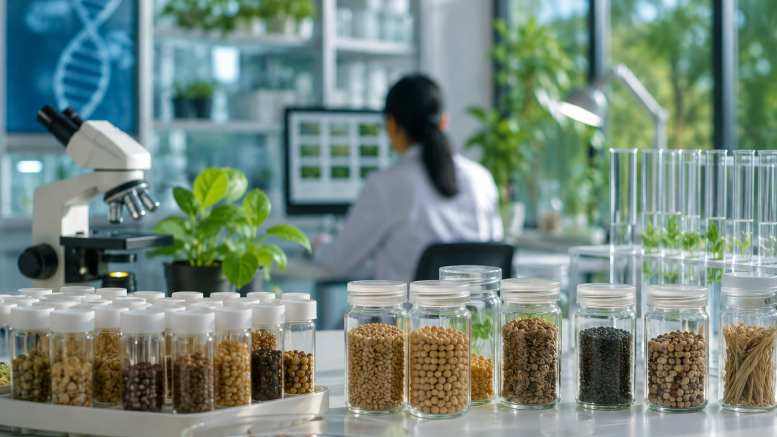
The Ministry of Development, Industry, Trade and Services launched a project to map and assess germplasm banks, which conserve biological material used in research, innovation and bioinput production. The initiative, carried out with the Federal University of Paraná, includes a technical diagnosis, training activities and a digital platform with information on these structures. The goal is to strengthen Brazil’s bioinput chain and expand access to data for researchers, companies and institutions. (MDIC)
The Secretariat of Agriculture of the State of Rio Grande do Sul and the Ministry of Agriculture inspected 522 farms and eradicated 201 citrus plants in Palmitinho after the first confirmed greening outbreak in the state. The actions follow the guidelines of the National Program for Huanglongbing Prevention and Control and include the removal of infected plants, control of Diaphorina citri psyllid and monitoring of areas surrounding the outbreak. (Seapi; MAPA)
A study performed by the Department of Entomology at the Federal University of Viçosa suggests ginger (Zingiber officinale) and bottlebrush (Callistemon spp.) essential oils showed potential against leaf-cutting ants and the symbiotic fungus that supports their colonies. The tests assessed effects on workers of Atta sexdens and Acromyrmex subterraneus, as well as on the fungus Leucoagaricus gongylophorus. According to the authors, the results point to possibilities for new formulations or additives in toxic baits, but further adjustments are still needed before practical use. Available at: https://www.mdpi.com/2075-4450/17/6/645 (UFV; Insects)
The Center for Sugarcane Technology launched, during the Nexfera event in the city of Ribeirão Preto, São Paulo state, a manual of good practices and a collaborative experimentation network for the control of sugarcane weevil (Sphenophorus levis). The insect can cause estimated losses of 25 to 30 tonnes/ha/year in Brazil’s Center-South region. Recommendations include mechanical destruction of ratoons, a fallow period of at least six months, crop rotation with non-host species, integration of biological and chemical control and continuous monitoring. (CTC)
The National Center for Research in Energy and Materials released a study showing how copper nanoparticles interact with different types of Brazilian tropical soils and can be used to increase the efficiency of fertilizers and other agricultural inputs. The research found soil organic matter alters the behavior of the particles, which led to the development of a technology with an organic coating to improve adhesion to plant leaves. The innovation is currently in the patenting process and may be applied in fertilizers and crop protection products. (CNPEM)
The Federal Highway Police seized an illegal cargo of pesticides and medicines of Uruguayan origin during an inspection on BR-290, in Rosário do Sul, State of Rio Grande do Sul. A 24-year-old man was arrested while transporting the material in a vehicle that had departed from Santana do Livramento and was headed to Bento Gonçalves. Authorities found approximately 200 liters of liquid pesticides, 93 kg of fungicides and 640 units of medicines, all without authorization from regulatory agencies. The case was forwarded to the Federal Revenue Service and the judicial police. (PRF)
The Paraná Sanitation Company launched a new call for the use of SaneBio, a biosolid fertilizer produced from sewage treatment. Supply increased from 1,200 to 1,500 tonnes and now also includes Type B, intended for sugarcane production for the sugar-energy sector. The material is available in Campo Mourão, Cianorte, Nova Londrina, and Umuarama, with prices ranging from approximately US$ 3.90 to US$ 19.40 per tonne. (Sanepar)
The Minister of Agriculture of Brazil, André de Paula, said a potential agreement between the USA and Iran could benefit Brazilian agribusiness by reducing pressure on fertilizer and diesel prices. Brazil imports more than 85% of fertilizer and approximately 25% of its diesel. According to the minister, reopening Strait of Hormuz navigation could help ease costs ahead of soybean planting, expected to begin in mid-September. (MAPA)
The Federal University of Goiás signed a US$ 369 thousand agreement, with the Rádio e Televisão Educativa e Cultural Foundation for the Nuclisolos Agroambiental project. The three-year initiative aims to establish agronomic efficiency protocols for bioinputs and remineralizers, as well as evaluate soil quality in the State of Goiás. The contract will be valid from May 2026 to May 2029. (UFG)
CropLife Brasil released a guide to support the inspection of irregularities in the bioinputs sector during the regulatory transition period. The document provides guidelines on the production, commercialization, transportation, storage, packaging and labeling of biological products and identifies prohibited microorganisms. The initiative was presented during the 9th National Conference on Agricultural Defense and comes as the decree regulating the Bioinputs Law is being drafted by Brazil’s Ministry of Agriculture. (CropLife Brasil)
The Brazilian Development Bank and the Brazilian Funding Authority for Studies and Projects announced an additional US$ 27.1 billion for Nova Indústria Brasil until December of 2026. The funds will focus on strategic sectors, including fertilizers, agricultural machinery, critical minerals, artificial intelligence, and electric mobility. With the announcement, the industrial policy is expected to reach more than US$ 145.3 billion in available resources between 2023 and 2026. (BNDES; Finep)
A study by the University of Rio Verde, in the State of Goiás, supported by the Goiás Research Foundation and the National Council for Scientific and Technological Development, is assessing the use of cultural control to reduce selection pressure from herbicide-resistant weeds. The project tests intercropping systems with corn, sorghum or millet and brachiaria in the Cerrado Biome, aiming to reduce dependence on chemical control. According to the research, herbicide use in Brazil increased 128% between 2010 and 2020, above the expansion of agricultural area, amid glyphosate resistance in species such as sourgrass, hairy fleabane, goosegrass and purple amaranth. (FAPEG; CNPq; UniRV)

Latin America
Argentina reduced disadvantage on the production costs for grain crops compared with Brazil, Paraguay, Uruguay and the USA, according to a report by IERAL, part of Fundación Mediterránea. The average price gap across 13 goods and services fell from 8.6% in April/May 2025 to 4.4% in the same period of 2026. Despite improvements in fertilizers, agrochemicals and some machinery items, the country still faces higher diesel and freight costs, while export taxes continue to reduce the effective price received by farmers. (IERAL)
Argentina became the first country to approve a new herbicide technology for controlling resistant grass weeds in soybeans and cotton. The active ingredient is metproxybicyclone, approved by Senasa in December 2025. The commercial formulation was authorized in April 2026 and launched by Syngenta in June. The technology may also be used in pre-sowing applications for corn and cereals. (Senasa; Syngenta)
The Administrative Litigation Chamber of Chaco, Argentina, ordered measures related to agrochemical applications near rural and Indigenous communities, in a case involving the provincial government, Unitec Bio and Marfra. The decision is related to the enforcement of the province’s Biopesticides Law, which provides for epidemiological records to monitor effects associated with phytosanitary products. Unitec Bio, a company of Corporación América International, operates in agriculture, livestock and biofuels in the provinces of Chaco and Formosa. (Poder Judicial del Chaco; Unitec Bio)
The Agrarian Federation of Argentina held the Pulso Tierra technical event in Córdoba, focused on innovation, management and technology adoption by small and medium-sized farmers. The program included stations on drones, AI, sensors, grain management and data-driven livestock production. According to the organizers, the use of drones and AI for weed detection can generate savings of up to 90% in herbicides in smaller farms. (FAA)
FMC and Corteva signed a strategic supply and licensing agreement to expand access to the herbicide rimisoxafen in corn and soybean markets in North and South America. According to the companies, the product was classified as the first herbicide with a dual mode of action, aimed at controlling resistant weeds such as species of the genus Amaranthus. FMC will retain the technology’s intellectual property and supply the active ingredient to Corteva, which will make an upfront payment of US$ 200 million. First commercial sales are expected by the end of the decade, subject to regulatory approvals. (FMC Corporation; Corteva)
Trials by the Center for Advanced Studies in Fruit Farming in Chile indicated flower strips can reduce agrochemical applications for melon aphid control (Aphis gossypii) in squash crops. The strategy uses flower strips to attract natural enemies of pests and, after three years of evaluations, reduced applications from 15 to 20 per season to four. (CEAF)
The Ministry of Agricultural Development of Panama intensified inspections at agrochemical stores in Costa Abajo, Colón, after 28 people received medical care following exposure to an agrochemical product in the city of Salamanca. According to authorities, packages found outdoors were labeled as aluminum phosphide, a restricted-use insecticide. The Ministry of Agricultural Development stated that it was awaiting analyses to confirm the product’s composition. (Minsa; MIDA)
READ MORE: