
Mexico’s Tomato Production Forecast to Decline 9% in 2026

Raízen reached an agreement to sell fuel refining and distribution operations in Argentina to companies controlled by Switzerland’s Mercuria Energy Group for US$ 1.42 billion. This includes a refinery near Buenos Aires and more than 880 Shell-branded service stations. The sale is part of the company’s divestment strategy, as Raízen also negotiates US$ 12.44 billion in financial debt. Closing the deal depends on regulatory and court approvals. (Raízen)
Louis Dreyfus Company announced a US$ 400 million investment in Argentina to build a sunflower processing plant in Bahía Blanca, Buenos Aires province. The facility will have an estimated crushing capacity of 1.5 million tonnes/year and is expected to be among the largest in the world in this segment. The project is scheduled by the end of 2027. (LDC; Argentina’s Ministry of Economy)
Wheat planting for Argentina’s 2026/27 crop reached 32.4% of the projected area, the fastest pace in five years, according to the Buenos Aires Grain Exchange. The estimated planted area is 6.5 million hectares. Water availability has supported fieldwork, which is 12.4 percentage points above the five-year average. (Buenos Aires Grain Exchange)

The West region of the State of Bahia could increase grain production from 11 million to 14 million tonnes in the coming years, according to Moisés Schmidt, president of the Association of Farmers and Irrigators of Bahia. The strategy involves expanding irrigation and using technology to raise productivity. A study cited by the association indicates potential to increase Bahia’s irrigated area from 150 thousand to more than 450 thousand hectares, while respecting water security criteria and environmental requirements. The region accounts for about 90% of Bahia’s grain and fiber production. (AIBA)
Agropecuária Maggi, part of the Amaggi group, raised US$ 670 million through a financial CPR note, a Brazilian rural credit instrument backed by soybean and cotton production. The transaction marks the company’s debut in this instrument. The financial CPR (Rural Product Note) allows cash settlement, without physical delivery of the crop, and has gained ground as an alternative to bank credit and public crop financing programs. (Amaggi)
Brazil’s National Association of Cereal Exporters raised the forecast of soybean exports in June, now estimated at 14.38 million tonnes. It is approximately 2 million tonnes above the previous forecast and indicates growth compared with June 2025. The association also revised upward its estimate for soybean meal shipments, from 1.65 million to 2.3 million tonnes for June. (Anec)
Brazilian exports to the USA fell 16% from January to May 2026, reaching US$ 14 billion, the lowest level since 2022. Bilateral trade dropped 14.3% to US$ 29.5 billion, while Brazil’s trade deficit with the USA increased 43.3%. The decline comes amid Section 301 investigations by the Office of the United States Trade Representative, which could lead to tariffs of up to 37.5% on certain Brazilian products. (Amcham Brasil; USTR)
The Labor Committee of Brazil’s Lower House of Congress discussed Bills No. 676/2025 and 1456/2025, which propose changes to rules for hiring seasonal rural workers. Harvest contracts are used in rural activities tied to the production cycle, such as soil preparation, crop management and harvesting. According to the Brazilian Confederation of Agriculture and Livestock, the proposals seek to provide greater legal certainty and simplify the formalization of temporary labor in rural areas. The issue is still under legislative review. (Brazil’s Lower House of Congress; CNA)
The Brazilian Animal Protein Association said the EU’s decision to keep Brazil off the list of countries authorized for certain exports of animal-origin products after September is not related to sanitary concerns. According to the association, the dispute concerns the EU’s recognition of Brazil’s official inspection and control mechanisms. The association will continue to support Brazil’s Ministry of Agriculture in technical discussions with European authorities. (ABPA; MAPA)
Embrapa sent 24 new Brazilian seed samples to the Svalbard Global Seed Vault in Norway. The samples include cashew, fava bean, peanut, castor bean and sesame, adding to more than 8 thousand genetic materials already deposited by the institution since 2012. The global vault preserves approximately 1.38 million seed samples from more than 5 thousand species, from 223 countries and territories. (Embrapa)
Coffee harvest in Cooxupé’s ag cooperative operating areas reached 12% by June 5th, the lowest level for the period since 2022. In the same period of 2025, members had harvested 13.7% of the area. (Cooxupé)
Boa Safra expects a stronger demand for longer-cycle soybean seeds for the 2026/27 season, amid the risk of El Niño and harsher weather conditions in Brazil’s Center-West region. According to Marino Colpo, CEO, these materials can give crops greater recovery capacity after dry spells. The company also expects stronger demand for more basic seed packages, amid cost pressure from fertilizers and fuels. However, the adoption of longer-cycle soybeans could shorten the planting window for second-crop corn and increase risks for the cereal. (Boa Safra)
The Bahia Cotton Farmers Association opened a new Fiber Analysis Center in Luís Eduardo Magalhães, State of Bahia, with an investment of approximately US$ 23 million. The facility has 5,200 m², 16 HVI classification machines and current capacity for 40 thousand analyses per day, which could reach 70 thousand with additional equipment. The laboratory is expected to process about 5 million samples in the 2025/26 crop year and serve cotton production from the States of Bahia, Tocantins, Maranhão and Piauí. (Abapa)


Arba Colombia expects to export approximately 400 containers of Hass avocados in 2026, equivalent to approximately 9,500 tonnes. This would represent growth of about 70% compared with 2025, when the company exported more than 220 containers. The company has 250 hectares in Colombia, of which 50 hectares are in production, and also works with more than 50 partner farmers. (Arba Colombia)
Research by Javeriana University of Cali indicates nanotechnology and artificial intelligence can help to preserve corn pollen and reduce losses in hybrid seed production. According to the study, reduced pollen viability can cause production losses of 15% to 25%. The proposal involves the use of nanocoatings and storage at 4°C to preserve pollen and allow its application at the optimal pollination timing. The technology could increase seed production efficiency and reduce costs for small and medium-sized farmers. (Javeriana University of Cali)
Coffee production increased 29% in May compared with the same month in 2025, reaching 1.05 million 60-kg bags and ending seven consecutive monthly declines. According to Colombia’s National Federation of Coffee Farmers, the harvest had been affected in previous months by rainfall in the main producing regions. Despite the recovery in May, cumulative production from January to May fell 19% to 4.27 million bags, while exports dropped 22% to 4.15 million bags. (FNC)

Mexico temporarily suspended imports of some live animal species from the USA as a preventive measure against New World screwworm, caused by the fly Cochliomyia hominivorax. The decision affects cattle, ruminants, pigs, sheep, goats, songbirds and fighting birds, after the identification of a risk of the pest spreading. The measure aims to protect Mexican livestock production and reduce sanitary and trade impacts on North America’s animal protein supply chain. (Sader; Senasica)
The president of Mexico, Claudia Sheinbaum, signed an agreement to create the White Corn Production and Commercialization Ordering System, known as “Fair Price.” The measure aims to stabilize the domestic market, provide more predictable prices for farmers and reduce intermediation in the supply chain. The program is expected to benefit 61 thousand farmers, 705 thousand hectares and an estimated production of 7 million tonnes of white corn. (Presidency of Mexico; Sader)
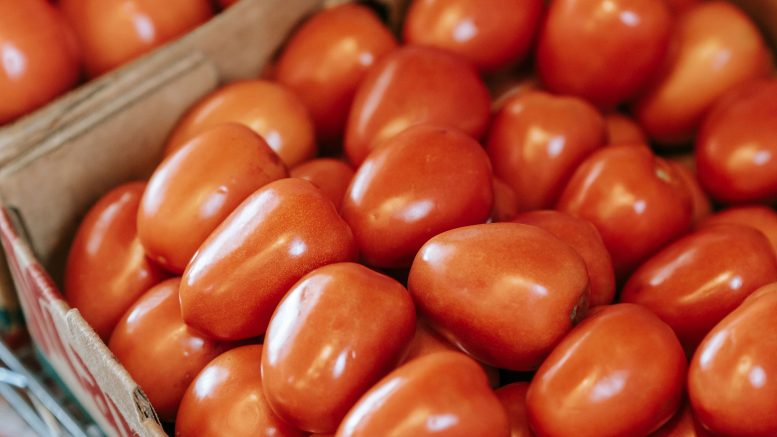
Tomato production is expected to fall 9% in 2026, to 2.6 million tonnes. The decline is attributed to smaller planted area, adverse weather, higher production costs and trade uncertainty with the USA, the main destination for Mexican tomatoes. (USDA)
The EU and Mexico signed the Modernised Global Agreement and the Interim Trade Agreement, expanding market access for agri-food products. The agreement provides for the elimination of tariffs on most agricultural products traded between the parties, as well as simpler procedures and protection for geographical indications. For agriculture, the main impact should be broader access for meats, dairy products, fruits, vegetables, wine and processed products. (European Union)


Paraguay and Japan launched a scientific project to combat wheat blast, one of the main threats to wheat production. The initiative will be funded by the Japanese government with US$ 1.85 million and will run for five years, from August 2026 to August 2031. The research will focus on developing more resistant varieties, seed treatments, epidemiological studies and technology transfer to farmers. (UNA; Capeco; JICA)
Paraguay was approved as an eligible country to export beef and live cattle to Turkey, according to Paraguay’s National Service for Animal Quality and Health. Turkish sanitary authorities are expected to conduct a verification visit to Paraguayan meatpacking plants, a necessary step to complete the registration of exporting facilities. Shipments are expected to begin in the second half of 2026. (Senacsa)
Forestry exports increased 9% in value from January to May 2026, reaching US$ 38.08 million. Export volume totaled 68,953 tonnes, up 4.6% from the same period last year. The figures were released by the Union of Production Guilds based on data from Paraguay’s National Forestry Institute. (UGP)

Peruvian Food Groups expects to export approximately US$ 5 million in 2026, double the amount recorded in 2025. The company works with agro-industrial products in different formats and aims to expand its international markets. (Peruvian Food Groups)
Pistachios could become a new bet for Peruvian agroexports, according to Alfonso Velásquez Tuesta, former Minister of Production and former executive president of Sierra y Selva Exportadora. The crop would require an estimated investment of US$ 15 thousand/ha, below the roughly US$ 50 thousand/ha needed to establish avocado orchards. (Alfonso Velásquez Tuesta)
Agricultural exports continue to grow, led by blueberries, Hass avocados and ginger. Blueberry exports are expected to keep increasing in 2026, driven by new hectares in production, the maturation of young orchards and a greater share of early varieties. Hass avocado exports are expected to reach 745,650 tonnes, up 3.16% from 2025, equivalent to 33,733 containers. Certified ginger exports reached 44,482 tonnes in 2025, compared with 16,785 tonnes in 2019, reaching 53 international markets. In 2025, Peruvian ag exports totaled US$ 14.54 billion, with blueberries as the country’s leading agroexport product, with sales above US$ 2.43 billion and more than 150 exporting companies. (Proarándanos; ProHass; ComexPerú; Senasa)

The area planted with rapeseed/canola is expected to reach a record of 392 thousand hectares in the current winter, according to the Uruguayan Association for the Protection of Plant Breeders. Winter oilseeds are expected to cover approximately 400 thousand hectares, while total winter crop area is estimated at 850 thousand hectares, the second largest on record. Barley is expected to increase to 205 thousand hectares, while wheat is expected to decline to 245 thousand hectares. (Urupov; Blasina y Asociados)
The purchasing power of milk in April 2026 was 13% below the level recorded in the same month last year, according to the National Milk Institute. The decline reflects higher production costs and a lower price received by farmers. The indicator was also 23% below the reference base used by the institute. (Inale)
The finished cattle market recorded a price adjustment after nine weeks of increases, according to the Livestock Brokers Association. Last week, the average steer price fell from US$ 5.66 to US$ 5.62 per kg, while cow prices declined from US$ 5.29 to US$ 5.26. Demand remains better positioned, but increased supply of finished cattle led the industry to attempt price reductions. (ACG; Blasina y Asociados)

READ MORE: