
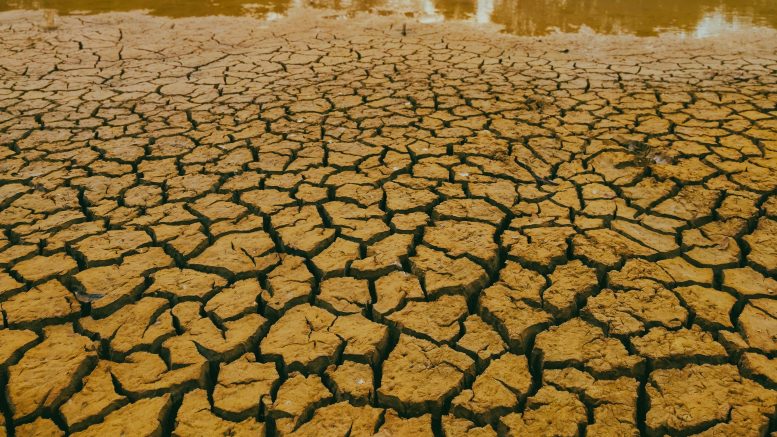
“The increasing frequency and intensity of extreme events raise the risks of failure in agricultural production…”
Walter Baethgen is a professor at Columbia University, where he served as senior research scientist and director of the International Research Institute for Climate and Society at the Climate School, as well as director of the Center for Agriculture and Food Security at the Earth Institute. He also served as vice president of the Board of Directors of Uruguay’s National Institute of Agricultural Research.
Baethgen holds M.Sc. and Ph.D. degrees from Virginia Polytechnic Institute and State University and a degree in Agricultural Engineering from the University of the Republic, in Uruguay.
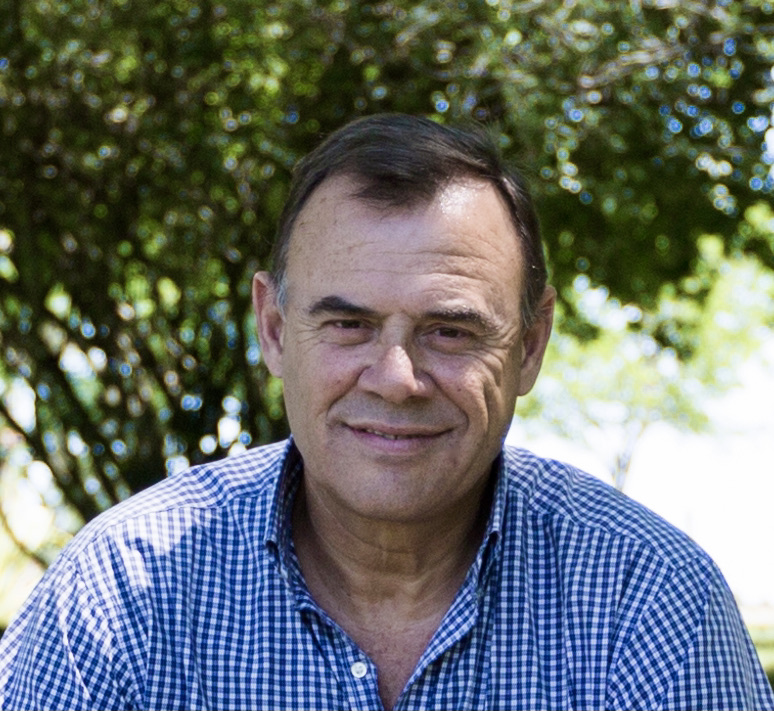
Walter Baethgen, professor at Columbia University
AgriBrasilis – What is the relationship between greenhouse gases and the occurrence of extreme weather events?
Walter Baethgen – Global warming adds thermal energy to the atmosphere and the oceans, which destabilizes global climate patterns by intensifying the global hydrological cycle, increasing evaporation and the amount of water vapor in the atmosphere. This results in an increase in the frequency and intensity of extreme events such as heat waves, droughts, wildfires, and floods.
AgriBrasilis – How is climate change affecting Uruguayan agriculture?
Walter Baethgen – The increasing frequency and intensity of extreme events raise the risks of failure in agricultural production. In particular, they increase the risks associated with open-field production, which depends directly on prevailing weather conditions.
AgriBrasilis – What preventive measures are being implemented by the government and the private sector?
Walter Baethgen – There is a series of public and private efforts aimed at improving the capacity to adapt to climate change. The government has emergency funds to support smaller producers, there are public and private insurance schemes that seek to transfer at least part of the climate-related risks, and the expansion of irrigation is being encouraged wherever possible. In the research field, there are specific initiatives focused on management practices that can make production systems more resilient.
AgriBrasilis – What is the economic cost of droughts for Uruguayan agriculture?
Walter Baethgen – The cost of droughts is very significant for the Uruguayan economy. For example, it is estimated that the 2022/23 drought, the worst ever recorded in Uruguay’s history, resulted in direct losses of more than US$1.8 billion. That is already very negative in itself, but in addition, agriculture has a multiplier effect on the rest of the economy that can reach a factor of 3 or more. In other words, for every dollar lost in agriculture, the country loses 3 dollars.
AgriBrasilis – What did the country learn from the 2022/2023 water crisis?
Walter Baethgen – This was not something new for agriculture. It was a situation that had been experienced many times before, but with much greater intensity. Given the importance of agriculture to the economy and, particularly, to Uruguay’s exports, it became clear that agricultural systems need to become more resilient. This includes expanding irrigation wherever possible, diversifying production, identifying more resilient systems, and seeking to mitigate as much risk as possible through financial instruments such as insurance.
AgriBrasilis – Why does it remain difficult to reach a consensus among the countries with the highest emissions on reducing greenhouse gas emissions?
Walter Baethgen – The problem of greenhouse gas emissions today lies in the energy sector: 75% of total global greenhouse gas emissions come from the burning of fossil fuels. At present, 80% of the global energy mix still depends on fossil fuels. Therefore, although there are countries committed to reducing that dependence, it will be a slow process. These difficulties are compounded when some countries do not even commit to reducing emissions.
More than 50% of total greenhouse gas emissions come from China, the United States, and the European Union. It is in these countries that the transition to renewable energy needs to be accelerated. Naturally, this too will be a slow process, given the current energy mix’s dependence on fossil fuels.
READ MORE: