
Urea Prices Rising By More Than 50% This Year in Brazil
Brazil
Embrapa Swine and Poultry launched the GeoFert system, a digital tool that enhances traceability in the use of swine manure as biofertilizers. The program records the origin, properties, dates, time and geographic coordinates of applications, integrating data from the Rural Environmental Registry. Currently under validation with private partners, the system aims to improve sustainability and environmental compliance in family swine farming. (Embrapa; Ekodata)
PI AgSciences announced that agronomist Paulo Queiroz has assumed the role of Global Head Fungicides Portfolio, strategically leading the company’s global fungicide portfolio. (PI AgSciences)
The Federal Public Prosecutor’s Office recommended the Federal Council of Agricultural Technicians to revoke the rules allowing the remote prescription of pesticides in the State of Rio Grande do Sul. The measure emphasizes the need for on-site technical visits, after an investigation revealed that one technician issued over 15 thousand prescriptions in a single year, including for crops not grown in the region. (MPF)
The Government of the State of Tocantins, through the State Agricultural Defense Agency, announces the itinerant collection schedule for empty packages of pesticides from May to November 2026. There will be 51 events across 50 municipalities, targeting small and medium rural producers located far from fixed collection points. (Tocantins State Government)
The Ministry of Agriculture and Livestock (Mapa) warns of the risk posed by the red palm weevil (Rhynchophorus ferrugineus), a quarantine pest absent in Brazil but already reported in neighboring countries such as Uruguay and Argentina. The pest threatens coconut, oil palm and ornamental palms and prevention is most effective by using plants from certified and regularized suppliers. Mapa reinforces border surveillance and advises not to handle or transport suspicious seedlings, reporting them to the competent authorities. (Mapa)
The Embrapa launched the CaatÁgua project to increase crop resilience to drought in the Semi-Arid region. The three-year initiative will develop microbial biostimulants and biological pest control strategies, with field tests conducted directly on family farmers’ properties. The goal is to reduce agricultural losses, strengthen agroecological cotton production and enhance food security for families. (Embrapa)
In compliance with court decisions, Anvisa has approved the toxicological evaluations of methomyl and chlorantraniliprole technical (Zhongshan), bifenthrin (Solus) and malathion (Biorisk). It was also published the withdrawal of the evaluation of clothianidin (Biorisk). (Official Gazette of Brazil, Res. No. 1099-1102 and 1104 from 03/23/2026, Anvisa)
The Agriculture Secretariat of Rio Grande do Sul State and Embrapa Grape & Wine signed an agreement to reduce fruit fly (Anastrepha spp.) in local orchards. The six-month project will integrate the release of sterile flies, parasitoids and toxic baits in apple and grape orchards, aiming to reduce damage and economic impacts on local fruit production. (Seapi; Embrapa)
Last week, the Ministry of Agriculture launched operations Dólos and Terra Prometida in the State of Minas Gerais, resulting in the seizure of over 29 tonnes of irregular pesticides, as well as seeds, fertilizers and illicit molasses, totaling an estimated loss of US$ 818,6 thousand to the offenders. These actions, integrated with IMA, Ibama, police forces and intelligence agencies, targeted clandestine warehouses and a factory with adulterated inputs, leading to in-flagrante arrests and administrative injunctions under the rigor of Law 14785/23. (CropLife Brasil)
The São Paulo State Secretariat of Agriculture published Resolution SAA No. 8/2026, establishing new standards for registration and regularization of companies within the pesticide supply chain at the Agricultural Defense. The measure aims to debureaucratize and streamline processes by eliminating excessive documentary requirements from the previous regulation and removing overlapping responsibilities with other inspection agencies. According to Marcelo Chaim, head of Input Inspection and Soil Conservation Division, this reorganization allows teams to focus on field inspections, which are essential to combat clandestine or irregular products. (Agência SP)
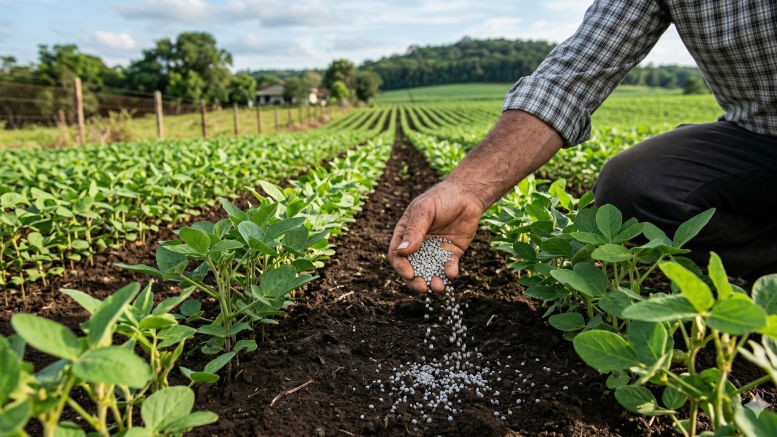
The National Confederation of Industry (CNI) warned Brazil remains highly dependent on imported fertilizers, which account more than 80% of domestic demand, amid geopolitical risks in the Strait of Hormuz. According to the organization’s study, tensions in the Middle East and potential logistical disruptions are already impacting costs, with urea prices rising by more than 50% this year. The CNI advocates strengthening local production and implementing policies such as the National Fertilizer Plan to reduce external dependence and mitigate risks to food security. (CNI)
The Agricultural Defense Agency of the State of Goiás and CropLife Brazil will carry out, on March 30 and 31, an operation to receive illegal pesticides seized by public authorities for subsequent environmentally sound incineration. Only products already authorized for disposal may be delivered, subject to prior scheduling and the submission of detailed documentation. The initiative also involves agencies such as Ibama and police forces. (Government of the State of Goiás; Agrodefesa)
The Ministry of Agriculture and Livestock has preemptively suspended 60 pesticide registrations for technical products containing 2,4-D and glyphosate due to non-compliance with the requirements set forth in Notice No. 1. (Official Gazette of Brazil, Act No. 15 from 03/17/2026, MAPA)

Latin America
Specialists from the National Agricultural Technology Institute and the National Food Safety and Quality Service of Argentina have confirmed the geographical expansion of the soybean stalk weevil (Rhyssomatus subtilis). Although the situation is not considered alarming, the pest’s advance requires strengthening collaboration networks, technical training and early monitoring to understand the insect’s population dynamics. INTA has intensified training for growers and consultants on the species’ biology and integrated management, aiming to mitigate damage to soybean crops and ensure the systematization of strategic information for future harvests. (INTA, Senasa)
Researchers from the National Agricultural Technology Institute identified the presence of five diseases in trials with 13 sunflower hybrids in Córdoba, Argentina, during the 2025/26 season. Although the impact on productivity was low due to dry weather conditions in January and February, the study warns the expansion of the cultivated area in the region increases the risk of pathogen dissemination. Alternaria and black stem (Phoma) were the most prevalent, with incidences reaching 100% in some cases, highlighting the critical importance of constant monitoring. (INTA)
Lallemand Plant Care Brazil announced Pâmela Magalhães as LATAM Commercial Vice President. Since February 2026, she has been leading the company’s commercial operations in Brazil and across Latin America. (Lallemand Plant Care)
The Executive Directorate of Agricultural Quarantine of Ministry of Agricultural Development of Panama carried out 90,512 technical treatments in February 2026, including spraying, atomization, fumigation, and thermal fogging at ports, airports and borders. These actions focused on the mandatory disinfection of imported machinery, equipment and vehicles to eliminate organic residues and potential pest vectors, in addition to applying the International Standards for Phytosanitary Measures (ISPM 15) to wood packaging. This ongoing operational management aims to protect the country’s phytosanitary and animal heritage. (MIDA)
The National Agrarian Health Service of Peru reported that in compliance with food safety standards keeps Peruvian agro-exports strong, totaling over US$ 15 billion in 2025. Fruits such as blueberries, grapes and cocoa consolidate the country as a global supplier. No full-load shipments were rejected in the EU and the agency has intensified input inspections and updated post-registration pesticide programs. (Senasa; Midagri)
Ministry of Agrarian Development and Irrigation of Peru has intensified national enforcement actions against the illegal trade of pesticides, resulting in the seizure of prohibited, expired and smuggled products, such as paraquat and chlorpyrifos. In 2025, the agency confiscated more than 2 tonnes of irregular products. The government reiterated its commitment to strengthening sanitary controls and inter-institutional coordination to ensure agri-food safety and protect public health and the environment against improper advertising practices and unauthorized trade. (Midagri)
The Ministry of Livestock, Agriculture and Fisheries of Uruguay has intensified phytosanitary controls after Chinese authorities detected quarantine pests in soybean shipments, which represent more than 80% of the volume exported in 2025. Notifications from China’s Customs point to the presence of prohibited weeds under the bilateral protocol, repeating occurrences already recorded during the 2024 harvest. In response, the General Directorate of Agricultural Services (DGSA) committed to strengthening inspection and pre-export certification systems to ensure compliance with Chinese sanitary requirements. (MGAP)
Read more:
Brazil Seeks to Lead the Carbon Market and Attract Green Investments