
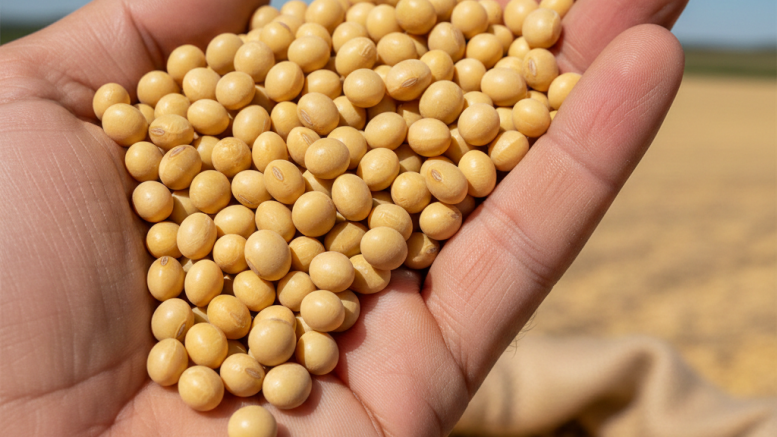
Soybean Production Could Reach a Historic Record in Paraguay

Total meat consumption in the country increased by 3.85% in 2025, rising from 112.16 kg to 116.4 kg per capita, with gains in beef (+2.94%), pork (+8.44%) and chicken (+3.07%). (Secretariat of Agriculture, Livestock and Fisheries)
USA increased the 2026 import quota for lean beef by 80 thousand metric tonnes and allocated 100% of the additional volume to Argentina, strengthening Argentina’s preferential access to the U.S. market amid tighter domestic supply. The quota will be released quarterly in 20 thousand tonnes tranches. (USA Government)
Consumer inflation rose 2.9% in January versus December and reached 32.4% year on year. The biggest monthly increases were in food, non-alcoholic beverages (4.7%) and restaurants and hotels (4.1%). (Indec)

The Government of the State of Paraná invested US$ 403.8 thousand in the CIA-Agro – Paraná Module project, which will implement precision agriculture on 20 farms using sensors and telemetry. Coordinated by the Center for Artificial Intelligence in Agriculture at the State University of Londrina, the program also includes technology showcases and training. (Government of Paraná)
According to the Foreign Trade Secretariat of Brazil’s Ministry of Development, Industry, Trade and Services, Brazilian agricultural exports increased by 2.1% in January 2026, contributing to a trade balance with US$ 25.2 billion in exports, US$ 20.81 billion in imports and a US$ 4.3 billion surplus. (MDIC)
Grain exports continue to advance in 2026, with shipments estimated at 13.9 million tonnes of soybeans, 3.34 million tonnes of corn and 4.04 million tonnes of soybean meal for the year-to-date through February. China is the leading buyer of Brazilian soybeans, accounting for 66% in January. (ANEC)
Family farming products secured reductions in Pronaf (a Brazilian government credit program that offers subsidized financing to small-scale farmers) loan installments in February, based on price gaps identified by the Price Guarantee Program for Family Farming. The measure aims to protect farmers’ income when market prices fall below the minimum level, with highlights including cowpea beans in the Brazilian state of Amapá, mango in Rio de Janeiro, potatoes in Paraná and cassava in Espírito Santo. (Conab)
In January Brazil’s agroclimatic scenario combined well-distributed rainfall across the North, Central-West and part of the Southeast with water deficits in the Northeast and western of the State of Rio Grande do Sul, where localized production impacts are already evident. For the February–April quarter, the outlook indicates good water availability across much of the country, but with drought risk in parts of the Northeast, State of Mato Grosso do Sul and the northern Southeast, which may pressure sensitive crops such as corn, beans, coffee and pastures. (Inmet)
Coffee exports totaled 2.78 million bags of 60kg in January, a 30.8% decrease in volume and US$ 1.17 billion in revenue compared to the same month in 2025. This decline was driven by the off-season period with limited Arabica coffee stocks, farmers capitalization and the redirection of Conilon and Robusta varieties to the domestic market, combined with a weaker dollar and expectations of a recovery in the 2026/27 harvest. (Cecafé)
In January 2026, soybean sales in the State of Mato Grosso reached 49.49% of the estimated production, driven by the harvest reaching 39.61% of the total area and the producers’ need for liquidity, despite a 3.96% monthly drop in average prices. The scenario is marked by record state exports, which totaled 487.63 thousand tonnes during the month, a 202.52% jump compared to 2025, reflecting strong foreign demand and the higher national supply projected by Conab. (Mato Grosso Institute of Agricultural Economics)
The Brazilian Development Bank approved US$ 28.6 million for the construction of a biomethane plant in the city of Toledo, State of Paraná, with a total investment of US$ 37.8 million. The project is expected to avoid 80 thousand tonnes of CO₂ per year, produce organic fertilizer and biogenic CO₂ and generate biomethane from agro-industrial organic waste. (BNDES)
Arauco, a Chilean forestry and pulp company, is investing US$ 4.6 billion in the world’s largest single-line mill, with capacity to process millions of tonnes of wood and produce 3.5 million tonnes of pulp annually starting in 2027. To enable logistics, the Government of the State of Mato Grosso do Sul is contributing US$ 5.18 million to dedicated road access for heavy vehicles, part of a broader US$ 250 million regional infrastructure package. (Semadesc)
In the first week of February 2026, the agricultural sector saw a 4.1% decline in the daily export average compared to the same period in 2025 , while the sector’s imports experienced a slight growth of 2.5%. (Secex)
Corporate rural credit totaled US$ 61.0 billion between July 2025 and January 2026, up 6% from the same period of the previous crop season, with US$ 59.2 billion already disbursed to farmers. Growth was driven by Rural Product Notes, which rose 37% and lifted total production financing to US$ 46.5 billion, while investment credit declined 20%. (Mapa; Central Bank)
The Brazilian government has launched a strategic offensive to fast-track the Mercosur-European Union agreement, aiming for its approval in the Chamber of Deputies by late February 2026. This move seeks to solidify agribusiness access to a market of 720 million consumers, utilizing a technical Working Group as a buffer to monitor the transition of sensitive sectors. (Ministry of Development, Industry, Trade and Services)
Exports of pulses (beans, peas, lentils and chickpeas) rose 30% in 2025, reaching US$ 448.1 million, with dry beans accounting for more than 98% of the total export value. In production, beans remain the main crop in the group, with output estimated at over 3 million tonnes in the 2025/26 season. (Mapa; Conab)


The Sustainable Ag-Export Competitiveness Agenda propelled the agro-forestry sector to a historic milestone, reaching record exports of US$ 20.5 billion in 2024 and a 9.1% growth at the start of the 2025/26 season. The strategy focused on opening 93 new markets, traceability and public-private coordination, resulting in remarkable expansions such as 319% in hazelnuts and 36% in cherries. (Minagri)

Agricultural exports grew 33.5% in value and 20.1% in volume in 2025, reaching US$ 15.3 billion and 6.88 million tonnes, driven mainly by higher shipments of coffee, palm oil and bananas. (National Administrative Department of Statistics)
Blueberry cultivation totals around 1 thousand hectares, mainly concentrated in Boyacá and Cundinamarca, with estimated production of 20 thousand tonnes/year. Exports are still primarily directed to the USA, while Asia continues to face phytosanitary barriers and long transit times. The sector also projects cost pressures in 2026, with labor representing a significant share of total costs and high initial investment requirements. (Asocolblue)

Access to financing for sugarcane farmers will be expanded through their inclusion in the Producción para el Bienestar and Fertilizantes para el Bienestar programs. The initiative will provide credit at preferential interest rates of 8.5%, reducing costs that can currently reach 30%. (Sader)


Soybean production could reach 11.53 million tonnes, in the 2025/26 season, setting a new historical record, following an upward revision of the main crop to 10.14 million tonnes and above-average yields driven by favorable rainfall. The final result will still depend on the performance of the second crop, while the increase in regional supply is expected to keep downward pressure on prices in the coming months. (StoneX)

Agricultural sector grew 4.8% in 2025, driven by higher crop production (+5.5%) and livestock output (+3.4%), with notable increases in olives, blueberries, grapes, avocados, mangoes, potatoes, coffee and cocoa, as well as greater supplies of chicken, milk, pork and turkey. (Midagri)
The National Agrarian Health Service certified the first shipment of 23 tonnes of turkey meat to Panama, marking a historic milestone for the national poultry sector. The initiative reflects the collaboration between the government and the private sector, which seeks to expand markets for the country’s poultry products, including strategic destinations in Asia and North America. (Midagri; Senasa)

Juan Baroffio, president of Regadores Unidos del Uruguay, an association representing irrigating farmers, stated that expanding the irrigated area to 300 thousand hectares is feasible, citing favorable topography, rainfall and water availability. He also noted that water demand in 2025 was exceptionally high between December and January, exceeding expectations and potentially leading to earlier shortages in some systems. (Regadores Unidos del Uruguay)

READ MORE:
System Combining Drones and Artificial Intelligence to Monitor and Control Leaf-Cutting Ants