
Brazil
International soybean buyers are pressing Brazilian trading companies after their voluntary withdrawal from the Amazon Soybean Moratorium and demanded the soybean supply remain deforestation-free, with independent monitoring and compliance with climate targets, emphasizing the importance of the 2008 cut-off as a reference for protecting the biome. (ALDI; Lidl; Tesco; Sainsbury’s)
The Ministry of the Environment published Ordinance GM/MMA No. 1597, regulating Field Activity Compensation for federal environmental career employees. This right had been established by law since 2013 but was only implemented after more than a decade. (MMA; ASCEMA Nacional)
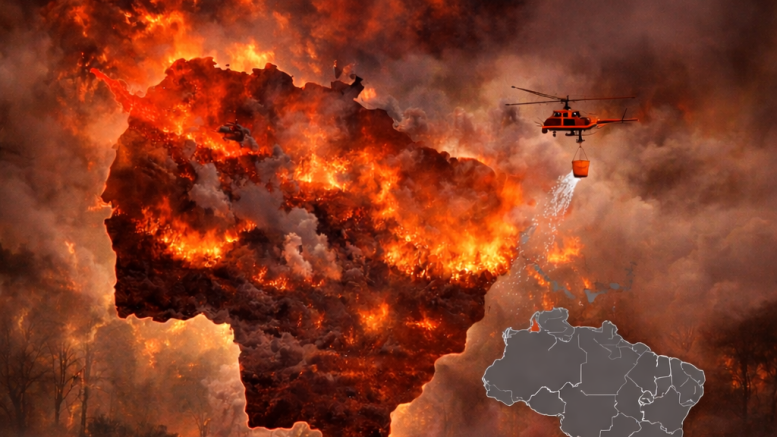
State of Mato Grosso do Sul recorded 49,434 hectares affected by fire between January 1st and 27, aggravated by the severe drought that is already affecting crops and may restrict water use for irrigation and energy. Authorities warn of worsening conditions from June due to El Niño and emphasize the need for prevention and firefighting measures. (SEMADESC; Cemtec-MS)
MAPFRE Seguros, an insurance company, in partnership with the Brazilian Mercantile Exchange, launched a new climate insurance model aimed at operations backed by Rural Product Notes (CPRs), strengthening protection against climate risks and boosting rural credit in Brazil. The product innovates by directly protecting the CPR creditor, reducing default risks. (MAPFRE)
The 3rd Eco Invest Brazil Auction raised US$ 10.17 billion in equity investments for projects focused on bioeconomy, energy transition, and circular economy. The initiative, coordinated by the Ministries of the Environment and Finance, will deploy US$ 2.9 billion in public capital to unlock long-term private investments. (MMA)
The Secretariat for the Environment of State of Acre presented the Socio-Environmental Resilience Program, carried out in partnership with UNESCO, funded by Fundo Brasil-ONU and the Government of Canada, the initiative aims to strengthen community governance, restore degraded areas, protect springs, promote a sustainable bioeconomy, and advance gender equity, while training over 300 people in environmental management. (SEMA)
Researchers from Embrapa Environment, the Brazilian Agricultural Research Corporation, Agroicone, a Brazilian consultancy focused on agriculture, and the University of Campinas have proposed a risk management model to reduce Indirect Land Use Change in biofuel production. The initiative promotes low-risk practices, prevents deforestation, and lowers emissions, and is already under discussion at the International Maritime Organization. (Embrapa; Agroicone; Unicamp)
The Superior Court of Justice approved a settlement ending a 34-year dispute over the Jarará Indigenous Land in the State of Mato Grosso do Sul. The agreement provides US$ 1.16 million in compensation and transfers the land to the Federal Government, while allowing it to seek recourse from the state. (STJ)
Federation of Agriculture of the State of Paraná submitted a request to the Water and Land Institute to simplify environmental licensing rules in Paraná. FAEP’s president said additional requirements could jeopardize rural businesses and advocated digital, low-cost tools to regularize low-impact activities. (FAEP/SENAR-PR)
The Urban Development Committee of the Lower House of Congress has approved the creation of the National Program to Encourage the Establishment and Strengthening of Municipal Councils on the Environment and Climate Change. The initiative aims to decentralize environmental policy, expand social participation, and strengthen sustainability actions, emissions reduction and climate adaptation at the municipal level. (Agência Câmara Notícias)
Brazilian government presented to Unesco the nomination of the Abrolhos Marine National Park, in Bahia State, to join the World Natural Heritage List, highlighting the importance of the largest reef complex in the South Atlantic, its high biodiversity, and the area’s role in the reproduction of humpback whales. (MMA)
The Federal Data Processing Service and the Ministry of Finance launched the initial (“inception”) phase of the digital platform that will operate as the central registry for Brazil’s regulated carbon market, established under Law No. 15042/2024. The system is expected to consolidate greenhouse gas emissions reporting, tracking of decarbonization targets, and registration of tradable assets, aiming to strengthen traceability, data integrity, and legal certainty for transactions. (Ministry of Finance)
Ibama carried out an inspection at the Brasília Sustainable Development Project in Castelo de Sonhos (Altamira, State of Pará) and imposed over US$ 21.12 million in fines for environmental violations linked to blocking natural vegetation regeneration. The operation also embargoed 5,868.70 hectares allegedly used illegally for cattle ranching and notified 33 properties to remove cattle and supporting structures within 30 days. (Ibama)
Data released by the Ministry of the Environment indicate that the State of Amapá recorded no deforestation above 50 hectares per rural property over the past three years, and is presented as the only state in Brazil’s Legal Amazon with that outcome. The assessment combined official datasets from the Rural Environmental Registry, land-tenure categories, spatial data from the National Institute for Space Research, and the embargo database of Brazil’s federal environmental enforcement and licensing authority (updated in November 2025). (MMA)
State of Mato Grosso’s Court of Justice has started data collection (base year 2025) for its Greenhouse Gas Emissions Inventory, measuring electricity use, fuels, cooking gas, business travel, and also air-conditioning systems (including refrigerant type/charge and refills). The effort is coordinated by the Sustainability Unit to guide climate management actions, reductions, and compensation measures. (Mato Grosso Court of Justice)
Brazil’s National Institute for Colonization and Agrarian Reform said it barred a carbon credit generation project in Apuí, State of Amazonas, after technical and legal reviews found irregularities involving the area known as “Fazenda Amazônica,” described as federal public land intended for a settlement project. In an official note, the agency outlines the administrative steps, on-site inspection, and the legal conclusion that prevented the initiative from moving forward. (Incra)
Cresol was reported as moving forward with carbon removal projects in partnership with Gawa, structuring payments for environmental services and conducting greenhouse gas emissions inventories on member farms using the GHG Protocol methodology. 24 cooperative members are included, combining inventories with a removal bonus, supported by regional cooperatives for selection and technical follow-up. (Cresol)

Latin America
Authorities in Chile’s Biobío Province have temporarily suspended agricultural and forestry activities due to the high risk of wildfires, driven by extreme heat, low humidity and strong winds. The measure will be monitored by police and armed forces. (Conaf; Minagri; National Defense of Chile)
Ministry of the Environment of Chile has launched the 21st Species Classification Process to define which native species are at risk. Citizens can submit information on 32 species, including the Andean condor, short-tailed chinchilla and Mocha Island degu, until February 21st. (MMA)
Ministry of Environment of Chile and FAO signed an agreement to launch the project “Communities for Sustainable Development” in the regions of Atacama, Ñuble and Los Ríos. The initiative has a budget of approximately US$ 990 thousand and will fund projects by civil society organizations in areas such as conservation, sustainable production, clean energy and waste management. (MMA; FAO)
Chile mobilizes over US$ 1.4 billion in climate investments through carbon markets and Article 6.2 instruments of the Paris Agreement. The projects prioritize energy storage, electromobility, biogas recover and native forest protection, with the potential to reduce 10 million tonnes of CO₂ per year. (Government of Chile)
Ministry of Environment of Peru proposes legal changes to ensure that resources collected by water companies for watershed conservation actually reach the ecosystems, preventing underuse and allowing the transfer of funds to specialized conservation entities. (Minam)
Ministry of Environment of Peru has expanded the recognition of methodologies to measure greenhouse gas reduction in waste management projects, within the framework of the National Register of Mitigation Measures including methodologies for organic waste utilization, landfill gas recovery and food waste reduction. The country now has 15 officially approved methodologies. (Minam)
Panama assumed the chairmanship of the Southeast Pacific Action Plan Executive Committee for 2026-2027. The country participated in the approval of the Strategic Plan of the Southeast Pacific Marine and Coastal Protected Areas Network and in discussions on marine pollution, blue carbon and the conservation of mangroves and seagrass meadows. (Ministry of the Environment)

READ MORE: