
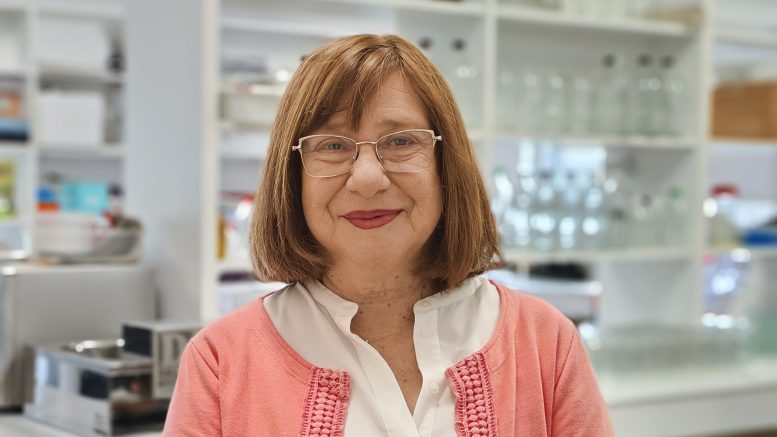
“The HB4 soybean and wheat varieties have already been approved for consumption in several countries…”
Raquel Chan is a researcher in the Nation Council for Scientific and Technical Researches in Argentina – Conicet, teacher at the National Coast University and director at the Agrobiotechnology Coast Institute. An expert in plant biotechnology and crop tolerance to environmental stresses, she is a co-inventor of the HB4 technology.
AgriBrasilis – What is the HB4 technology?
Raquel Chan – HB4 is the trade name for technology developed to soybeans and what wich consists in introducing the gene HaHB4 derived from sunflowers. This gene gives the plants greater tolerance to stress caused by water deficit, salinity and high temperatures. This leads to a decrease in yield losses when compared to plants without the gene, after periods of drought, in salty soils or harvest in high temperatures.
AgriBrasilis – How does HB4 technology affect plant physiology?
Raquel Chan – To the human eye, HB4 plants cannot be distinguished from their counterparts that are lacking the sunflower gene. It is possible that subtle characteristics could be identified using spectral imaging and artificial intelligence.
The plant’s general physiology doesn’t change when the growing conditions aren’t stressful. In adverse conditions, however, the HB4 plants appears greener and healthier looks.
AgriBrasilis – How has the market reacted to HB4 soybeans and wheat?
Raquel Chan – The HB4 soybeans and wheat have already been approved for consumption in several countries and, in some cases, also for cultivation. Acceptance was not immediate, but it has been gradually increasing.
AgriBrasilis – What were the stages and costs involved in the development of the technology?
Raquel Chan – The project started with basic research aimed at understanding why the sunflower is more tolerant than other species to stress caused by water deficit. The public laboratory developed the technology in the model-plant Arabidopsis thaliana, while the application in agricultural crops was conducted by the company Bioceres.
It’s very hard to calculate the total development cost. According to estimates, the investment made by the company was approximately US$ 25 million.
I can’t estimate the public laboratory costs, because the work involves years of education and research, salaries, grants, and the funding of the projects were not dedicated exclusively to this technology.
AgriBrasilis – What other research on climate adaptation is currently being conducted?
Raquel Chan – A lot. We continuously study this endless and important topic to food security. We have new developments and patents, but we still lack in the fundamental stages for these technologies get to the market.
READ MORE: