
Brazil Steps Up Enforcement Against Corporate Biopiracy
Brazil
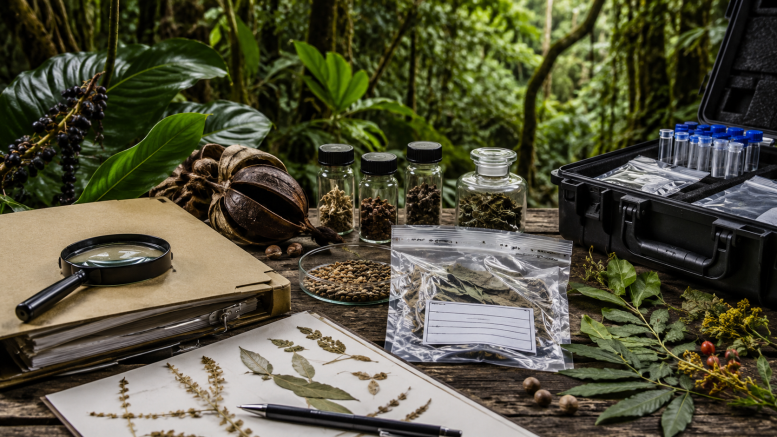
Ibama issued US$ 7.07 million in corporate biopiracy fines in Brazil over the past five years, reinforcing the need for companies using Brazilian biodiversity resources to comply with the country’s Biodiversity Law. Failures in identifying the origin of biological inputs, ensuring supply chain traceability and properly registering genetic heritage may result in fines and undermine legal certainty for business operations. (Ibama)
The Ministry of Mines and Energy highlighted progress on the Amazon Energy Program, which aims to replace isolated diesel-powered systems with renewable energy sources across the Amazon Biome region. The projects are expected to benefit 36 communities and approximately 652 thousand people, while reducing diesel consumption by an estimated 270 million and avoiding 800 thousand tonnes of CO₂ emissions over their lifetime. (MME)
The Amazon+10 Initiative launched the first call under the Amazon Challenges Program, allocating approximately US$ 20.6 million for research, development and innovation projects focused on the Amazon socio-bioeconomy. The call will support 9 to 12 projects, with up to US$ 1.9 million per proposal, prioritizing value chains such as assaí berries, Brazil nuts, cocoa, babassu, non-timber forest products and fisheries. (Fundação Araucária; Amazônia+10)
The Ministry of Finance launched a series of roadshows across Asia to present the Eco Invest Brasil program to investors and governments. The initiative highlights the program’s fifth auction, focused on innovation funds for strategic sectors, and notes that Eco Invest has already mobilized more than US$ 26.9 billion for sustainable projects across the country. (Ministry of Finance)
The Climate Investment Funds approved an investment plan for the Industrial Decarbonization Program. The initiative provides US$ 250 million for decarbonization projects, with the potential to reach more than US$ 3 billion in co-financing, prioritizing the steel, cement, chemicals and fertilizer sectors. (MDIC)
The Government of the State of São Paulo launched Phase 3 of the Guardians of the Forests Payment for Environmental Services program, with an investment of approximately US$ 663 thousand to remunerate Indigenous communities for environmental conservation actions. The program expands to new territories and is expected to benefit more than 600 families, strengthening forest protection, biodiversity and sustainable practices. (Semil-SP)
The Government of São Paulo inaugurated a plant at the University of São Paulo that converts organic waste into electricity, biomethane and biofertilizers, in a circular economy project supported by Semil. The facility can process up to 25 tonnes of waste per day, with potential for expansion, and turns the material into renewable energy and agricultural inputs, helping to reduce emissions and promote the sustainable use of urban and industrial waste. (Semil-SP)
The Ministry of the Environment expanded the monitoring of air quality in the Amazon Biome with the installation of two new automatic stations in Rio Branco, State of Acre, and Porto Velho, State of Rondônia, designed to measure fine particulate matter. The initiative is part of a project in partnership with Fiocruz and local institutions and aims to strengthen environmental surveillance, support public policies and improve monitoring of the health impacts of wildfires and wildfires on the population. The data will be integrated into the MonitorAr platform. (MMA)
The State of Paraná reduced Atlantic Forest deforestation by 87.5% between 2020 and 2025, from 3,298 hectares to 411 hectares, according to the Atlantic Forest Deforestation Alert System, developed by the SOS Mata Atlântica Foundation, MapBiomas and Arcplan. The result places the state among the best performers in the country, behind only the States of Rio Grande do Sul and São Paulo, and is attributed to the use of monitoring technologies, strengthened enforcement and policies encouraging environmental conservation. (SOS Mata Atlântica Foundation; MapBiomas; Arcplan)
Brazil recorded the highest volume of funding in the historical series for deforestation control, environmental enforcement and wildfire prevention and response. Provisional Measure No. 1367/2026 opened approximately US$ 64.9 million in extraordinary credit for the Ministry of the Environment. Of the total, approximately US$ 37.4 million will go to Ibama and US$ 27.5 million to ICMBio. (Ibama)
Areas under deforestation alerts fell 37.5% in the Amazon Biome and 8.2% in the Cerrado Biome from August 2025 to May 2026, according to Deter/Inpe data. In the Amazon, alerts totaled 2,189 km², the lowest level in the historical series for the period, which began in 2016. In the Cerrado, 4,208 km² were identified under deforestation alerts. (MMA; Inpe)
The Amazon Fund quadrupled the annual pace of project approvals since its governance was restored in 2023. Average approved funding rose from approximately US$ 57.7 million per year between 2009 and 2018 to approximately US$ 250 million over the past three years. Since its creation, the mechanism has received approximately US$ 1.02 billion in donations and approved 153 projects focused on preventing, monitoring and combating deforestation, forest restoration and sustainable productive activities. (MMA; BNDES)
The Interinstitutional Working Group for the Castanhão Reservoir advanced in building solutions for the sustainable regulation of fish farming in the largest multi-use reservoir in the semi-arid region. The measures include starting the regularization process for small tilapia farmers, holding a public hearing and creating a technical group to improve studies on the reservoir’s carrying capacity. The initiative seeks to reconcile aquaculture production with water quality preservation and water security in Ceará state. (ANA)
Natura launched a startup focused on selling Amazon Biome bioingredients to other industries, with full traceability, sustainable management and standardized assets. The initiative builds on the supply chain the company has developed in the region over 25 years. In 2025, 13.1% of the raw materials used by Natura came from the Amazon, involving 43 communities and more than 11 thousand families in ethical biotrade chains in Brazil, helping conserve 2.2 million hectares of forest. (Natura)
Suzano reached 43% of its goal to connect 500 thousand hectares of priority areas for biodiversity conservation by 2030. By the end of 2025, the company had connected 214.4 thousand hectares through ecological corridors, mainly in the Atlantic Forest in the State of Espírito Santo. The company’s biodiversity monitoring identified 125 threatened species in its operating areas, of which 24 were selected as priority targets. (Suzano)
Klabin reported progress on environmental targets related to climate, water, biodiversity and the circular economy. The company has more than 900 thousand hectares in Brazil, of which 41% of the forest areas are dedicated to native vegetation conservation. The company also said more than 93% of the energy matrix comes from renewable sources and that more than 99% of the industrial solid waste generated in its operations is recycled, reused or converted. (Klabin)
Nescafé reported 53% of the green coffee used by the brand in 2025 came from farmers adopting regenerative agriculture practices. The program supported more than 100 thousand coffee farmers in 15 countries, with training and technical assistance from more than 1.6 thousand agronomists and field staff. The company also reported an 18.3% reduction in greenhouse gas emissions associated with green coffee compared with the 2018 baseline. (Nestlé; Nescafé)
Danone updated the circular packaging strategy for 2030 and said that, from 2026 onward, it will prioritize designing packaging for recycling, reducing virgin plastic use and supporting more inclusive and efficient recycling systems. The company reaffirmed the commitment to the Ellen MacArthur Foundation and to advancing packaging circularity. (Danone)
JBS and Âmbar Energia announced a US$ 12.45 million investment to expand biomethane production at Friboi units in Campo Grande II, State of Mato Grosso do Sul, Lins, State of São Paulo, and Andradina, State of São Paulo. The expansion is expected to add more than 14 million m³ of biomethane per year to the company’s energy matrix, using industrial waste. According to the company, methane capture at meatpacking plants has already avoided more than 263 thousand tonnes of CO₂ equivalent emissions since 2023. (JBS; Âmbar Energia)
Gasmig, part of Grupo Cemig, signed a contract with GeoMit for biomethane supply in the Triângulo Mineiro region. The agreement enables a plant in Uberaba, State of Minas Gerais, with capacity to produce 50 thousand m³ of biomethane/day from byproducts of the sugar and ethanol chain of State of Minas Gerais Sugar and Ethanol Company. Gasmig is to invest approximately US$ 190 million in infrastructure, including almost 400 km of isolated networks and interconnections to expand the use of renewable gas by industrial customers. (Gasmig; GeoMit; CMAA)
The National Agency of Petroleum, Natural Gas and Biofuels approved a technical report on the fungibility of the Biomethane Certificate of Origin Guarantee. The measure is part of the regulatory framework for the biomethane market, a renewable fuel produced from organic waste, and aims to provide more certainty for certification, traceability and commercialization of the product in the country. (ANP)

Latin America
The Undersecretariat of Environment of Argentina is contributing to the development of the Blue Ports strategy, focused on sustainable environmental management of fishing ports. The initiative, promoted by FAO, seeks to define guidelines to integrate environmental, social, economic and governance dimensions into port management, focusing on coastal and marine biodiversity, fisheries and pollution control, especially plastic pollution in the marine environment. (Undersecretariat of Environment; FAO)
Colombia adopted, for the first time, environmental terms of reference for Environmental Impact Studies for offshore wind energy projects. Resolution No. 0808/2026 establishes criteria to assess marine and coastal ecosystems, biodiversity, the seabed, underwater noise, maritime traffic, cumulative impacts, climate risks and effects on communities and economic activities linked to the sea. (Ministry of Environment)
Colombia adopted a methodology to evaluate low-impact agricultural activities in páramos [alpine tundra ecosystems located in the Andes Mountains], strategic ecosystems for water supply. The methodology will make it possible to recognize sustainable agricultural practices, guide productive reconversion and substitution programs, and apply differentiated criteria for traditional inhabitants of páramo areas. The technical instrument will be reviewed every three years. (Ministry of Environment; Ministry of Agriculture)
RSPO and Conservation International brought North American buyer companies to the Amazon Biome in Ecuador to discuss more sustainable and inclusive palm oil supply chains. The delegation included companies such as Dunkin’ and Yum! Brands, among other organizations. The visit highlighted independent farmers, smallholder initiatives and Grupo Danec’s ACUS La Pantera ecological reserve, with more than 500 hectares of conserved forest. (RSPO; Conservation International)
Grupo Bimbo, from Mexico, surpassed 500 thousand hectares under regenerative agriculture practices by the end of 2025, up nearly 73% from more than 290 thousand hectares in 2024. The company aims to source 100% of key ingredients from land cultivated under regenerative practices by 2050. The strategy involves farmers, suppliers and institutions such as CIMMYT, focusing on soil health, biodiversity, ecosystems and the resilience of farming communities. (Grupo Bimbo)
The Andean Development Corporation made the first disbursement of a credit line of up to US$ 50 million to Bancolombia in Panama, aimed at strengthening sustainable foreign trade financing in Latin America. The funds will be primarily directed to companies and SMEs in the agricultural sector with sustainability certifications, as well as green projects such as energy efficiency and renewable energy. (CAF; Bancolombia)
The National Irrigation Technification Directorate and the Technological University of Santiago, in the Dominican Republic, signed a cooperation agreement to promote innovation, training and research in the agricultural sector. The partnership aims to strengthen sustainable agriculture through the efficient use of irrigation water, as well as the development of technologies and smart agriculture projects, including solutions based on artificial intelligence. The agreement provides technical support from TNR and academic contributions from UTESA for professional training and applied research, aligned with the country’s national irrigation technification strategy. (TNR; UTESA)
COFCO International reported a reduction of up to 23% in the emissions intensity of soybean and corn supply chains in 2025 compared to 2021, according to its Sustainability Report. The company also surpassed US$ 1 billion in sustainability-linked financing and increased the sourcing of sustainably certified grains in South America by 46%. (COFCO International)
READ MORE: