
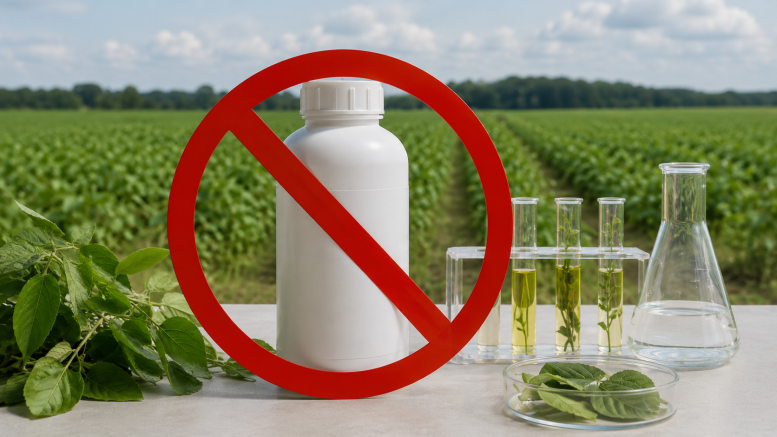
“The transition to a model less dependent on harmful products and the gradual replacement of more toxic inputs with less toxic substances…”
Leomar Daroncho is a labor prosecutor, member of the Working Group on Pesticides of the Brazilian Labor Prosecution Office, a master’s student in public health policy, and holds degrees in Law from the University of Brasília (UnB) and Civil Engineering from the Federal University of Santa Maria (UFSM).

Leomar Daroncho, member of the Working Group on Pesticides of the Brazilian Labor Prosecution Office
AgriBrasilis – Why ban glyphosate?
Leomar Daroncho – In 2015, the International Agency for Research on Cancer (IARC) classified glyphosate as probably carcinogenic to humans, mainly in relation to non-Hodgkin lymphoma.
There is abundant scientific data, especially from the National Cancer Institute (INCA), Fiocruz and the Ministry of Health, indicating that exposure to the product poses risks to the health and lives of exposed workers and their families, even at low doses. This applies both to employed rural workers and to farmers who own their land.
At the end of 2025, an article published in the scientific journal Regulatory Toxicology and Pharmacology, from 1999/2000, was retracted. The article had been used to justify the authorization of glyphosate use by regulatory agencies. The study argued that glyphosate was not carcinogenic. However, the journal identified serious flaws in the work, which lost credibility. Therefore, in the name of health, the authorization for the use of glyphosate must be reviewed.
AgriBrasilis – Considering the importance of this product, what mitigation measures could be adopted, instead of a ban, to minimize health risks?
Leomar Daroncho – Public health, exposed workers, their families and farmers in this important economic sector deserve special attention from regulatory agencies and policymakers.
This attention must be transformed into effective action, prioritizing less harmful forms of production.
According to data from the Ministry of Agriculture and Livestock, Brazil reached a record in pesticide approvals and commercialization in 2025. There were 914 new registrations, a 38% increase compared to 2024. Sales in 2024 reached 825.8 thousand tonnes, up 9.3% compared to 2023, according to data from Ibama.
A fundamental measure to mitigate damage to health and the environment would be to accelerate the re-evaluation of products, especially those banned in their countries of origin or those subject to warnings of serious harm. The Pesticides Law (No. 14785/2023), although it has greatly weakened the possibility of inspection and control, contains a provision requiring the competent authority to reanalyze products in cases of risk alerts or recommendations against the use of pesticides by international organizations responsible for health, food or the environment of which Brazil is a member (article 3, paragraph 9).
Another measure of maximum importance would be to prioritize the registration of less toxic products capable of replacing substances currently in use.
In the medium term, these measures may even be vital for the economic sector, as they reduce the risk of sanitary barriers imposed by more demanding consumer markets abroad.
The transition to a model less dependent on harmful products and the gradual replacement of more toxic inputs with less toxic substances require research and investment. This is unlikely to happen through the spontaneous choice of the chemical industry. Government agencies need to assume this responsibility.
AgriBrasilis – Why does the MPT believe that Anvisa is applying a “double standard” in the analysis and re-evaluation of pesticides?
Leomar Daroncho – Anvisa is the agency responsible for analyzing the risks to human health arising from exposure to pesticides. Its role is preventive, in defense of rural workers and public health.
As stated in the Public Civil Action, the double standard is configured based on the findings of the Federal Court of Accounts, which identified excessive delays in the re-evaluation of substances already authorized. The regulatory process is often marked by significant bureaucracy, which delays State measures to protect health and a balanced environment. Meanwhile, in the registration of new products, fast-track measures are generally adopted to authorize certain pesticides, in a process that is not very transparent, according to the Federal Court of Accounts.
The lawsuit cites data according to which Brazil continues to use large volumes of pesticides banned in OECD countries, as well as in China and India. Around 67% of the volume sold in Brazil would include pesticides recognized as carcinogenic, endocrine-disrupting and toxic to reproduction.
AgriBrasilis – If the courts decide against a ban, what will be the MPT’s next actions?
Leomar Daroncho – The possibility of discussing this serious environmental problem, based on reliable scientific data, is already very important. It is essential that the people most exposed become aware of the issue.
An adequate and safe working environment is a right of Brazilian society and one of the most important rights of working citizens. The MPT acts in accordance with the guideline of sustainable development established by the Brazilian Constitution.
Other very important and serious issues have also represented, or still represent, challenges for institutions and for Brazilian society, such as the banning of the insecticide DDT, dams, asbestos and tobacco. There are good reasons to have hope in decisions that preserve the health and lives of workers, whether employees or landowners, and their families.
Both the Labor Courts and the Federal Supreme Court have shown sensitivity and responsibility regarding the environmental agenda, which concerns the survival of present and future generations.
It is worth highlighting the concern shown by the Federal Supreme Court in giving practical effect to the commitment assumed by the Federative Republic of Brazil before the international community, especially regarding the Sustainable Development Goals, which are also linked to the promotion of a safe working environment, with a focus on the most vulnerable people.
In addition, there are possibilities for challenges before international bodies, which have also been evolving in the agenda of environmental preservation for present and future generations.
READ MORE: