
Illegal Agrochemicals Already Account for up to 25% of Sales in Some Regions of Peru
The Tropical Plant Health Network published new studies in the Technical Series – Tropical Plant Health on crop protection management in corn and coffee. Research Bulletin No. 2 summarizes 156 cooperative trials on the control of corn white spot in second-crop corn between 2021 and 2024, indicating better performance of mixtures with strobilurins, carboxamides and triazoles, as well as benefits from multisite fungicides. Technical Communication No. 3 evaluated the population dynamics of the red mite, Oligonychus ilicis, in conilon coffee, Coffea canephora, in southern Amazonas, recording a 90% infestation peak in Humaitá. According to the publications, strategies with multiple modes of action and systematic monitoring are essential to guide integrated management and preserve yield. Available at: https://lnkd.in/dS5NsYVe;
Brazilian glyphosate imports totaled 57.3 thousand tonnes from January to May 2026, down 20% from the same period in 2025, according to AMR Business Intelligence. China remained the leading supplier, accounting for 84% of imported volume, while the USA represented 16%. The data indicate a slower supply pace for one of the most widely used herbicides in the country. (AMR Business Intelligence)
CropLife Brasil reported 230 tonnes of seized illegal chemical pesticides were incinerated and safely disposed of in 2025, a volume 30% lower than in the previous year. Since 2020, the organization has supported 49 cooperation actions that resulted in the destruction of approximately 1.6 thousand tonnes of illegal inputs. According to the organization, disposal includes handling, repackaging, storage, transport and incineration in licensed facilities at temperatures above 900 °C. The Institute for Economic and Social Development of Borders estimates that approximately 25% of Brazil’s pesticide market is illegal. (CropLife Brasil; IDESF)
Sindiveg maintains a free online training platform for farmers, rural workers and agricultural chain professionals, with more than 20,000 registered users. The courses offer digital certification and cover topics such as correct and safe use of pesticides, application technology, prevention and first aid, transport, storage, aerial application, illegal pesticides, phytosanitary management and biological control. The platform also includes content from the Colmeia Viva and Legal Applicator programs, focusing on good practices, sustainability, worker safety and environmental protection. Available at: https://sindiveg.org.br/
The Federation of Agriculture of the State of Rio Grande do Sul reported the Production Cost Inflation Index accumulated a 4.90% increase in 2026 and 2.37% over 12 months in the State. In April, the index rose 1.55%, mainly pressured by fertilizers, which increased 8% during the month. The Farmer Price Inflation Index rose 0.81% in April, but still accumulated a 9.19% decline over 12 months, indicating that farmers continue to receive less than a year ago despite rising costs. (Farsul)
Erika Ramos Mello was appointed director of the Agricultural Defense Department of the State of São Paulo, under the State Secretariat of Agriculture and Supply. A veterinarian with a master’s degree in Veterinary Medicine from the Federal Rural University of Rio de Janeiro and a bachelor’s degree in Public Administration from Fluminense Federal University, she has worked in agricultural defense since 2008. Mello will be the first woman to lead the institution in 27 years and has worked in areas such as animal health, data intelligence, agricultural transit, foot-and-mouth disease and zoosanitary emergencies. (SAA-SP)
Researchers from the Federal University of Rondonópolis are developing organomineral fertilizers from ashes of plant biomass, with support from the Mato Grosso State Research Support Foundation and the National Council for Scientific and Technological Development. Coordinated by professor Edna Maria Bonfim, the project aims to transform agroindustrial residues into granulated and pelletized agricultural inputs with gradual nutrient release. According to the researchers, studies initiated in 2009 indicate the potential of plant ash to improve soil fertility, supply nutrients to plants and contribute to nematode management, with results observed in crops such as beans, corn, arugula, melon and ornamental flowers. (UFR; Fapemat; CNPq)
Águia Fertilizantes started production of the first phosphate fertilizer manufactured in the State of Rio Grande do Sul, at an industrial unit in Caçapava do Sul. The operation is part of the initial phase of the Três Estradas Phosphate Project, based on a phosphate rock deposit in Lavras do Sul, with geological resources estimated at more than 100 million tonnes of ore. Initial capacity will be up to 150 thousand tonnes/year, with expected production of approximately 70 thousand tonnes in 2026. With the new industrial complex planned for 2027, capacity could reach 300 thousand tonnes/year, which is estimated to meet approximately 15% of Rio Grande do Sul’s demand for phosphate fertilizers. (Águia Fertilizantes; Government of Rio Grande do Sul)
The Organization of Brazilian Sugarcane Farmers’ Associations warned that farmers have been reducing fertilizer applications in sugarcane fields due to negative margins, high costs and low profitability for sugar and ethanol. Fertilizer use has been cut by up to 60% in some areas and may affect the 2027/2028 and 2028/2029 crops, with impacts on tillering, yield per hectare, sugar recovery and ratoon sprouting. (Orplana)
An accident with an agricultural sprayer and a pickup truck caused the leakage of approximately 2,500 L of a mixture containing herbicides and adjuvant in Ciríaco, northern State of Rio Grande do Sul. The tank rupture caused the product to flow for approximately 200 m before reaching a nearby watercourse. Inspectors did not find evidence of fish, wildlife or other aquatic organism mortality so far, but the area remains under monitoring to assess potential environmental damage. (3rd Environmental Police Battalion; Military Brigade)
Fertilizer deliveries to the Brazilian market totaled 9.76 million tonnes in the 1Q26, up 3.8% from the same period in 2025, according to the National Fertilizer Association. In March, deliveries reached 2.83 million tonnes, an 18.7% year-on-year increase. The State of Mato Grosso accounted for 25.2% of the volume, with 2.45 million tonnes. Domestic production of intermediate fertilizers decreased 16.2% in the period, to 1.41 million tonnes, although the association noted that not all national production was captured in the quarterly data. Imports declined 4%, to 8.15 million tonnes. (ANDA; Siacesp; MDIC)
Agrion Fertilizantes started construction of a second organomineral fertilizer plant, integrated with Enersugar’s industrial facility in Ibirarema, State of São Paulo. The project involves an investment of approximately US$ 9.63 million and will use sugarcane processing residues, such as vinasse and filter cake, to produce pelletized solid and liquid organomineral fertilizers. The unit will have a capacity of up to 50 thousand tonnes/year and is expected to start operations in the 1H27. According to the company, the model combines circular economy, sugarcane processing and regional supply of lower-impact fertilizers. (Enersugar; Agrion Fertilizantes)
Gabriel Medina, professor at the University of Brasília, stated that scientific evidence indicates progress in the use of bioinputs in agricultural management, although efficacy varies according to product, crop and biological target. According to the researcher, some commercial bioinputs achieved up to 80% control of white mold, caused by Sclerotinia sclerotiorum, while products targeting foliar diseases, such as target spot, caused by Corynespora cassiicola, showed efficacy of up to 40%. Medina also highlighted the evidence for bioinsecticides and bionematicides, but warned that products associated with foliar biological nitrogen fixation in corn should be properly reviewed, since a scientific article indicated that the commercial strain of Methylobacterium symbioticum lacks the complete nitrogenase genetic apparatus, although it may act as a plant growth promoter. (UnB)
CropLife Brasil intends to intensify its advocacy for regulatory priorities considered strategic for the agricultural technology sector. According to Ana Repezza, the organization’s president, the agenda includes regulation of the new pesticide legal framework, approved in 2023; the bioinputs law, approved in 2024; and congressional approval of the revision of the Plant Variety Protection Law. The organization says defining regulatory procedures is necessary to reduce legal uncertainty and provide predictability for companies developing new technologies for agribusiness. (CropLife Brasil)
Aegro, a Brazilian agricultural technology company specialized in farm management, launched a price intelligence tool based on 1.7 million electronic invoices. The platform allows farmers to compare purchases of fertilizers, pesticides, seeds and other input prices per region. It also identifies historical patterns, seasonality, embedded interest in installment payments and more competitive suppliers. The initiative aims to reduce information asymmetry in negotiations between farmers, dealers and input suppliers. (Aegro; Pensar Agro)
The Federation of Agriculture and Livestock of the State of São Paulo reported agricultural production costs in the State remained under pressure, mainly due to increases in nitrogen fertilizers and diesel. Urea prices rose 33.7%, while ammonium nitrate increased 14.3%, ammonium sulfate 16.5%, etc. (FAESP; CNA; ESALQ/USP)
The soybean sanitary break began in the State of Mato Grosso and will run until September 7th, 2026. During this period, farmers must eliminate volunteer soybean plants in farms, roadsides, storage areas and other locations to reduce the survival of Phakopsora pachyrhizi, which is the fungus that causes Asian soybean rust. Planting for the 2026/27 season is authorized from September 7th, 2026, to January 7th, 2027, according to the State Secretariat for Economic Development and the Mato Grosso Agricultural Defense Institute. (Famato; Indea-MT; Sedec-MT)
Researchers from the State University of Londrina, Agronema and Estação Dashen evaluated pre-emergence herbicides used with bionematicides against Meloidogyne javanica in soybean. The study indicated imazethapyr and S-metolachlor did not impair biological agents based on Pochonia chlamydosporia and Bacillus firmus. The result helps guide compatibility between herbicides and bionematicides in soybean nematode management programs. Available at: https://doi.org/10.1007/
Latin America
Melissa Owen, founder and attorney at Law Practice, a firm focused on international and Latin America regulatory counsel, said Brazil and Chile are moving in different directions to modernize pesticide regulation. In Brazil, Anvisa has started incorporating the Globally Harmonized System toxicological classifications into active ingredient monographs, while the Unified Electronic Information, Petition and Evaluation System will centralize registration and post-registration procedures. In Chile, Resolution No. 3960/2026 expanded authorization pathways for microbial pesticides and natural substances, including products already approved in the USA and the EU. (Law Practice | Latin America & International Regulatory Counsel)
The Federal Court of Victoria, Argentina, ordered a judicial inspection of a 5,300-hectare area in Islas de las Lechiguanas, in the Paraná Delta, as part of an investigation into the construction of dikes, blockage of waterways and agrochemical spraying. The measure follows a request by the civil association Unidos por la Vida y el Medio Ambiente, which filed a preventive environmental damage action and alleges the existence of a 12-km embankment, obstruction of a stream and attempts to dry lagoons and wetlands for agricultural and livestock use. The inspection will verify the existence of the works and assess their potential environmental impacts and risks to public health. (Federal Court of Victoria; Unidos por la Vida y el Medio Ambiente)
Fertilizar Civil Association warned that pasture fertilization still has low adoption in Argentina, despite its potential to increase forage production. According to the entity, only 30% of the 11 million forage hectares analyzed in the country’s main livestock basins receive some type of fertilization. Adoption is higher in annual forage crops, with 74% of the area fertilized, but falls to 38% in perennial pastures, while more than 90% of approximately 6 million hectares of natural grasslands receive no fertilizers. In demonstration modules in the Salado Basin, improved fertilization treatments produced 15,750 kg of dry matter per hectare, compared with 8,784 kg in the unfertilized control. (Fertilizar Civil Association)
Brazil and Guatemala signed a memorandum of understanding to expand cooperation in the agricultural sector, focusing on animal and plant health, research, innovation, bioinputs, genetic resources and agricultural trade. The agreement was signed by Brazil’s and Guatemala’s Ministries of Agriculture, in the context of 50 years of technical cooperation between the countries. (MAPA; MAGA)
The Ministry of Agriculture of Brazil reported that an official mission to Panama identified cooperation opportunities in fertilizer logistics, bioinputs and agricultural technology, with a focus on diversifying strategic supply routes to Brazil. The delegation visited port terminals at the Cristóbal complex, assessed procedures for transporting fertilizers, grains, natural gas and raw materials for fertilizers, and formalized the opening of the Panamanian market to Brazilian coconut and coffee seeds. (MAPA)
Chile’s Agricultural and Livestock Service opened a public consultation on 06/03/2026 regarding a draft amendment to complementary rules under Law No. 21349, which regulates the composition, labeling and commercialization of fertilizers and biostimulants. The draft adjusts rules on nutrient and contaminant limits, tolerances in official analyses, criteria for organomineral fertilizers, physicochemical parameters, minimum levels of nutrients, and label and leaflet requirements. (SAG)
Irrigation specialists from Chapingo Autonomous University warned that excessive use of agrochemicals increases river contamination in Mexico, mainly through nitrogen leaching into water. According to researchers Rafael Sánchez Bravo and Claudio Lobato, monitoring in agricultural areas found nitrogen levels above the Mexican Official Standard. Approximately 80% of the country’s rivers show contamination associated with agriculture. The specialists also said agriculture consumes 75% to 77% of Mexico’s available freshwater, with losses exceeding 60% in agricultural water use due to infiltration and evaporation. (Chapingo Autonomous University)
The Service for Agrifood Health, Safety and Quality in Mexico reported, in its 06/01/2026 Phytosanitary Monitor, the USA Department of Agriculture expanded the quarantine area for Anastrepha ludens, the Mexican fruit fly, in Hidalgo County, Texas, near the Mexican border. The regulated area covers 229.71 km² and includes 93.93 hectares of commercial citrus. In Mexico, A. ludens is listed as a regulated pest and is targeted by the National Fruit Fly Campaign. (Senasica; USDA)
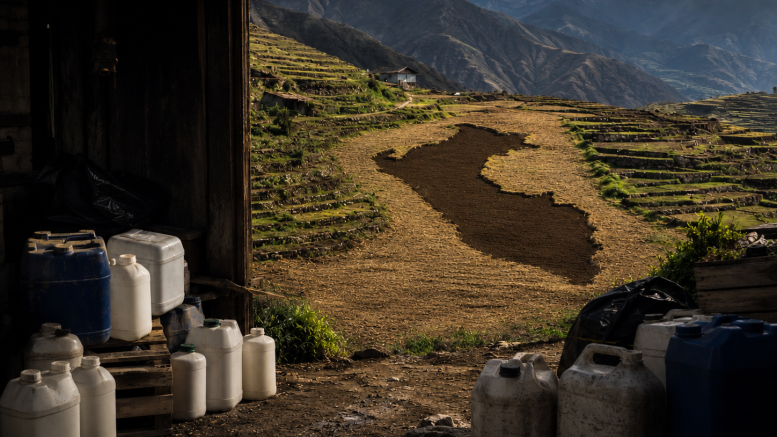
Cultivida association warned that illegal agrochemicals already account for up to 25% of sales in some regions of Peru, posing risks to public health, food safety, the environment and agricultural productivity. According to the organization, many products enter the market through smuggling networks, without official registration, quality control or technical evaluation, potentially causing toxic residues in food, soil and water contamination, as well as failures in pest control. The organization recommends that farmers purchase inputs only from authorized dealers and calls for stronger coordination between the public and private sectors to fight illegal trading, especially in border areas. (Cultivida)

READ MORE: