
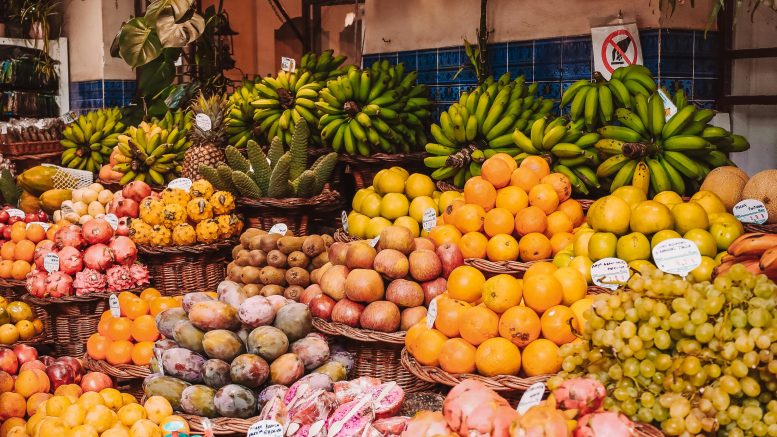
“Today’s crop varieties come from a small number of ancestors…”
Juliano Gomes Pádua is a researcher at Embrapa Genetic Resources and Biotechnology, an agronomist from the Federal University of Lavras, with a PhD in genetics and plant breeding from USP.
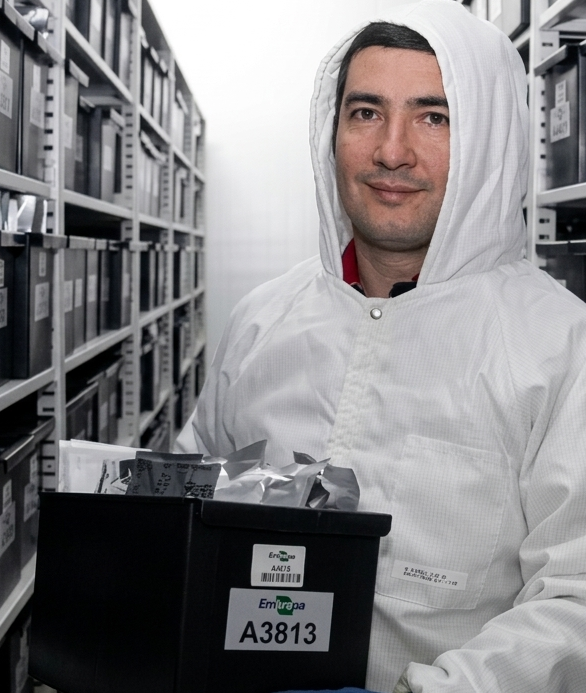
Juliano Gomes Pádua, researcher at Embrapa
AgriBrasilis – Why is it important to conserve the genetic diversity of agricultural crops?
Juliano Gomes Pádua – Because it is the foundation of food security. Genetic diversity is, in practice, agriculture’s “insurance policy.” When we need a trait to improve a plant, we activate this insurance through the genetic diversity preserved in germplasm banks. In this sense, we search these banks for plants that have characteristics that may confer tolerance to drought, high temperatures, disease resistance and adaptation to poor soils. In a climate change scenario, this shifts from being important to being essential.
Moreover, all plant breeding depends on this diversity. The modern cultivars we use today are the result of successive cycles of crossing and selection using genetically diverse materials. If this genetic base shrinks, technological progress is also limited. These actions are also closely linked to food sovereignty, as they allow a country to develop its own agricultural solutions without relying exclusively on closed technological packages from abroad.
Another important point is food quality. Genetic diversity is associated with variability in nutrition, flavor and even cultural uses. When we lose diversity, we don’t just lose productivity—we also lose nutritional and cultural richness.
In addition to conservation in germplasm banks by research institutions, there is also important work done by farmers who preserve varieties that have been cultivated for decades, known as creole, traditional, or local varieties. This is called on-farm conservation, in which varieties are maintained in a constant evolutionary process because they are continuously cultivated. Plants remain in the field facing sun, rain, insects and today’s viruses, fungi and bacteria. They adapt locally to climate change in real time.
AgriBrasilis – Which species are most conserved?
Juliano Gomes Pádua – FAO estimates that there are more than 850 national germplasm banks in 116 countries, collectively conserving nearly 6 million accessions (samples stored in these banks).
Each country conserves a set of species according to its needs and interests. The plant species that form the basis of the human food chain are the most represented worldwide, such as wheat, rice and maize.
In Brazil, it is estimated that there are more than 370,000 accessions of approximately 2,330 different species. The largest collections include soybean, rice, beans and wheat. Thanks to Brazil’s vast geography and diverse climates, there is also a wide range of native species used for food—especially fruits, palms, roots and tubers—as well as ornamental and medicinal plants conserved in germplasm banks. However, many of these species remain underutilized, with exceptions such as pineapple, açaí, cocoa, cashew, Brazil nut, cupuaçu, guaraná, cassava and passion fruit.
AgriBrasilis – Are we losing genetic diversity in crops?
Juliano Gomes Pádua – Yes. Since the Green Revolution, there has been a massive replacement of local (creole) varieties with high-yield commercial cultivars. Although this increased total food production, it also resulted in dangerous homogenization. Today’s crop varieties come from a small number of ancestors, making them closely related and genetically less diverse.
A 2013 study found that four soybean cultivars form the basis of current varieties. Research in sugarcane showed a similar pattern: about 59% of the genetic makeup of analyzed varieties came from just four ancestors.
Another way diversity is lost is when farmers abandon seeds of traditional varieties selected over generations in favor of commercial ones—or even different species. Unique genes adapted to specific microclimates can be lost forever.
However, there are cases where this trend is being reversed. The search for genes in wild relatives of cultivated plants has brought new diversity to species such as tomato, rice, sugarcane, peanut, soybean and cotton.
AgriBrasilis – Are germplasm banks sufficient to preserve this diversity?
Juliano Gomes Pádua – Not at all. The most effective way to preserve diversity is by combining conservation strategies: ex situ (in germplasm banks), in situ (in natural habitats) and on farm (managed by farmers).
These approaches are interdependent—none is effective alone. In on-farm conservation, the risk of losing plants due to pests, diseases, droughts, floods, or extreme weather is significant, especially under climate change. However, these plants are constantly evolving. In contrast, germplasm banks preserve static diversity—plants do not evolve there—but they allow large amounts of diversity to be stored in controlled conditions, increasing conservation security.
AgriBrasilis – How dependent is Brazil on foreign seeds? What are the consequences for agriculture?
Juliano Gomes Pádua – Most of the species that form the basis of the Brazilian diet are exotic, meaning they originated in other countries. Rice and soybean come from Asia, beans from Central and Andean America, wheat from Mexico and coffee from Ethiopia.
However, Brazilian science has successfully imported a large amount of genetic material over the years and now maintains significant diversity in germplasm banks. In addition, Brazil has developed cultivars adapted to its environmental conditions.
Successful examples include the “tropicalization” of soybean, which was once grown mainly in southern Brazil but is now cultivated across all biomes. Grape production in semi-arid regions also demonstrates the effective use of genetic diversity combined with agricultural practices. More recently, wheat cultivation has expanded into the Cerrado with high productivity, bringing Brazil closer to self-sufficiency.
AgriBrasilis – Does Brazil fully utilize its biodiversity potential?
Juliano Gomes Pádua – Still in a limited way. Brazil is one of the most biodiverse countries in the world, but this richness is not yet fully translated into productive systems.
Few native species have been effectively domesticated or integrated into structured supply chains. This contrasts with the existing potential—not only for food, but also for industrial, pharmaceutical and cosmetic products.
Brazil holds about 15–20% of the world’s biodiversity, yet its agricultural trade balance is still largely based on exotic species (soybean from China, cattle from India, coffee from Ethiopia, sugarcane from Asia).
There have been important advances, including those led by Embrapa, but significant bottlenecks remain—such as transforming biodiversity into marketable products, increasing investment in research and development and addressing regulatory challenges.
Better use of this potential could bring economic, social and environmental benefits. It could diversify agricultural production, reduce dependence on a few crops, and enhance local resources.
In the current context, this is not just an opportunity—it is also a strategy for building a more resilient and sustainable agriculture.
READ MORE:
Brazil’s Ministry of Agriculture Outlines Advances in Fertilizer Regulation