
State of Mato Grosso Agricultural Defense Institute Warned About the Deadline for Cotton Planting in Brazil
Brazil
In compliance with court decisions, Anvisa has approved three toxicological evaluations of ammonium glufosinate + quizalofop-P-ethyl (Helm); pyroxsulam and chlorantraniliprole + lambda-cyhalothrin (Rainbow); and glyphosate (Lemma). (Official Gazette of Brazil, Res. No. 741-744 from 02/26/2026, Anvisa)
Agronomist Wagner de Proença Janjacomo is the new director of portfolio and strategic alliances at Syngenta. (Syngenta)
The Department of Border Operations seized 600 kg of pesticides from Paraguay in Maracaju, State of Mato Grosso do Sul. The illegal cargo, which included pesticides and other goods, was valued at approximately US$ 135 thousand and sent to the Federal Police station in Dourados, Mato Grosso do Sul. (Department of Border Operations)
Jonas Cuzzi is the new marketing director for PI AgSciences in Brazil. (PI AgSciences)
The State of Goiás Agricultural Defense Agency has increased field inspections to prevent the entry and spread of Amaranthus palmeri in Goiás, after the recent detection of the weed in the State of São Paulo and confirmed cases in Mato Grosso and Mato Grosso do Sul. The agency expanded inspections in soybean and corn fields and is advising farmers to reinforce equipment cleaning, use certified seeds and maintain constant monitoring of cultivated areas. (Agrodefesa)
Reduction of federal tax incentives introduced by Complementary Law No. 224/2025 may jeopardize the offset and refund of accumulated tax credits related to PIS and Cofins (Brazilian federal taxes levied on gross revenue) in agribusiness segments such as fertilizers, crop protection and seeds, according to Jorge Luiz de Brito Jr., attorney and partner at Gaede & Associados. He says that, if the Brazilian Federal Revenue Service does not clarify the matter before April 1st of 2026, the likely outcome is litigation to prevent a significant cash-flow impact on these supply chains. (ConJur; Gaede & Associados)
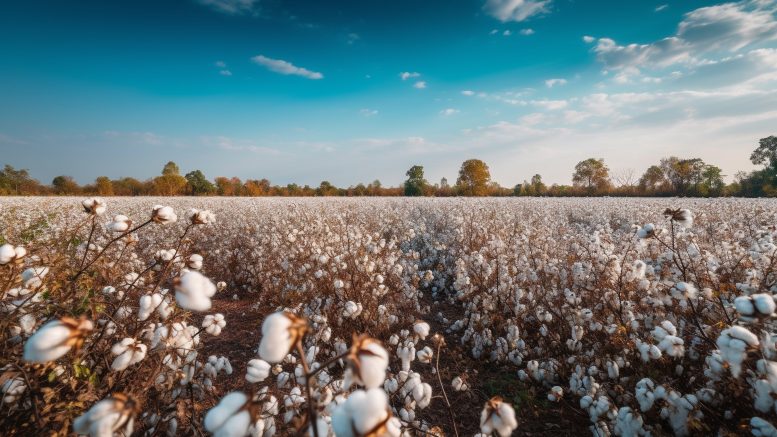
State of Mato Grosso Agricultural Defense Institute warned more than 500 cotton farmers about the deadline for cotton planting on February 28th. After that, sowing is prohibited as a phytosanitary measure to control the cotton boll weevil, Anthonomus grandis. (Indea)
The State of Goiás Agricultural Defense Agency seized and destroyed 350 citrus seedlings infected with citrus canker in the city of Itumbiara after laboratory confirmation of the bacterium Xanthomonas citri subsp. citri. According to the agency, the measure is intended to prevent the spread of the quarantine pest, which can cause defoliation, fruit drop and yield losses, while reinforcing the recommendation that farmers purchase seedlings only from certified nurseries. (Agrodefesa)
Partnership between BiotecBlue and the Federal University of São Paulo is developing a microalgae-based bioinput grown with treated effluents from breweries and aquaculture as a more affordable and sustainable alternative to chemical fertilizers. The product is already being tested in corn, banana, vegetable, and coffee crops, with early results indicating improved leaf development and soil health, in a context of Brazil’s strong dependence on imported fertilizers. (Agência Fapesp)
CropLife Brasil representatives are participating this week in bioinputs discussions at the Organisation for Economic Co-operation and Development in France, in a move that may help align national regulation with international practices. As the global leader in the adoption of these inputs, Brazil closed the 2024/25 season with a 15% increase in bioinputs use, reaching 158.6 million hectares when multiple applications are considered. (CropLife Brasil)
Agribusiness and industry entities have submitted to the Ministry of Agriculture a consensus proposal for a decree to regulate the Bioinputs Law. The text, jointly developed through technical discussions, is expected to be released in the first week of March and aims to enable the practical implementation of the legislation governing the production, use, and commercialization of these products in Brazil. (Abbins)
Rising tensions in Iran could increase fertilizer, diesel, and freight costs in Brazil, with potential effects on the next crop and on corn exports. According to Adriano Turco, grain analyst at Agroconsult, the immediate risk is not supply disruption, but higher urea costs, greater logistics volatility and a possible loss of competitiveness for Brazilian agribusiness. (Agroconsult)
According to Lidia Cristina, partner at Figueiredo & Santos Sociedade de Advogados, the new Bioinputs Law has created a legal gray area in States such as Ceará, where there are specific restrictions on aerial spraying of pesticides. Because the new law removed biological control products from the pesticide legal framework before secondary regulation was fully concluded, the transition does not automatically mean that State prohibitions written for pesticides now apply in the same way to biological products. In Ceará, where the so-called “Zé Maria do Tomé Law” bans aerial spraying of pesticides in agriculture, this creates a fresh legal debate over whether and how those restrictions extend to bioinputs. (Figueiredo & Santos Sociedade de Advogados)
According to Lilian Gonçalves, registration coordinator at Bequisa, Decree No. 12858/2026 strengthens self-control requirements in Brazil’s fertilizer sector by more explicitly incorporating traceability, documented monitoring, quality control and updated criteria for violations and penalties. In her view, the update consolidates a regulatory model more focused on governance, evidence-based oversight and continuous compliance within regulated companies. (Lilian Gonçalves)
Study shows shifts in the profile of root-knot nematodes in Brazilian soybean farms, with Meloidogyne incognita predominating in the States of Mato Grosso and Goiás and Meloidogyne javanica in the southern states. The research also reports, for the first time, the presence of Meloidogyne enterolobii in commercial soybean fields across different regions in the country. Available at: https://tinyurl.com/4mb9mxkb. (Plant Pathology)
Rafael Gil Nogueira Gimenes has been appointed as the new Business Director for ADAMA’s South region, where he will lead commercial operations across the States of Rio Grande do Sul, Santa Catarina, Paraná and parts of Mato Grosso do Sul and São Paulo. (Adama)

Latin América
The Province of Buenos Aires, Argentina, has formalized training courses to certify drone operators for agrochemical spraying, creating a new license category for applications carried out by remotely piloted aircraft. The measure updates the regulatory framework, introduces training requirements and reinforces standards for oversight, human health protection, environmental care and the rational use of crop protection products. (MDA)
In its 2025 annual report, BASF informed that sales in its Agricultural Solutions business in the South America, Africa and Middle East regions decreased by US$ 97 million, reaching US$ 2.66 billion. According to the company, the decline was mainly driven by negative currency effects, especially the weaker Brazilian and Argentine currencies, as well as lower prices; higher volumes, particularly in insecticides, partially offset the drop. Available at: https://tinyurl.com/3v98prny. (BASF)
Bolivia’s ammonia and urea plant in Bulo Bulo has remained shut down since February 11th due to critical failures in a boiler and catalyst systems, which could extend the stoppage by at least 30 days and limit any restart to around 70% of capacity. (YPFB)
According to agronomist and consultant César Palacio, prices of fertilizer and soil amendment in Colombia’s market remain under pressure because the country imports more than 90% of the fertilizers it consumes, leaving the market exposed to exchange rates, international prices, freight, interest rates, and logistics costs. Palacio says that both brand value and the final price paid by farmers depend on the combination of credibility, market conditions, and actual delivery. (César Palacio)
A fire at a warehouse operated by agrochemical company Martínez & Valdivieso in Curicó, Chile, caused losses exceeding US$ 392,1 thousand. The blaze reportedly began during PVC pipe repair work involving the use of a blowtorch; despite the severity of the incident, there were no injuries and there was no chemical emergency. (Bomberos de Curicó y Romenal)
READ MORE:
Sustainable Investments in Brazil: Value Lies in Transformation, Not Exclusion