
Brazil’s Fertilizer Market Recorded More Than US$ 7.38 Million in Losses from Theft
Operation launched by the Environmental Military Police together with the State of São Paulo Public Prosecutor’s Office, dismantled a gang involved in the counterfeiting, theft and robbery of pesticides, resulting in the fulfillment of 25 arrest warrants, arrest of 22 people and the dismantling of five clandestine labs, including two large-scale ones used for adulteration and counterfeiting. (Agência SP)
Fiagril opened up an office in Balsas, in the State of Maranhão, expanding its footprint in the region known as Matopiba (States of Maranhão, Tocantins, Piauí and Bahia). The company, which has operated in the State of Tocantins for 11 years, said the move will strengthen proximity to local farmers and support its expansion plan across key agricultural frontiers. (Fiagril)
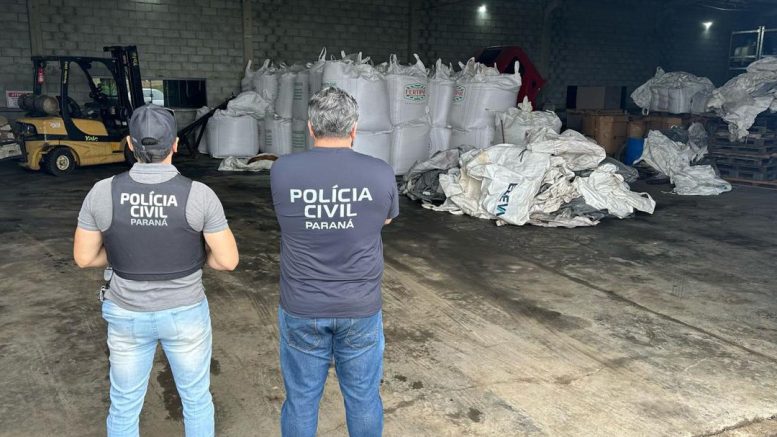
State of Paraná’s Agricultural and Livestock Defense Agency seized, as a precautionary measure, approximately 142 tonnes of fertilizers during an inspection operation in municipalities in the Curitiba Metropolitan Region, carried out jointly with the Paraná Civil Police and the State Revenue Service. The agency said the action found signs of irregular production and non-compliance involving storage conditions and product-origin documentation, aiming to curb fraud and ensure the quality of inputs supplied to farmers. (Adapar)
Brazil’s fertilizer market recorded more than US$ 7.38 million in losses from theft, cargo hijacking and product adulteration from January of 2021 to December of 2024, according to the National Fertilizer Promotion Association. Adulteration accounted for the largest share (US$ 4.96 million). There is a concentration of cases in specific logistics corridors and ports, which calls for stronger traceability, logistics improvements and closer coordination with law enforcement, alongside expanded use of monitoring, telemetry and Internet of Things (IoT) tools. (ANDA)
So far, in 2025, Brazil set a new record for pesticide registration approvals: 725 new products from February to early December, nearly 10% more than in 2024, when 663 approvals had already reached a record. (Ministry of Agriculture)
In compliance with a court decision, Anvisa approves the toxicological evaluation of clomazone + flumioxazin, from Oxon. (Official Gazette of Brazil, Res No. 5013 from 12/11/2025, Anvisa)
Anvisa publishes the voluntary withdrawal of 19 pesticide toxicological evaluation requests. (Official Gazette of Brazil, Res No. 5011 from 12/11/2025, Anvisa)
The Ministry of Agriculture published 38 registration cancellations and 4 pesticide registration request withdrawals. (Official Gazette of Brazil, Act No. 59 from 08/12/2025, Ministry of Agriculture)
Brazil has consolidated a benchmark circular-economy model in the crop protection sector through Campo Limpo, based in Taubaté, State of São Paulo, which has recycled and returned to the market more than 120 million pesticide containers since 2008. According to the company’s president, Marcelo Okamura, the collection and recycling of these packages since 2002 has prevented the emission of more than 1 million tonnes of CO₂. (Campo Limpo; InpEV)
The use of bioinputs continues to expand in Brazil, but experts warn of an underestimated operational risk: tank-mixing bioinputs with fertilizers and other incompatible chemicals can “inactivate” microorganisms before application, due to spray-solution pH and salinity effects. According to Fortgreen’s product manager, João Vidotto, the challenge is ensuring compatibility to achieve an “additive”, or synergistic effect. According to him, there is demand for more technical criteria in selecting and managing mixes to avoid performance losses and wasted investment. (Fortgreen)
Cotton aphid, Aphis gossypii, is again drawing attention from cotton farmers due to its fast reproduction (a 7–10 day life cycle) and direct plant damage, including leaf deformation and reduced growth and photosynthesis. The pest also promotes sooty mold (fungi in the genus Capnodium) through sugary excretion (“honeydew”), lowers fiber quality (“sticky cotton”), and can transmit viral diseases; under severe infestations, yield losses may reach 40%. Effective management should focus on early infestation detection and on risk periods with high temperatures and very low humidity, given that sap-sucking pests like this account for a significant share of insecticide sprays. (Rainbow Agro)
Bacterial spot disease in passion fruit, caused by Xanthomonas axonopodis, is becoming a growing risk in humid production areas, causing primarily leaf damage (heavy defoliation) and directly reducing photosynthesis, fruit filling and market value; when management fails, yield losses may exceed 80%. The issue is especially critical in Northeast Brazil, with higher pressure from December to June during the rainy season, reinforcing the need for preventive, consistent spray programs and an integrated approach alongside control of other recurring pests in the crop, including thrips, passion fruit borer, fruit flies and mites. (Satis)
The Association of Cotton Farmers from the State of Bahia concluded six regional meetings of Abapa Conecta, an initiative designed to strengthen phytosanitary actions and coordinated farmer engagement against the cotton boll weevil, Anthonomus grandis. In 2025, the meetings brought together around 170 cotton farmers plus technical teams, with a new round already planned for 2026; Abapa also presented a restructuring of its Production Nuclei, from 18 down to seven, based on geographic proximity and production profiles to improve the effectiveness of area-wide control efforts. (Abapa)
Brazil’s rural credit crysis, combined with surging production costs and the increase of Brazil’s benchmark interest rate (Selic), is squeezing margins and deepening farm indebtedness, increasing the risk of business disruption across multiple value chains. Scarce and delayed working-capital and investment credit lines are driving a rise in court-supervised debt restructuring [Bankruptcy Protection, similar to US’ Chapter 11th) among farmers (2,273 requests in 2024, up 62% year over year, with an upward trend in 2025) and could translate into lower output and higher food prices, calling for an immediate increase in subsidized rural credit resources to prevent further deterioration. (Faesc; Senar/SC)
Vittia expects a challenging 2026 for agribusiness, with irregular weather, tighter credit, and pressured margins, alongside delays in input sales after planting was pushed back due to insufficient rainfall in 2025. At the same time, the company reinforced its focus on innovation by installing a 3D, multi-spectral automated phenotyping system at its R&D center in São Joaquim da Barra, State of São Paulo, to accelerate the selection and validation of microorganisms and formulations for biological inputs. (Vittia)
The “Spray Adjuvants” program run by the Engineering and Automation Center of the Agronomic Institute ended 2025 with more than 100 agricultural certified adjuvants from 60 companies operating in Brazil, all bearing its Functionality Seal. The initiative advanced by sharing proprietary result-interpretation tables with partner companies and by adopting adjuvant-specific evaluation parameters (such as surface tension, spreading and drift), aiming to reduce grower risk in a segment that does not require mandatory official registration; certification takes about six months on average and is funded through private resources. (IAC)
Anvisa approved its 2026–2027 Regulatory Agenda and, under pesticides, listed toxicological re-evaluations for the active ingredients epoxiconazole and thiophanate-methyl. The agenda also includes revoking Board of Directors Resolution No. 184/2017 and requiring the migration of products previously filed through the Toxicology Petitioning and Review Timeline Control System. (Official Gazette of Brazil, Ordinance No. 1484 from 12/15/25, published on 16 Dec 2025)
The National Association for Fertilizer Promotion elected its new Board of Directors for the term from January 2nd of 2026 to December 12th of 2028, appointing Elias Alves Lima as president and Gustavo Rodrigues Zaitune as vice president. According to the association, the new leadership takes office amid ongoing changes in the fertilizer market, with increasing pressure for competitiveness, supply security and sustainability, succeeding Eduardo de Souza Monteiro, whose three-year term ends in 2025. (ANDA)
Brazil’s fertilizer imports decreased in November of 2025 to around 3.3 million tonnes, which is a move that the consulting firm StoneX attributes to the typical year-end seasonality after heavier volumes from August to October. Year to date (January–November), however, imports remain above 2024 levels despite purchases being made amid high prices and geopolitical uncertainty; the analysis also points to a shift in the import mix, with urea imports down 12% (6.6 million tonnes) and ammonium sulfate up 31% as buyers sought better cost-benefit alternatives amid tight availability of products such as urea and monoammonium phosphate. (StoneX Consultoria)
Ballagro and Symbiomics announced a partnership to exchange their microorganism portfolios and evaluate combined resources within a single research pipeline, targeting a new generation of bioinputs. Ballagro will gain access to Symbiomics’ technology platform to identify and select high-performance microorganisms, with the companies stating the development process can be two to five times faster than traditional methods. Symbiomics executives note that, while Brazil has more than 600 registrations of microbial biocontrol products, these are concentrated in a limited set of groups, and the collaboration aims to broaden the base by isolating competitive strains for plants and soil. (Ballagro; Symbiomics)
Luis Eduardo Pacifici Rangel argues that public policies such as the ABC+ Plan, the National Bioinputs Program and the National Policy on Agroecology and Organic Production showed no statistically measurable impact on bioinputs adoption in Brazil from 2014 to 2023, indicating that market forces and tropical-agriculture advantages are the main drivers of market growth. According to him, financial instruments, such as sustainable credit, have a stronger link to adoption, particularly for inoculants. (CCAS)
Ibama reported that, at the registrant’s request, it has cancelled the registration of a formulated product for non-agricultural use, sold under the brand name Sonar, registration No. 2910/00. (Official Gazette of Brazil, Notice No. 25646134/2025-DIQUA from 12/12/25, Ibama)

Latin America
According to agronomist engineer Jorge Vildoza, president of the College of Agronomic Engineering of Catamarca and the Argentine Federation of Agronomic Engineering, an aerial spraying operation recorded by residents in Balcozna (Paclín municipality) has renewed concerns about weak enforcement of agrochemical norms in the province. He argues that Catamarca has specific legislation, but that the core issue is limited implementation and oversight. Provincial Law No. 4395 and its implementing Decree No. 3175/87, among other provisions, require aerial applicators to operate more than 1,000 meters from populated areas and prohibit overflights of those zones. (College of Agronomic Engineering of Catamarca)
Argentina’s oil company Yacimientos Petrolíferos Fiscales approved the sale of its 50% stake in Profertil, following Nutrien’s earlier sale of the other half. The deal, estimated at roughly US$ 1.2 billion, results in new ownership: Adecoagro with 90% and the Asociación de Cooperativas Argentinas with 10%. Profertil will keep its name and will keep running a plant near Bahía Blanca with capacity of 1.3 million tonnes per year of granular urea and 790,000 tonnes of ammonia, supplying about 60% of Argentina’s urea demand. (YPF)
According to Bayer, the PRO Carbono program, launched in 2020 to measure emissions/carbon footprint and support regenerative practices, has become a regional platform across Brazil, Argentina and Paraguay, with more than 3,000 farmers and 3 million monitored hectares. The company reported average gains of 11% in productivity and 9% in production stability in fields using no-till, crop rotation and cover crops; it also cited partnerships (including with Viterra in Argentina) and a Rabobank-linked credit line tied to environmental, social and governance indicators. (Bayer)
According to Miguel Crespo, researcher and spokesperson for Productividad Biosfera Medio Ambiente (Probioma), 42% of Bolivia’s agricultural land is described as desertified after decades of indiscriminate agrochemical use. Crespo says imports have increased 500% over the last 20 years, reaching more than US$ 500 million. He links soil deterioration to pressure for agricultural expansion through deforestation, while Probioma highlights 700,000 hectares under bioinputs and the replacement of hundreds of thousands of kg of agrochemicals across more than 60 crops. (Probioma)
At the San Isidro Integrated Control Post on the Panama–Costa Rica border, Panama’s National Customs Authority detained two shipments for lacking documents proving lawful origin. In the first case, a pickup truck was carrying boxes of suspected agrochemicals without invoices or paperwork. In the second, an articulated truck driven by a Costa Rican national was transporting 35 boxes with 150 medicine bottles each, without sanitary registration and without documentation; the seizures were reported under the “Navidad sin Contrabando” operation. (National Customs Authority of Panama)
READ MORE: