
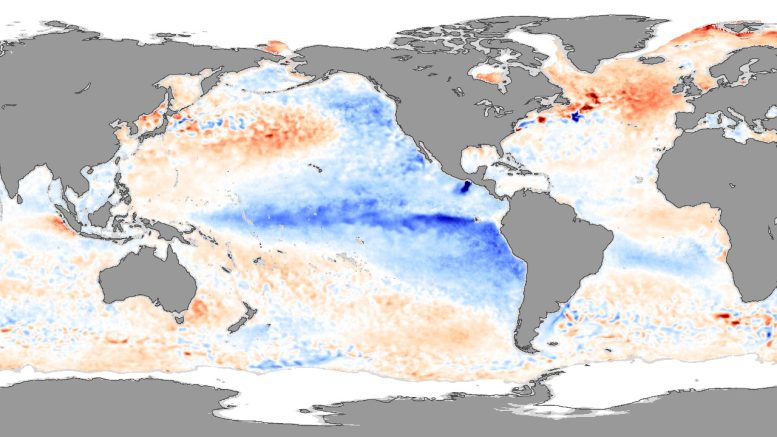
La Niña is Increasing Risks for the 2025/26 Corn Crop in Argentina

Foreign currency settlements by the agro-export sector totaled US$ 760 million in November 2025, a 32% drop compared with October and almost 62% below November 2024, but 24% higher in the year-to-date versus the same period of 2024. The figure reflects shipments under a special regime that temporarily suspended export taxes and the advance of foreign currency inflows made in September, in a context where the country remains the world’s leading exporter of soybean oil and meal and the third-largest exporter of corn. (Ciara-CEC)
La Niña is increasing risks for the 2025/26 corn crop, currently estimated at 52 million tonnes. The outlook is under threat because part of the fields will likely face severe water stress and temperatures above 40°C between December and January, precisely during the critical pollination and grain-filling stages, raising the probability of yield losses and supporting higher corn prices. (Grão Direto)

Brazilian chicken meat exports to reach up to 5.32 million tonnes in 2025, a 0.5% increase compared with 2024, driven by the lifting of import bans by countries such as China after the resolution of an avian influenza case at a commercial farm in the State of Rio Grande do Sul. Despite the growth, shipments will remain below the initial forecast of 5.4 million tonnes. The Brazilian Association of Animal Protein also projects higher exports and production of pork, with Brazil potentially consolidating itself as the world’s third-largest exporter of the product in 2025. (ABPA)
3tentos should increase its grain origination to 6.926 million tonnes in 2026, up from an estimated 6.145 million tonnes in 2025, mainly in soybeans, corn, wheat and canola. The company also announced the acquisition of Grão Pará Bioenergia in Redenção, State of Pará, to build a new corn processing plant for the production of ethanol, distillers dried grains and oil, with an investment of US$ 220 million and completion scheduled for the 2H of 2028, as well as the opening of new retail units in the States of Pará, Tocantins, Goiás and Minas Gerais. (3tentos)
The 2025/26 cotton harvest in the State of Mato Grosso, Brazil’s leading producer, was estimated at 2.58 million tonnes of lint, a 1.74% reduction compared with the November forecast. The reduction is driven by a planted area of 1.43 million hectares, which is 7.28% below 2024/25, amid tighter profitability for cotton and weather challenges affecting soybeans, which are usually grown before cotton. Forecasts for soybean and corn in the State of Mato Grosso were kept at 47.18 million and 51.72 million tonnes, respectively. (IMEA)
Fuel ethanol production in Brazil’s Center-South region increased by 24.45% in the 1H of November 2025, reaching 1.35 billion L, as mills diverted 61.39% of sugarcane to biofuel output, compared with 56.86% in the same period a year earlier. With lower global sugar prices and declining cane quality at the end of the 2025/2026 season, sugar lost ground, totaling 983 thousand tonnes in the fortnight, below market expectations, although still 8.7% higher than a year before. (Brazilian Sugarcane Industry Association)
The Commodity Index of the Central Bank of Brazil decreased by 3.04% in November when compared with October, driven mainly by a sharp 5.43% drop in ag commodities, while metal and energy commodities rose by 1.29% and 2.51%, respectively. From January to November, the index decreased 13.22%, with agricultural commodities dropping 18.11% and metal commodities rising 9.27%, highlighting a trend of lower international prices for agricultural products. (Central Bank of Brazil)
The Joint Committee in the Federal Senate responsible for examining Provisional Measure No. 1308/2025 has approved a report that creates the Special Environmental License for strategic projects. The measure establishes a clearer licensing procedure with defined deadlines and greater legal certainty, while maintaining the requirement for Environmental Impact Studies and Reports for high-impact projects and excluding sensitive activities such as mining from simplified licensing. The proposal will now be voted on by the plenaries of the Lower House of Congress and the Federal Senate. (FPA)
Brazil’s 2025/26 soybean crop has been estimated at a record 178 million tonnes, despite planting delays linked to La Niña. Planted area is expected to increase by about 1 million hectares and, with more favorable weather maps for the coming weeks, yields should hold, even as farmers’ margins fall to 33%, with higher production costs and average soybean prices around US$ 20 per 60-kg bag. For corn, Itaú BBA forecasts total Brazilian output at 138–139 million tonnes, higher than the USDA estimate of 131 million tonnes. (Itaú BBA)


In Colombia, the Food and Agriculture Organization of the United Nations and the South Korea International Cooperation Agency will implement, from 2025 to 2027, the “Más Putumayo” project to restore 120 hectares of forest in the department of Putumayo (Orito, San Miguel, Valle del Guamuez and Puerto Asís). With a US$ 3.9 million investment and support from Colombian ministries and public institutions, the initiative aims to combine sustainable agroforestry production, higher rural incomes and conservation of the Amazon Biome. (FAO; Koica)
The Government acquired 446,766 hectares of land through direct purchases over three years, within a total of 703,661 hectares incorporated into the National Land Fund, with more than US$ 16.7 billion invested. This volume remains below the target set in the Peace Agreement (3 million hectares to be acquired and 7 million to be formalized), although over 1.8 million hectares have already been titled for small-scale farmers and ethnic communities. (Government of Colombia)
The USA has authorized imports of shell eggs from Colombia for industrial processing, following work led by the Ministry of Trade in coordination with the Colombian Agricultural Institute and the Colombian embassy in Washington. According to Minister of Commerce, Diana Marcela Morales, the decision expands opportunities for the Colombian poultry industry, strengthens its integration into high-value supply chains and improves its competitiveness in international markets. (Government of Colombia)

Peru and Mexico are key players in the global avocado market, which exceeds US$ 10 billion a year. From January to October of 2025, Peru exported US$ 1.613 billion and nearly 877 thousand tonnes (+41%), though with a 17% drop in average prices, strengthening its position in Europe and expanding in Asia, while Mexico remains dominant in the USA, especially in high-consumption periods such as the Super Bowl. (Fresh Fruit Peru)

Beef exports to reach US$ 2.169 billion in 2025, an 18% increase versus the previous year, with shipments projected at around 420,000 tonnes (+3%) and an average export price 16% higher, consolidating the country as a regional beef powerhouse and one of its main sources of foreign exchange alongside soybeans. (Paraguayan Chamber of Meat)
The labour market is considered as highly heterogeneous: the tertiary sector (trade and services) is expanding its workforce, the secondary sector (industry and construction) remains relatively stable and the primary sector (agriculture, livestock and extractive activities) shows strong seasonality, with quarterly swings of more than 50,000 jobs tied to planting and harvest cycles. High informality, above 60% among non-agricultural workers, remains one of the main obstacles to creating quality jobs. (Instituto Nacional de Estatística)
Pork exports reached 17.2 thousand tonnes and US$ 52 million by November of 2025, up 58% in volume and 69% in export revenue versus the same period in 2024. Taiwan accounts for 76% of shipments (13.2 thousand tonnes), followed by Brazil and Uruguay, while the industry pushes for a sanitary status of no foot-and-mouth disease without the need for vaccination to open new markets. (Senacsa)

Peru has overtaken Chile in agricultural exports, reaching more than US$ 11.3 billion from January to October of 2025, compared with Chile’s US$ 10.7 billion. Peru’s performance is driven by a concentrated basket of high-value crops, including blueberries, grapes, avocados, coffee and cocoa, supported by pro-agriculture tax incentives and major irrigation projects. Both countries are competing, especially in the USA market. (Blueberries Consulting; Fresh Fruit)
Peruvian fresh mango exports in the 2025/26 season reached 8,921 tonnes up to November 23rd, a 69.5% drop versus 29.2 thousand tonnes in the same period of 2024/25, due to a delayed harvest. The association expects fresh mango shipments to total 243,757 tonnes by the end of the season, below the 286,311 tonnes of 2024/2025, while frozen mango exports should decrease 45.1%, to 3,801 tonnes. (APEM)
Ministry of Agrarian Development and Irrigation has released a 15-day public consultation regarding the draft for the supreme decree approving the National Family Farming Plan 2025/27. The initiative is based on Law No. 30355, which recognises family farming as key for food security, agrobiodiversity conservation and rural employment. (Midagri)

READ MORE: