
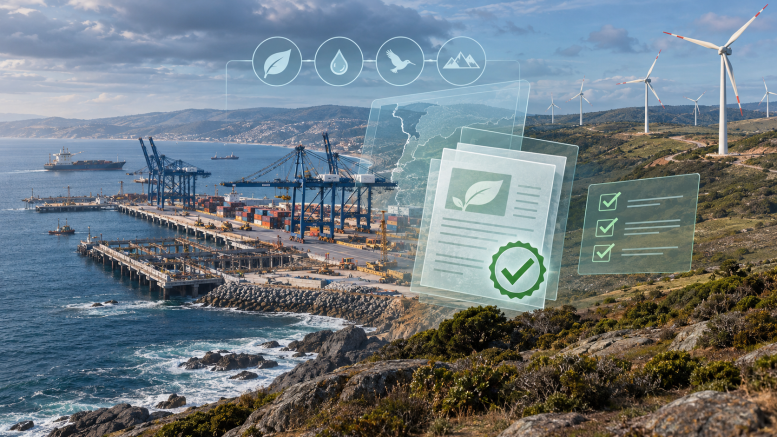
Chile Upholds Environmental Approvals for US$ 4.25 Billion in Port and Wind Projects
Brazil
Syngenta and sugarcane bioenergy company Usina Santa Terezinha completed a transaction worth approximately US$ 67 K using decarbonisation credits (CBIOs) to purchase chemical and biological inputs. It was the first transaction of this kind for Syngenta in the sugarcane sector. (Syngenta – 11/3/26)
A Mission Possible Partnership report included the sustainable aviation fuel biorefinery of Acelen Renewables, an energy company linked to Mubadala Capital, among clean-industry projects that reached an investment decision. The company had announced US$ 1.5 billion in financing in May for the facility in the State of Bahia, part of an estimated US$ 3 billion project. The November report does not represent new funding. (Mission Possible Partnership – 11/4/26)
The COP30 Presidency presented international roadmaps to accelerate the transition away from fossil fuels and halt and reverse deforestation by 2030. The documents provide guidance for governments, investors and businesses but create no immediate legal obligations. (Brazilian Ministry of Environment – 11/3/26)
The Brazilian Development Bank and Petrobras announced approximately US$ 1.8 million in non-repayable funding to support 720 family farmers, 27 cooperatives and associations and the implementation of 240 agroecological systems in the State of Bahia over 36 months. The systems and production facilities have yet to be implemented. (Brazilian Development Bank – 11/3/26)
Ibama embargoed approximately 1.9 K hectares and imposed approximately US$ 662 K in fines for illegal deforestation and burning in the State of Paraíba following inspections conducted in September and October. Firefighting operations also recorded 389 fires extinguished in the State of Amazonas and 172 of 176 in the State of Pará. These are cumulative operational results. (Brazilian Environmental Agency – 11/3/26)
The Brazilian Energy Research Company projected approximately US$ 17.4 billion in micro and small-scale distributed-generation investment from 2027 to 2036. The plan also estimates a 276 TWh contribution in 2036 from energy efficiency, distributed generation and self-generation. These figures are forecasts, not committed investment. (Brazilian Energy Research Company – 11/4/26)
A committee of the Brazilian Senate approved a revised bill proposing AI, drones and sensors to monitor deforestation, wildfires and environmental restoration. The proposal will move to the Environment Committee and has not become law. (Brazilian Senate – 11/4/26)
The Brazilian oil and biofuels regulator opened a public consultation on certification rules for sustainable aviation fuel and associated sustainability certificates. Comments are due by November 13th, with a hearing planned for November 18th. The criteria are not yet final. (Brazilian Oil, Natural Gas and Biofuels Agency, Consultation 23/2026 – 11/3/26)
Research by the Federal University of São Carlos identified biodiversity risks in forest restoration projects focused on carbon capture. An analysis of more than 1 K planting sites in the Atlantic Forest found 423 tree species in use, compared with more than 4 K occurring in the biome. Restoring carbon stocks does not necessarily restore plant diversity. (FAPESP – 11/4/26)
Imazon, a Brazilian environmental research institute, identified 60.7 K hectares of logging in the State of Pará between August 2024 and July 2025 (+40% against the previous period). Of this area, 19.1 K hectares (32%) were logged without authorization. Authorized logging increased 83%, while unauthorized logging declined approximately 6%. (Imazon – 11/4/26)
MapBiomas identified a 132% expansion in urbanized areas in Brazil between 1985 and 2025, from 1.9 million to 4.4 million hectares. Urbanized areas susceptible to flooding increased from 93 K to 174 K hectares, while peri-urban vegetation declined 38%. (MapBiomas – 11/4/26)
The Brazilian National Meteorological Institute identified high temperatures and irregular rainfall in September and October across the states of Maranhão, Tocantins, Piauí and Bahia. Conditions increased water demand and risks to soybean development, while future rainfall will affect the 2026/27 crop. (National Meteorological Institute – 11/4/26)
The Brazilian Development Bank advanced the selection of projects to restore 12.5 K hectares in the Rio Doce Basin, across the states of Minas Gerais and Espírito Santo. The initiative has a budget of approximately US$ 113 million for native vegetation restoration, agroforestry systems and soil and water conservation. Of 27 proposals submitted, 24 met the initial eligibility requirements. Implementing organisations have yet to be selected. (Brazilian Development Bank – 11/5/26)
An international coalition filed 14 legal complaints involving JBS and financial institutions across four European jurisdictions, alleging potential breaches of anti-money laundering regulations linked to illegal deforestation in Amazon beef supply chains. JBS stated that the supporting evidence had not been shared with the company. Authorities have yet to decide whether to open investigations. (Global Legal Action Network – 11/5/26)
Itaú BBA reported disbursements of approximately US$ 37 million through three Eco Invest Brasil financing operations supporting pasture restoration, crop-livestock integration and cattle traceability. Approximately US$ 13 million went to Campanelli, while US$ 24 million financed two projects in the State of Mato Grosso, within the Amazon and Cerrado biomes. The projects include emissions monitoring and production intensification without expanding land use. (Itaú BBA – 11/5/26)
The Ministry of Justice reported 1,172 satellite-detected hotspots in the states of Pará and Amazonas on November 1st and 2nd, including 1,080 in Pará. The latter state recorded 12.5 K hotspots during October. Due to intense wildfires in the Ituna-Tatá region, authorities redeployed an aircraft previously operating in the Apyterewa Indigenous Territory and maintained National Force teams across six operational bases in the Amazon. (Brazilian Ministry of Justice – 11/4/26)
MAPA updated minimum prices for 17 extractive products for 2027, including increases of 106.45% for macauba palm fruit in the Central-West and Southeast, 94.82% for Brazil nuts in the North and State of Mato Grosso and 66.67% for pequi fruit. The policy aims to protect extractive producers’ income and support supply chains associated with native vegetation conservation. The new prices take effect in January. (Brazilian Food Supply Company – 11/4/26)
The Development Bank of Minas Gerais disbursed approximately US$ 113 million in environmental financing between January and mid-October 2026, up 114% from approximately US$ 53 million in the same period of 2025. Funding supported renewable energy, energy efficiency, industrial decarbonisation and low-carbon agriculture projects. (Development Bank of Minas Gerais – 11/5/26)
The Amazonas Environmental Protection Institute embargoed 120.83 hectares in Manaquiri, State of Amazonas, after drone-assisted inspections identified illegal deforestation and burning. The embargo was formalized on November 3rd during Operation Tamoiotatá 6. Police are investigating responsibility for the area, while environmental authorities prepare an infringement notice. (Amazonas Environmental Protection Institute – 11/4/26)
The REDD Early Movers (REM MT) program, which rewards results in reducing deforestation-related emissions in the State of Mato Grosso, reported approximately US$ 31 million in new funding from Germany and the UK for the second phase. Planned allocations include approximately US$ 12 million for family farming and traditional communities, US$ 4.6 million for Indigenous territories, US$ 3.7 million for sustainable production and US$ 10.9 million for institutional strengthening and environmental enforcement. Approximately US$ 45 million was invested during the first phase. (REM Mato Grosso – 11/5/26)

Latin America
In Argentina, the renewable energy company Genneia raised US$ 70 million through green bonds to finance battery electricity-storage projects. The bonds mature in November 2029. The issue was completed, but the financed facilities are not necessarily operational. (National Securities Commission – 11/3/26)
The government of Argentina approved a list of high-efficiency equipment eligible for the Medium Investment Incentive Regime. Qualifying businesses may access accelerated depreciation and VAT credits for motors, pumps and other efficient systems. (Secretariat of Energy – 11/4/26)
The government of Chile announced an approximately US$ 26 million budget for wildfire prevention and firefighting in the Biobío Region during the 2026/27 season. The plan includes 42 brigades, approximately 545 firefighters, ten aircraft and access to 106 monitoring cameras. Preventive measures cover approximately 1,263 km of firebreaks and roadside clearance strips, with participation from the forestry sector. (Regional Presidential Delegation of Biobío – 11/5/26)
The Committee of Ministers of Chile upheld environmental approvals for two projects representing US$ 4.25 billion in planned investment: the San Antonio Outer Port (US$ 4 billion) and Los Portones wind farm (US$ 250 million). The decisions do not mean construction has started. (Environmental Evaluation Service – 11/2/26)
The government of Mexico presented approximately US$ 9 million in planned investment for sustainable forestry production in Michoacán, including approximately US$ 5.8 million for the resin supply chain. Measures cover forest management across 39.1 K hectares, restoration of 1.6 K hectares and payments for environmental services to 38 agrarian communities. Some activities are already underway. (Presidency of Mexico – 11/4/26)
Colombia aims to reduce hydrofluorocarbon consumption by 18.3% by 2029 through lower-climate-impact refrigerants. According to the Ministry of Environment, the reduction would correspond to approximately 1.58 million tonnes of CO₂ equivalent. (Ministry of Environment – 11/3/26)
A Mission Possible Partnership report identified Paraguay among emerging economies with clean industrial projects reaching final investment decisions over a 12-month period. It cites a fertilizer production facility but does not specify the individual value within the US$ 5.3 billion committed to six plants across several countries. (Mission Possible Partnership – 11/4/26)

READ MORE: