

Credit transactions through NERA, a digital ag financing platform, increased 40% in the 1H26, surpassing 13 K transactions. Of these, 81% were contracted in US dollars, up 30 points from the 1H25. The weighted average interest rate on US dollar financing was 1.8%, compared with 34.6% for financing with pesos. (NERA)
Sheep meat exports increased 34% in the 1H26 to 4.67 K tonnes. Export revenue rose 46%, while the average value per tonne increased 10%. The EU remains the main destination, while Middle Eastern countries increased purchases. 44 markets are available for Argentine sheep meat exports. (Secretariat of Agriculture)
Inflation accelerated to 2.1% in July from 1.9% in June and reached 33.8% year over year. (Indec)
The Government expanded the access for US dollar bank financing to companies. Banks will be allowed to allocate up to 15% of foreign-currency deposits to borrowers outside previously eligible uses, subject to additional prudential requirements. US dollar deposits from private-sector increased from US$ 14.1 billion in December 2023 to US$ 40.3 billion, while US dollar loans rose from US$ 3.7 billion to US$ 24.6 billion. Government estimates approximately US$ 5.8 billion in additional lending capacity. The change was announced on August 13th. (BCRA; Ministry of Economy)

Soluble coffee exports increased 20% in July to 8.16 K tonnes, while green coffee exports rose 48.5% in average daily shipments through the second week of August, to 10.1 K tonnes/day. From January to July, soluble coffee exports reached 57.4 K tonnes (+10.9%), with revenue of US$ 663.5 million (-2.5%). (Abics; Secex/MDIC)
Itaú BBA launched the Itaúba Fiagro offering, targeting up to US$ 930 million for credit investments linked to agroindustrial chains. (Itaú BBA; Itaú Asset)
Seven ag cooperatives in the State of Paraná began joint operations at the Campos Gerais soybean crushing plant in the city of Ponta Grossa, acquired from the Louis Dreyfus Company. The facility can process 3.4 K tonnes of soybean/day to produce oil, meal and other derivatives. (Frísia; Sistema Ocepar)
Conab raised the corn production estimate in Brazil to 142.96 million tonnes (+1.3%) for the 2025/26 season. Domestic consumption is expected to increase 4.8% to 95.04 million tonnes, driven by the demand for ethanol, while ending stocks are projected at 15.58 million tonnes (+25%). Exports remain estimated at 46.5 million tonnes. (Conab)
Luiz Paulo Heimpel became president of the Irrigation Equipment Sector Chamber at the Brazilian Machinery and Equipment Industry Association. (Abimaq)
Cotton harvest reached 59.6% of the area by August 14th, compared with 48.9% in August 2025. Conab estimates 2025/26 lint production at 4.08 million tonnes, nearly unchanged despite a 3.2% reduction in area. Exports are expected to reach 3.4 million tonnes in 2026. (Conab)
MBRF captured approximately US$ 30 million in merger synergies in the 2Q26 and approximately US$ 63 million through the MBRF+ efficiency program. Net revenue reached approximately US$ 7.8 billion (+4.9%) and operating cash flow approximately US$ 420 million. Commercial integration also expanded the company’s beef portfolio to more than 20 K additional points of sale in Brazil. (MBRF)
Wheat area is expected to fall 18% in 2026/27 in Brazil to 2 million hectares, the lowest level since 2017. The decline is expected to constrain domestic supply and increase reliance on imports, with production forecast at 6.1 million tonnes. (Cepea)
CNH appointed Frederico N. F. Carvalho to lead finance operations in Latin America in August 2026, with HQ in Curitiba, State of Paraná. Executive spent approximately ten years at Nissan Motor Corporation and will oversee financial management in the region, with a focus on strategy execution, financial discipline and long-term growth. (CNH)
Orange production in the citrus belt in the States of São Paulo and Minas Gerais is estimated at 255.2 million boxes in 2026/27 (-12.9%). Industrial orange prices fell 30% in one year to approximately US$ 5.9 per 40.8-kg box on August 3rd, while orange juice prices in New York fell 40%. Higher stocks and weaker international demand are pressuring prices. (Fundecitrus; Itaú BBA; Cepea)
Paddy rice prices in the State of Rio Grande do Sul have increased approximately 22% since early July. The Cepea/Irga-RS indicator reached US$ 14.20 per 50-kg bag on August 17th, up 7.55% in the month. (Cepea)
3tentos ended the 2Q26 with net debt of approximately US$ 690 million, up approximately US$ 380 million from December of 2025. The company obtained a temporary waiver for a leverage covenant covering debt agreements in three quarters of 2026. The board also approved on August 13th a program to repurchase up to 5 million shares, approximately 1% of total shares, through February 2028. (3tentos; CVM)
The city of São Gotardo, State of Minas Gerais, declared a 180-day economic emergency for the agricultural sector through Decree No. 263 of August 17th. Measure cites higher costs, lower margins, crop losses caused by adverse weather, competition from lower-priced imports and tighter credit conditions. Decree is intended to support requests to extend and renegotiate rural debt with financial institutions, credit cooperatives and suppliers. (Government of São Gotardo)
Temperatures above 40°C and relative humidity below 20% are forecast for parts of Central-West Brazil from August 19th through 25th. Dry weather is favoring the final stage of the second-crop corn harvest, which reached 84.7% of the national area, but is increasing wildfire risk, reducing pasture availability and intensifying heat stress in livestock. In the State of Mato Grosso, harvesting is nearly complete and yields exceeded initial estimates. (Inmet; Conab)
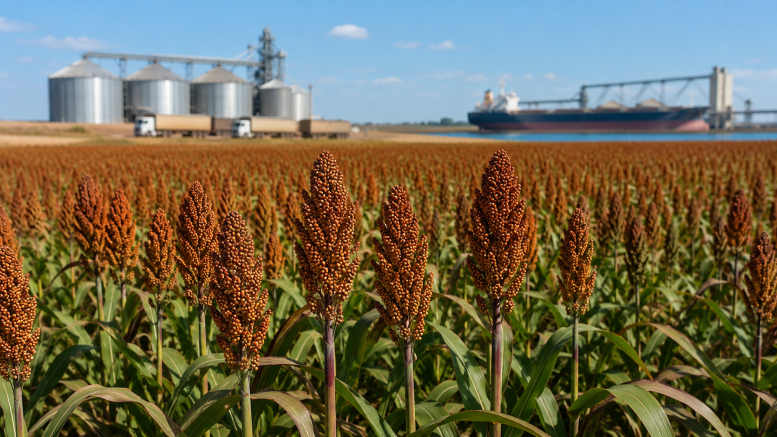
Sorghum area is to increase 32.9% in the 2025/26 season, an expansion of approximately 537 thousand hectares, while production is projected to rise 20.7%. The increase follows the opening of the Chinese market to Brazilian sorghum and the approval of the first five Brazilian facilities authorized to export the grain to China. (Conab; MAPA)
Coopercitrus generated more than US$ 386 million in transactions during the Expo 2026. Fertilizers accounted for a significant share as delayed purchases during the year and the approaching spraying window accelerated farmers’ decisions to buy. Animal nutrition also stood out, along with pesticides, seeds, biological products and specialties. (Coopercitrus)


Bolivian government and private company Alere signed an agreement on August 15th to produce and distribute diesel directly to farmers in Cuatro Cañadas and to other agricultural areas in the Department of Santa Cruz. In the initial phase, the refinery expects to process 18.9 K barrels of crude oil/month and produce 1.35 million L of diesel, with plans to supply up to 2 million L to farmers in the region. The project follows Supreme Decree 5603, which authorized private companies to import crude oil for pilot production tests for one year. (Ministry of Productive Development)

Colombian agribusiness company Riopaila Castilla ended the 1H26 with a net loss of approximately US$ 27.1 million, compared with US$ 17.1 million a year earlier, while the Debt/EBITDA ratio increased from 1.80x to 6.29x. Amid pressure on cash flow, the company is prioritizing maintenance capex, postponing non-priority investments, extending payment terms with suppliers and using credit lines and factoring. (Riopaila Castilla)
Pork production increased 15.5% year over year through June 2026, increasing pressure on prices. In the 1H26, the average live hog price was 26.5% below a year earlier and carcass prices fell approximately 25%. Through May, apparent consumption increased 6.3%, while imports fell 19.3%, reducing the imported share of the market to 18.6%. (Bancolombia)
Sugar and ethanol companies Incauca and Ingenio Mayagüez began harvesting and processing approximately 400 K tonnes of sugarcane from farmers affected by the judicial liquidation of Ingenio La Cabaña. The operation seeks to prevent crop losses after growers were left without a mill to receive their production. Another approximately 200 K tonnes of sugarcane, currently seven to eight months old, may be considered for harvesting later. (Procaña; Superintendencia de Sociedades)

Ecuador is financing 42 agricultural research and innovation projects in 2026 through the Fund for Research on Agrobiodiversity, Seeds and Sustainable Agriculture. Each project may receive up to US$ 450 K. Since 2022, the fund has allocated approximately US$ 19.5 million to research and development and directly benefited 84 farmer organizations. A new call for 2027 projects received 121 proposals. (Ministry of Agriculture)

Mexico allocated approximately US$ 14.6 million to 48 credit operations for tomato farmers from June 3rd through August 14th. The financing is channeled through the Trust Funds for Rural Development, with banks and other financial intermediaries participating in the program. (FIRA)
Mexico set an incentive of approximately US$ 106/tonne, for commercialization of bread wheat from the 2025/26 fall-winter crop in 13 states. Farmers in areas affected by insufficient cold hours may receive an additional US$ 12/tonne. Registration begins on August 20th. In Baja California, 446 farmers have already received approximately US$ 6.1 million. (Banxico)
The USA resumed inspections required for Mexican avocado exports from the State of Michoacán to the US market on August 13th, following a partial restart in some regions on August 8th. (Senasica)
Mexico and China advanced discussions to expand market access for Mexican rice and sorghum during a meeting on August 14th. Governments also discussed streamlining agro-food trade procedures and expanding technological cooperation. (Secretaría de Agricultura)

Panama approved US$ 22.1 million in supplementary credit for the Agricultural Marketing Institute. The resources will be added to the investment budget and used to finance purchases of approximately 25 K tonnes of rice and other food products for government fairs, stores and agricultural distribution outlets. (IMA)


Food and beverage companies from Argentina evaluated investment and industrial opportunities in Paraguay during a meeting with the Ministry of Industry and Commerce on August 13th. Government presented the “maquila” regime, which provides tax incentives for export-oriented production, and plans to attract investments to regions outside the main industrial centers in the country. (MIC)
The port of Caacupemí, in the city of Pilar, is seeking to expand as a logistics alternative for soybean, rice and molasses exports during periods of low water levels in the Paraguay River. Terminal operates throughout the year and can receive vessels with deeper drafts when conditions restrict cargo transportation to Asunción. The Ministry of Industry and Commerce considers the infrastructure strategic for agroindustrial expansion in southern Paraguay. (MIC; Puerto Caacupemí)
Ministry of Industry and Commerce started discussions with Paraguayan cooperatives to expand industrial processing of agricultural production. Strategy presented on August 14th includes scale expansion, access to new markets, innovation and value-added processing, with cooperatives expected to participate in the industrial expansion policy in Paraguay. (MIC)

Peruvian agricultural exports surpassed US$ 5.6 billion in the 1H26, increasing 3.6% from the same period of 2025. Growth was driven by products including blueberries, grapes, avocados and mangoes. (MIDAGRI)
Agro Rural is implementing measures to protect more than 376 K head of livestock and 7.1 K rural families in Junín, Tacna and Ayacucho from frost, snowfall and low temperatures. Actions include livestock shelters, animal-health kits, forage conservation and pasture seeds. The 2026 Multisectoral Frost and Cold Weather Plan covers 16 regions and is expected to protect more than 2 million animals and assist more than 48 K families. (Agro Rural/MIDAGRI)

Banco República, the State-owned bank of Uruguay, is accepting financing requests until August 24th from micro, small and medium-size agricultural companies covered by the 2026 Agricultural Emergency. The credit line offers maturities of up to 48 months, a six-month grace period on principal and interest and a guarantee covering up to 70% of the financed amount, with no guarantee fee charged to the borrower. (BROU)
Uruguay soybean production was estimated at 1.98 million tonnes for the 2025/26 crop, down nearly 50% from the previous crop due to severe water deficit. Average yield fell 45% to 1.72 tonnes/hectare. (MGAP/DIEA)

READ MORE: