
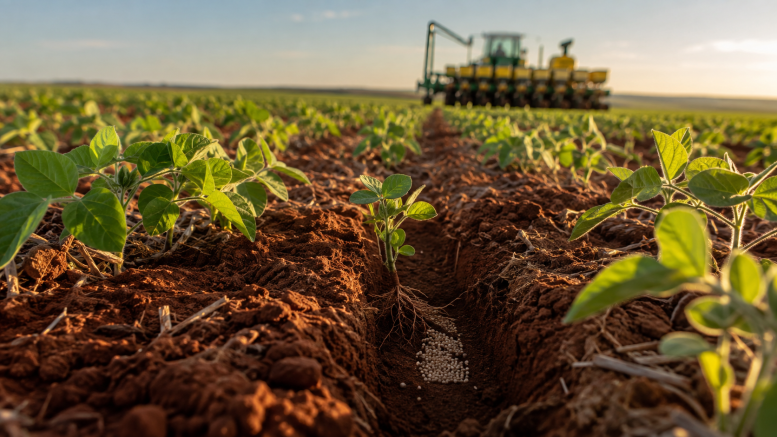
With monoammonium phosphate imports declining in 2026, soil compaction, organic matter, and straw cover become even more important for improving nutrient utilization…
Sandro Roberto Brancalião is a research scientist at the Agronomic Institute – IAC, in the Sugarcane Division in Ribeirão Preto, São Paulo. An agronomist, M.Sc and Ph.D in agriculture from Unesp.
Denizart Bolonhezi is a research scientist at the IAC Sugarcane Division in Ribeirão Preto, São Paulo. An agronomist, M.Sc and Ph.D in agronomy from Unesp.
André Luiz de Souza Lacerda is a consultant at Agrolacerda and agronomist who graduated from the Federal University of Lavras. M.Sc in agronomy from Unesp, Ph.D in crop science from USP, and has completed postdoctoral research in crop science at the Biological Institute of São Paulo – IB/SP and in chemistry at Unicamp.
Antônio Lúcio Mello Martins is a researcher at the São Paulo Agency for Agribusiness Technology – APTA at the Pindorama, São Paulo, regional unit, where he served as technical director from 2000 to 2021. An agronomist graduated from Esalq/USP, Ph.D from Unesp, he works in the fields of crop science, soil science, water resources, and environmental education.
Márcio Aurélio Pitta Bidóia is an agronomist, M.Sc in Agronomy, with a specialization in Crop Production, from Unesp. Since 1997, he has worked with the Sugarcane Breeding Program at the IAC in Ribeirão Preto, São Paulo.
The Brazilian fertilizer market began the second half of 2026 with high prices for phosphate fertilizers and a tighter supply window. In the first half of the year, imports of key raw materials used in fertilizer production fell by 8.6% compared to the same period in 2025. For monoammonium phosphate (MAP), the decline reached 24%, according to a StoneX survey released in July.
This scenario makes it even more important to increase the efficiency of phosphorus applied to crops. The availability of the nutrient does not depend only on the dose used or the results of the chemical analysis. The physical quality of the soil, organic matter content, biological activity and maintenance of vegetation cover also affect the use of fertilizer.
Compaction varies according to the soil type
Soil compaction is among the factors that must be considered. According to much of the management literature, critical density limits are higher in sandy soils than in clayey soils, with reference values close to 1.6 kg dm⁻³ and 1.3 kg dm⁻³, respectively.
This means that soil density should not be interpreted in isolation. The same value can represent different conditions depending on the texture, structure and characteristics of the area evaluated.
In the same way, isolated chemical indicators do not allow for a complete characterization of soil quality. Assessment must integrate chemical, physical, and biological attributes, making it possible to identify limitations that do not always appear in a conventional fertility analysis.
Crop residue protects the soil and helps retain moisture
In sugarcane cultivation, maintaining crop residues or phytomass on the soil plays an important role in this management system. In addition to recycling nutrients, the cover reduces temperature fluctuations, helps conserve moisture, and protects the soil surface throughout the crop’s various developmental stages.
The removal or excessive incorporation of crop residues leaves the soil more exposed to temperature fluctuations, water loss, and erosion. Therefore, ground cover should be considered part of fertility management rather than merely a harvest residue.
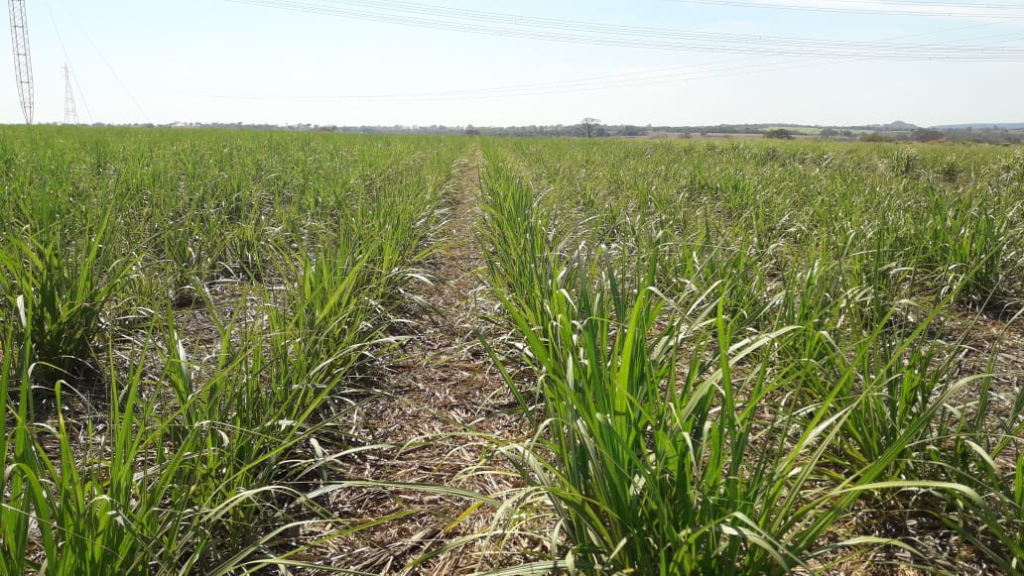
IACSP97-4039 sugarcane in a B1 production environment, in the Ribeirão Preto region, São Paulo. Photo: Sandro Roberto Brancalião.
Part of the phosphorus remains poorly available
In highly weathered soils, which are common in Brazilian agricultural regions, organic forms account for approximately 20% to 35% of total phosphorus. Therefore, organic matter plays a role in the storage and cycling of the nutrient.
Among the inorganic forms, approximately half consists of residual phosphorus, which has low availability to plants. The remainder includes forms bound to calcium and those extracted by anion-exchange resin.
Soils also differ in the sensitivity of labile phosphorus to changes in the nutrient’s concentration within the soil solution. This resistance is known as buffering capacity; it enables the soil to maintain relatively constant levels of phosphorus in the solution as the nutrient is taken up by plants.
In soils where the clay fraction consists predominantly of iron and aluminum oxyhydroxides, besides with kaolinite, phosphorus sorption capacity is high. Under these conditions, a portion of the applied nutrient may become strongly retained by the soil, resulting in lower immediate availability to plants.
At the same time, excessive soil disaggregation and a lack of vegetative cover promote erosion. Surface runoff transports sediments and the nutrients associated with these particles, thereby removing phosphorus from the cultivated soil layer.
Efficiency begins with integrated management
With phosphate fertilizers becoming more expensive and supply getting pressured into 2026, minimizing losses and improving phosphorus utilization have become even more critical economic issues.
Fertilization efficiency begins before the actual application. It requires managing soil compaction, preserving organic matter, maintaining crop residue, and comprehensively assessing the soil’s chemical, physical, and biological properties.
Beyond simply determining how much phosphorus to apply, management strategies must consider how the soil stores, makes available, and protects this nutrient. It is this combination that determines the return on fertilization and the ability to sustain productivity across growing cycles.

Sandro Brancalião, researcher at IAC

André Lacerda, consultant at Agrolacerda

Denizart Bolonhezi, researcher at IAC

Márcio Bidóia, assistant technical researcher at IAC

Antônio Martins, researcher at APTA
READ MORE: