
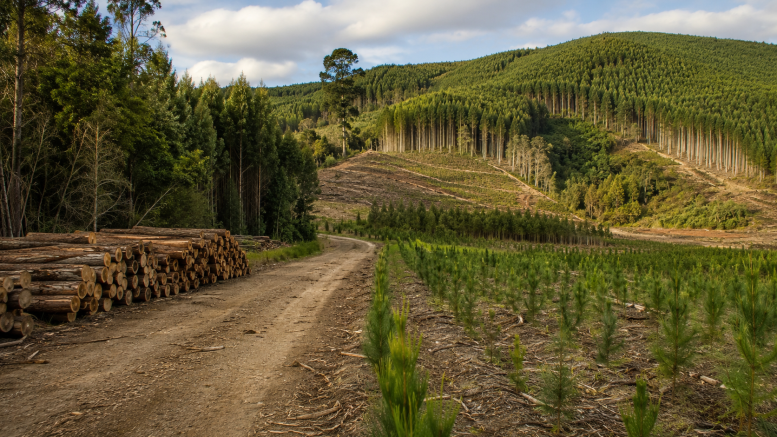
Sustainable Forest Management Is Expanding in Argentina
Brazil
The Public Prosecutor’s Office of the State of Mato Grosso do Sul has signed a Conduct Adjustment Agreement with a farm owner in the city of Corumbá, State of Mato Grosso do Sul, to ensure the restoration of an area degraded by illegal deforestation, totaling 50.64 hectares, 17.77 of which were within a Legal Reserve area. The Degraded Area Restoration Plan has been filed with the State of Mato Grosso do Sul Environment Institute and stipulates a payment of US$ 24,558 as environmental compensation. (MPMS; Imasul)
Nestlé has announced an investment of approximately US$ 107 million to modernize the factory in Araçatuba, State of São Paulo, by 2028. The facility uses biomethane and electricity from 100% clean sources, reuses water and sends no waste to landfills or incineration. Biomethane reduces emissions from milk powder production by approximately 20%, while replacing natural gas with biomass has cut emissions from heating systems by 23%. (Nestlé)
ENGIE Brasil Energia has completed a follow-on share offering totaling approximately US$ 1.65 billion. The transaction, which involved the incorporation of a stake in the Jirau hydropower plant, strengthens the company’s capital structure and the capacity to invest in new energy-transition opportunities. ENGIE operates 145 renewable and low-emission power plants in Brazil, totaling approximately 13 GW of installed capacity. (ENGIE Brasil Energia; B3)
The Superior Court of Justice ruled that machinery used in environmental violations may be seized regardless of whether the owner acted in bad faith. The decision ordered the transfer to Ibama of a tractor used to deforest approximately 100 hectares within the Gurupi Biological Reserve, in the State of Maranhão. Definitive forfeiture must be decided through administrative proceedings. (STJ)
IDB Invest has approved a loan of up to US$ 550 million to Santander Brasil to expand financing for resilient investments. The funds will be directed to eligible projects under the Eco Invest program, focusing on agricultural productivity, land use and infrastructure while supporting Brazil’s ecological transition and the mobilization of private capital. (IDB Invest; Santander Brasil)
Heavy rainfall and flooding affected 59,967 people across 218 municipalities in the State of Rio Grande do Sul. According to the State Civil Defense Operations Center, 488 people were staying in shelters and 762 had been displaced from their homes; 91.6% of those in shelters were in the Taquari Valley. (Codec)
Ending the Soybean Moratorium could result in an additional 1.4 million hectares of deforestation in the Amazon Biome over the next ten years, representing a 17% increase compared with the historical rates analyzed. (Science; WWF-Brasil)
GS1 Brasil Ventures announces an investment of an undisclosed amount in the startup Ecotrace, which provides traceability, sustainability and payment services to the agribusiness sector. The startup has already attracted US$ 2.21 million in investment over the past eight years and is valued at US$ 11.66 million. (GS1BV)
The Brazilian Institute of Law and Sustainability – IBRADES and the Commercial Association of Bahia – ACB have reiterated their request to join the proceedings as amici curiae and present oral arguments before the Brazilian Supreme Court in the cases concerning the General Environmental Licensing Law (No. 15190/2025). The organizations seek the dismissal of the actions challenging the legislation, arguing that it modernizes environmental licensing and provides greater legal certainty for business projects. (Ibrades; ACB; STF)
The Ministry of Agriculture and Livestock, the Ministry of Agrarian Development and Family Farming and the Inter-American Institute for Cooperation on Agriculture have presented the Trilhas Project, fully funded by a US$ 8 million World Bank grant. The 48-month initiative seeks to improve policies for sustainable agriculture, family farming, food security, rural extension and the resilience of production systems to climate change. (MAPA; MDA; IICA; World Bank)
Petrobras has sent the P-33 floating production platform from the Port of Açu, State of Rio de Janeiro, to the Rio Grande shipyard, State of Rio Grande do Sul, for dismantling and recycling. The unit was sold to Gerdau, in partnership with the Ecovix Group. Petrobras’ Strategic Plan provides for the decommissioning of 18 platforms by 2030. (Petrobras)
Ibama has updated the ReVerdeAr Program call for native vegetation restoration projects in the Caatinga, Cerrado, Atlantic Forest, Pampa and Pantanal biomes. Each proposal must cover between 100 and 300 hectares, with implementation costs capped at approximately US$ 12,200/hectare. The projects may be carried out by offenders who convert environmental fines into restoration services. (Ibama)
A study by the National Institute for Space Research using machine learning and explainable artificial intelligence for subseasonal rainfall forecasting in Southeastern Brazil won first place at the Workshop on Computing Applied to Environmental and Natural Resources Management. The technology seeks to improve the interpretation of the factors used by climate forecasting models. (INPE)
WRI Brasil mapped 21 traceability initiatives covering the soybean and beef supply chains and proposed a unified framework for deforestation-free trade. Brazilian exports of these commodities to China generated approximately US$ 44.6 billion between 2023 and 2024. (WRI Brasil)
BYD ranks first in Brazil’s inaugural consumer-led sustainability brand ranking, followed by Neoenergia, Mãe Terra, Magalu and Disney. Kantar surveyed 1.5 thousand Brazilian consumers, who evaluated 180 brands. (Kantar)
Envases has installed one of Latin America’s largest plastic packaging recycling facilities in the city of Ponta Grossa, State of Paraná. The plant converts used PET bottles into new packaging, currently employs approximately 150 people and is expected to create another 120 jobs. (Municipality of Ponta Grossa)
The National Development Bank has approved approximately US$ 17.4 million from the Climate Fund for the Muçununga Project, developed by Biomas and Carbon2Nature Brasil on land owned by Veracel Celulose. The project will restore 1.3 thousand hectares of Atlantic Forest with more than 2 million seedlings and is expected to generate approximately 500 thousand carbon credits over 40 years. (BNDES; Biomas)
The Amazon Biome lost 1,145 km² of forest in the 1H26, down 10% from the same period of 2025. From August of 2025 to June of 2026, the State of Pará had the largest deforested area, at 684 km², although more than 80% of the monitored protected areas recorded no deforestation. (Imazon)

Latin America
Sustainable forest management is expanding in Argentina, where more than 380 thousand hectares are certified under the PEFC Sustainable Forest Management system across the provinces of Misiones, Corrientes, Entre Ríos, Buenos Aires and Santa Fe. Of the total certified area, 53% is allocated to production and 47% to conservation. (PEFC)
BIO4, a corn-based bioethanol producer in Argentina, announced a US$ 70 million investment plan to expand the production capacity to more than 900 m³ per day. (BIO4)
The government of Santa Fe, Argentina, has launched the Provincial Climate Change Response Plan via Decree 959/26, based on the Climate Variability Report produced by the Center for the Study of Climate Variability and Change. The Plan aims to implement a greenhouse gas (GHG) inventory alongside a climate risk analysis to guide prevention and mitigation policies. (Cevarcam; Government of Santa Fe)
The Development Bank of Latin America has renewed a US$ 200 million credit line with BBVA Colombia to finance exporting companies and strengthen the sustainability of the country’s palm oil value chain. The operation will also support the recovery of trade between Colombia and Venezuela. (CAF; BBVA Colombia)
Ministry of Agriculture of Chile is launching the project “Scaling up regenerative practices for the recovery and improvement of soils, biodiversity and associated ecosystem services in the Chilean agricultural sector”. The initiative involves a total investment of US$ 39.2 million, comprising US$ 6.6 million from the GEF and US$ 32.5 million in public and private national co-financing. The five-year program will implement pilot projects on 40 farms spanning the region from Coquimbo to Aysén, covering olive and vegetable cultivation, viticulture, fruit growing, cereal production, dairy farming, as well as sheep and cattle raising. (GEF; Minagri)
Bancolombia allocated approximately US$ 10.8 million, through financial leasing, to a portfolio of mini solar farms in the Department of Cesar, Colombia. The project also promotes renewable energy education and community development. Also, the bank supported approximately 12 distributed solar generation projects capable of producing 24 GWh per year, supplying almost 7 thousand households and avoiding 2.3 thousand tonnes of CO₂ emissions annually. (Bancolombia)
Paraguay has presented the country’s first National Forest Policy, a long-term planning instrument aimed at the sustainable management of native forests and forest plantations, industrialization, investment attraction and job creation. Developed through a participatory process launched in 2024, the policy provides for incentives for production and industrial processing, export promotion and greater access of Paraguayan forest products to international markets. (Infona)
The Parliament of Uruguay hosted the first forum, “Uruguay Facing the Methane Challenge: Climate Action and the Strategic Role of Parliament”, bringing together government officials, researchers and institutions to discuss sustainable production and emissions reductions. The panels addressed methane mitigation strategies, waste management, circular economy, food waste and monitoring, reporting and verification systems. The Ministry of Agriculture highlighted the country’s commitment to reducing emissions, particularly in livestock production, and presented the Innovation Program for Sustainable Cow-Calf Production. (MGAP)
READ MORE: