
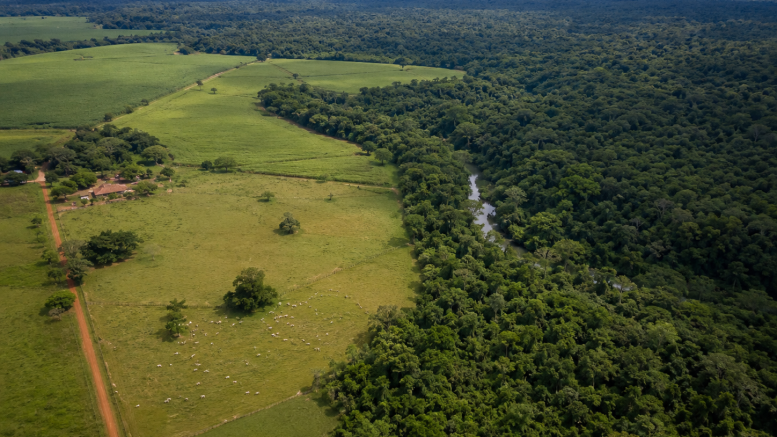
Private Rural Properties Account for 45% of Brazil’s Protected Forests
Brazil
The State of Mato Grosso do Sul declared a 180-day environmental emergency due to the increased risk of wildfires. The measure aims to strengthen fire prevention and response efforts amid forecasts of high temperatures, low humidity, strong winds and limited rainfall, particularly in the Pantanal. The decree allows for faster procurement of equipment, hiring of personnel and creation of firebreaks, while also expanding the enforcement of illegal burning activities. (Government of Mato Grosso do Sul)
Sanitation investments in the North Coast of the State of São Paulo are expected to strengthen environmental preservation in the region, with US$ 731 million allocated to expanding water supply and sewage systems through 2029. The expansion of sewage collection and treatment aims to reduce pollution in rivers, streams and coastal areas, contributing to ecosystem conservation and improved water quality. Since 2024, more than 16,000 households have been connected to the sewage network and 15,600 have gained access to wastewater treatment services. (Government of São Paulo)
Authorities of the municipality of Rio Grande, in the State of Rio Grande do Sul, have argued that approximately US$ 1.3 million in environmental compensation funds linked to the CMPC’s future pulp terminal should be invested locally. According to the Municipal Secretariat for Environment and Climate Change, the resources could support conservation units, protected areas and climate adaptation projects in a region considered vulnerable to extreme weather events. The proposal was presented during a public hearing as part of the environmental licensing process for the project, which is expected to receive US$ 296 million in investments. (Rio Grande City Hall)
Floods and urban flooding are the leading environmental concerns among residents of several Brazilian State capitals, according to a survey by the Sustainable Cities Institute and Ipsos-Ipec. The study indicates that the impacts of climate change are affecting daily urban life, with extreme weather events, excessive heat and air pollution among the most widely perceived challenges. The survey found that 84% of respondents believe local governments play an important role in addressing climate change and implementing adaptation policies. (Sustainable Cities Institute; Ipsos-Ipec)
The Federal Environmental Compensation Committee approved the allocation of an additional US$ 14.6 million to strengthen protected areas across different regions of Brazil, bringing the total amount allocated since 2011 to approximately US$ 771.5 million. The investments will support environmental protection, land regularization, monitoring, management plan development and improvements in the administration of protected areas. The resources will benefit federal, state and municipal conservation units across several Brazilian states. (Ministry of the Environment and Climate Change)
The National Confederation of Industry and 24 State industry federations have requested participation in cases before Brazil’s Supreme Federal Court that challenge the General Environmental Licensing Law. Organizations argue that the legislation increases legal certainty and predictability in environmental licensing processes without compromising environmental protection. According to the industry sector, the law can modernize procedures, reduce bureaucracy and support investments in infrastructure and productive projects while maintaining a balance between economic development and sustainability. (CNI)
The Federal Public Prosecutor’s Office has coordinated a task force to protect Sinningia helleri, a plant native to the Serra do Tinguá region, State of Rio de Janeiro, that is considered critically endangered. Rediscovered in 2015 after being presumed extinct for more than 150 years, the species is now the focus of emergency conservation measures, including the rescue of specimens affected by landslides, seed collection and cultivation programs. The MPF is also monitoring new threats to the plant’s habitat and evaluating additional measures to strengthen its protection and preserve local biodiversity. (MPF)
Researchers are developing a project that uses AI to interpret biological signals from species such as oysters, bats, bees and trees to measure environmental stress levels in urban areas. The initiative aims to create a Metabolic Resilience Index capable of translating organisms’ responses to environmental pressures and providing indicators to support urban planning, biodiversity conservation and climate change adaptation. (UFPE; CESAR)
Nearly half of Brazil’s legally protected forests are located on private rural properties, according to the Arapyaú Institute. Survey found that 45.2% of the country’s conserved forest areas are on private lands through Legal Reserves and Permanent Preservation Areas, highlighting the important role of rural landowners in environmental conservation. (Arapyaú Institute)
The Brazilian Securities and Exchange Commission has revised its sustainability disclosure rules, making the adoption of sustainability-related financial reporting voluntary for publicly traded companies. The changes maintain the use of international reporting standards while providing companies with greater flexibility to determine whether such disclosures are suitable for their business. Companies that choose not to adopt the standards will be required to inform the market and explain their decision under a “comply or explain” approach. (CVM)
The Soy Moratorium has become a focal point in the trade dispute between Brazil and the United States after being cited by the U.S. government as one of the reasons for recommending a 25% tariff on Brazilian products. According to the report, measures adopted in the State of Mato Grosso to weaken the agreement reduce incentives to combat deforestation. The document highlights state legislation that limits tax benefits for companies participating in the Soy Moratorium, an initiative that restricts the purchase of soybeans grown on Amazon land deforested after 2008. (USA Government)
Rabobank Brazil has structured a US$ 20 million financing deal for Bioenergética Aroeira in the State of Minas Gerais, linked to the achievement of environmental and social targets. The loan’s terms will vary according to the company’s performance on indicators such as fertilizer-use efficiency, expanded use of biomethane, increased female participation in the workforce and the expansion of social programs. The funds will support decarbonization initiatives and operational efficiency improvements in the sugar-energy sector. (Rabobank Brazil; Bioenergética Aroeira)
The State of Mato Grosso do Sul launched a selection process to develop its State Energy Transition Plan with an investment of approximately US$ 128 thousand. The initiative aims to establish goals, strategies and guidelines to expand the use of renewable energy, reduce greenhouse gas emissions and strengthen energy security. Currently, 91.35% of the state’s electricity matrix already comes from renewable sources, including solar energy, biomass and small hydropower plants. (Semadesc/MS)
The States of Bahia and Pará have received the Brazil Agroforestry Cocoa Project, a strategic initiative led by the Ministry of Agriculture to expand sustainable cocoa production through agroforestry systems. Backed by investments of US$30.9 million, the project aims to promote climate change mitigation and adaptation, combining agricultural production, environmental conservation and rural development in the Amazon and Atlantic Forest biomes. The initiative is expected to establish 12,500 hectares of agroforestry systems, reduce 5.18 million tonnes of CO₂ equivalent emissions and directly benefit approximately 69 thousand people. (Ministry of Agriculture and Livestock)
Conexsus reported that 87 community-based businesses supported by the organization operate across four Brazilian biomes, contributing to the conservation of about 5.5 million hectares of natural areas. In 2024, these enterprises generated US$ 33.03 million in gross revenue from products such as açaí, Brazil nuts, cocoa, cassava, fruits, seeds, rubber and vegetable oils. The organization will also participate in NaturalTech 2026, from June 10th to 13th, in São Paulo, at the joint “Casa da Sociobio” booth, alongside WWF-Brasil and Central do Cerrado, to promote community-based businesses and sociobiodiversity value chains. (Conexsus; WWF-Brasil; Central do Cerrado)
Data from the ABC+ Platform indicate that Brazil has already accounted for 204.87 million tonnes of carbon dioxide equivalent in climate benefits, representing 19.65% of the target set under the ABC+ Plan for 2030. Released in connection with World Environment Day, the survey points to about 65 million hectares under sustainable production systems monitored by the program, across 3.61 million rural properties. The ABC+ Plan aims to generate climate benefits equivalent to approximately 1.04 billion tonnes of carbon dioxide equivalent by 2030. (ABC+ Platform; MAPA; Ascenza Brazil)
Binatural joined four Ambition 2030 movements of the United Nations Global Compact – Brazil Network: Net Zero Ambition, Living Wage, Mind in Focus and Circular Connection. The signing took place during the 4th Ambition 2030 Forum in São Paulo and formalizes the company’s commitments to decarbonization, circular economy, mental health and employee well-being. The company also reported that, in 2025, it used nearly 22 million liters of used cooking oil in biodiesel production, preventing the potential contamination of more than 530 billion liters of water. (Binatural; United Nations Global Compact – Brazil Network)
Coalizão Brasil Clima, Florestas e Agricultura highlighted that ecosystem restoration could generate up to 2.5 million direct jobs in Brazil by 2030, while attracting investments and contributing to carbon removal. The organization argues that environmental conservation, ecosystem services, carbon markets and the bioeconomy are expanding the country’s so-called “Green GDP,” amid a global context in which nature-positive solutions could generate US$10.1 trillion in annual business value and 395 million jobs by 2030, according to the World Economic Forum. (Coalizão Brasil; World Economic Forum)
The Brazilian Sugarcane and Bioenergy Industry Association and Bioenergia Brasil challenged questions raised by the Office of the United States Trade Representative over U.S. ethanol access to the Brazilian market, after the Section 301 investigation cited the issue among Brazilian practices considered restrictive to trade. The organizations said Brazil’s tariff on imported ethanol follows Mercosur’s Common External Tariff and is not specifically targeted at the United States. They also argued that trade disputes should be addressed through dialogue and negotiation, while preserving the shared agenda on biofuels and the energy transition. (UNICA; Bioenergia Brasil; USTR)
Netafim highlighted the growing demand for technical information on irrigation in Brazil amid increasing pressure for water-use efficiency, productivity and sustainable use of natural resources. The first season of Netacast, the company’s podcast, reached nearly 40,000 views and streams across 12 episodes on irrigated agriculture, crop management, technology and sustainability in value chains such as coffee, citrus and cocoa. According to the company, expanding access to technical knowledge is part of its strategy to make irrigation more accessible and support agriculture that is more resilient to climate challenges. (Netafim)
ApexBrasil presented a study on decarbonization pathways for Brazil’s beef cattle sector through 2050 at the FAO headquarters in Rome. Developed by the Agribusiness Studies Center of Fundação Getulio Vargas, in partnership with the Brazilian Beef Exporters Association, the report projects a reduction of up to 92.6% in the emissions intensity of Brazilian cattle production under the most ambitious scenarios linked to the ABC+ Plan. According to the study, the combination of degraded pasture recovery, crop-livestock-forest integration and productivity gains would allow Brazil to reduce pasture area while maintaining high production levels, reinforcing the so-called “land-sparing effect.” (ApexBrasil; FGV Agro; ABIEC)
Kraft Heinz Brazil reported that 100% of tomatoes that do not meet industrial standards in its fields are kept on-site and converted into organic fertilizer, as part of waste reduction and soil health practices. The company also stated that its Nerópolis unit, in the State of Goiás, reduced water consumption by nearly 70% over the past five years through water reuse systems, including in fruit washing operations. According to the company, about 70 local farmers receive technical support through its Agricultural Excellence Program, and all Heinz partner growers have obtained Farm Sustainability Assessment certification. (Kraft Heinz Brazil)
State of Tocantins was included in Brazil’s federal wildfire prevention plan for the 2026 dry season, amid fire risks and the possible influence of El Niño. According to the planning, three municipalities in the State were classified at an intermediate risk level, in a mapping that also includes cities in the States of Pará, Amazonas and Mato Grosso. The federal government plans integrated inspection, prevention and firefighting actions involving agencies such as the Brazilian Institute of Environment and Renewable Natural Resources, the Chico Mendes Institute for Biodiversity Conservation, the Federal Police, the Ministry of Defense and security forces. (MMA; Ibama; ICMBio)
The Government of the State of Minas Gerais reported that its tax policy includes special regimes to encourage the use of clean energy in industrial processes, with deferral of the state value-added tax for biomethane, green hydrogen, biodiesel and macaúba, as well as exemptions for photovoltaic energy in certain operations. According to the state government, the measure aims to attract investments and support the decarbonization of Minas Gerais’ industry. One example cited is Asja GBio’s biomethane plant in Sabará, enabled by a lower tax burden on fuel sales, with approximately 500 direct and indirect jobs expected. (Government of Minas Gerais; SEF-MG; Asja GBio)
Inpasa reported a 59% reduction in the greenhouse gas emissions intensity of its operations compared with 2021, reaching 6.845 kg of carbon dioxide per tonne of corn processed, according to its 2025 Sustainability Report. The company also stated that more than 99% of the energy consumed at its units comes from renewable sources and that it generated more than 2,080 GWh of clean electricity during the year. The initiatives cited include the use of regional biomass in boilers, solar power generation, treatment of 100% of effluents and reuse of neutral ethanol effluent to produce biogas at the Dourados unit, in the State of Mato Grosso do Sul. (Inpasa)
The University of São Paulo will act as an intermediary institution for UI GreenCityMetric, an international initiative focused on assessing urban sustainability in municipalities. According to an article by Patrícia Iglecias, the university’s superintendent of environmental management, the tool uses indicators on water governance, waste management, energy, climate change, urban mobility, territorial planning and green-area conservation to support local public policies. The initiative aims to bring scientific knowledge closer to municipal management, with technical support from the university for cities seeking to improve their environmental performance. (USP)
Codevasf held a special program for World Environment Day to discuss sustainability, the Sustainable Development Goals, environmental governance, natural resource conservation and institutional actions aligned with the 2030 Agenda. The event included presentations on the practical application of the Sustainable Development Goals and sustainable logistics in public procurement, as well as the Revitalizar para Produzir [Revitalize and Produce] program, focused on hydro-environmental recovery and sustainable development in areas served by the company. The initiative also included the release of a technical-scientific publication on ichthyofauna and aquatic biodiversity. (Codevasf)
The Brazilian Supreme Federal Court declared unconstitutional a provision of Law No. 15,042/2024 that required insurers, open private pension entities, capitalization companies and reinsurers to allocate at least 0.5% of their technical reserves and provisions to the purchase of carbon credits or fund shares linked to these assets. The decision, issued in Direct Action of Unconstitutionality No. 7795, found that the requirement violated the principles of equality, free enterprise and legal certainty by imposing a financial obligation on entities that are not among the main greenhouse gas emitters. (STF)
New rules issued by Brazil’s National Monetary Council have expanded monitoring and socio-environmental analysis requirements for rural credit operations, increasing demand for territorial intelligence tools in the financial system. CMN Resolution No. 5267/2025 updated rules for remote sensing-based inspection, while CMN Resolution No. 5,268/2025 amended provisions on social, environmental and climate-related restrictions in Brazil’s Rural Credit Manual. According to Agrotools, this scenario requires banks and credit cooperatives to integrate environmental, territorial, documentary and production data to monitor operations throughout the credit cycle. (Central Bank of Brazil; Agrotools)
The Brazilian Development Bank raised US$ 200 million from Spain’s Official Credit Institute to finance green and sustainable projects in Brazil. The operation is expected to support initiatives with positive environmental impacts, including sustainability, climate change mitigation, emissions reduction, renewable energy, energy efficiency and sustainable infrastructure. (BNDES; ICO)
Banco do Nordeste [Brazilian Northeast Bank] reported that it allocated US$ 450 million between January and April of 2026 to projects under Brazil’s New Industry program. The funds support sustainable production chains, infrastructure and decarbonization in the bank’s operating area, which includes the Northeast and parts of Minas Gerais and Espírito Santo. Of the total, US$ 138.7 million went to sustainable and digital agro-industrial chains, while US$ 53.30 million supported bioeconomy, energy transition and emissions reduction initiatives. (BNB)
Equinor, Embrapii and the Brazilian Center for Research in Energy and Materials launched a US$ 5.20 million project to develop biomethane from ethanol production residues. The Res2Bio initiative aims to expand the use of sugarcane bagasse, straw, vinasse and filter cake as renewable energy sources, with potential to replace fossil gas using existing infrastructure. (Equinor; Embrapii; CNPEM)
Brazil’s Ministry of Development, Industry, Trade and Services advanced the implementation of the Green Seal Brazil Program, an initiative focused on certifying products and services based on environmental, social and governance criteria. The program aims to create verifiable sustainability standards, strengthen the circular economy and increase the competitiveness of Brazilian companies in domestic and international markets. (MDIC)
Brazil has advanced pilot projects for low-emission steel, with initiatives involving green hydrogen, steel recycling and the use of renewable energy in the steel industry. Axia Energia announced a partnership with German groups to develop a green hydrogen plant focused on low-carbon steel production, while Companhia Siderúrgica Nacional launched a green hydrogen plant in the State of Paraná. Despite Brazil’s potential in high-quality iron ore, renewable electricity and green hydrogen projects, the sector still faces challenges such as competition from Chinese steel, high decarbonization costs, lack of international standardization for “green steel” and pressure from the European Union’s carbon border tax. (Axia Energia; CSN; MDIC)

Latin America
Argentina Carbon Forum brought together experts, companies, investors and organizations in Buenos Aires on June 3 and 4 to discuss carbon markets, climate finance and decarbonization strategies. The program included debates on Article 6 of the Paris Agreement, voluntary markets, industrial decarbonization, bioeconomy and opportunities for climate projects in Latin America. (Argentina Carbon Forum)
The ProYungas Foundation and the Ministry of Economy and Production of the Province of Tucumán, Argentina, presented the book “Argentina Sustentable: El Norte Grande” developed by more than 100 authors, which highlights the social, economic and environmental importance of northern Argentina. The book advocates development models that integrate environmental conservation, sustainable production and social inclusion, bringing together contributions from academia, the productive sector, Indigenous communities, civil society and government. (ProYungas Foundation; Ministry of Economy and Production of Tucumán)
Argentine congressman José Glinski introduced a bill requiring oil companies to cover the costs of well closures and remediation of environmental liabilities left by hydrocarbon activities. The proposal provides for the creation of a federal fund financed by companies, a public registry of environmental liabilities and financial guarantees to cover environmental recovery actions, while also linking these activities to job creation and retention in producing regions during the energy transition. (Argentine Lower House of Congress)
Argentine startup Nideport has raised more than US$ 7 million in international funding to develop forest restoration projects in the Atlantic Forest of Misiones, combining carbon credits, artificial intelligence and autonomous drones. The company operates across more than 22,000 hectares of degraded land, where it has already helped capture over 1.2 million tonnes of CO₂ and significantly reduce forest fires. In addition to environmental restoration, Nideport has developed a technology platform that uses AI, sensors and satellite imagery to monitor forests in real time and support conservation projects. (Nideport)
Scientists from Chile published a letter in the scientific journal Nature warning that changes in government can undermine environmental progress built over decades. They highlight that changes regarding environmental decrees in Chile illustrate how biodiversity conservation policies, protected natural areas and climate change adaptation measures can be weakened by electoral cycles. The study emphasizes that environmental protection is essential not only for biodiversity, but also for the economic stability of countries that depend heavily on natural resources. (University of Chile; Universidad Mayor)
The “Conserva Aves” [Birds Conservation] initiative has launched a public call in Chile to fund the creation, expansion and certification of private protected areas focused on conserving threatened, endemic and migratory bird species. The program will provide up to US$ 107 thousand per project and support local communities, Indigenous organizations and civil society groups in protecting critical habitats. (Conserva Aves; Nature Fund Chile)
Peru officially joined the Intergovernmental Land Tenure Commitment, an international initiative aimed at strengthening land governance and reducing deforestation by 2030. The measure seeks to enhance Amazon rainforest protection, reinforce Indigenous land rights and expand access to climate finance and international cooperation for conservation and sustainable development. (Ministry of Foreign Affairs; FCLP)

READ MORE: