
Mexico’s Heatwave Raises Crop and Water Security Risks

Argentina filled 100% of the EU egg export quota within the first 15 days of application of the Mercosur-EU Agreement. Sales reached 333 tonnes, with production from farms in Entre Ríos, Córdoba and Buenos Aires. Resolution No. 50/2026 of the Ministry of Economy regulated the access to agricultural tariff-rate quotas opened under the agreement, in force since May 1st, 2026. (Ministry of Economy)
The Government announced a gradual reduction schedule for export duties on soybeans, corn, sorghum and sunflower starting in 2027. Soybean export duties will be cut by 0.25 percentage point per month from January 2027 and by 0.5 percentage point per month from January 2028. For corn and sorghum, the reduction will be 0.25 percentage point per quarter in 2027 and 0.5 percentage point per quarter in 2028. The measure aims to provide predictability to the agricultural sector and allow early registration of export sales declarations for shipments from January 2027. (Ministry of Economy)

CNH and TIM will invest US$ 15.2 million to install 97 telecommunications towers in rural areas of the State of Minas Gerais. The project is expected to connect about 1.5 million hectares, benefit more than 200 thousand people and reach approximately 11 thousand farms, as well as schools and basic health units. The initiative uses State Value-Added Tax credits to expand connectivity infrastructure in the countryside. (CNH; TIM)
In the southern region of the State of Minas Gerais, rainfall slowed the arabica coffee harvest, which is nearing 10% of the planted area. Weather instability was also indicated by Brazil’s National Institute of Meteorology, which forecast rainfall in southeastern Minas Gerais in May. (Cepea; Inmet)
The Brazilian Government is expected to decide in June whether to raise the mandatory anhydrous ethanol blend in gasoline from 30% to 32%. The proposal depends on approval by the National Energy Policy Council. In April, the Ministry of Mines and Energy had already said it would submit E32 to the council and that the percentage had passed technical tests during the adoption of E30. The measure is backed by the government as a way to reduce gasoline imports and expand the use of biofuels. (MME)
The 2026/27 Harvest Plan [Brazilian Government’s agricultural financing plan] is still under preparation, but Brazil’s Ministry of Agriculture has already received proposals from the Brazilian Confederation of Agriculture and Livestock for the new edition of the Agricultural and Livestock Plan. Also, the Ministry of Agrarian Development opened a public consultation for the 2026/27 Family Farming Crop Plan, focused on improving credit lines and policies for small farmers. By April of 2026, corporate rural credit under the 2025/26 Harvest Plan had reached US$ 77.2 billion in contracted loans. (MAPA; MDA)
3tentos started operating its first corn ethanol plant in Porto Alegre do Norte, State of Mato Grosso, after authorization from Brazil’s National Agency of Petroleum. The unit is authorized to produce 1,275 m³/day of hydrous ethanol and 1,215 m³/day of anhydrous ethanol and will process 2,800 tonnes of corn per day. The operation marks the company’s entry into the corn ethanol market and expands grain industrialization in Brazil’s Center-West region. (ANP; 3tentos)
The State of Santa Catarina declared a 180-day climate alert amid forecasts that El Niño may form in the 2H26. The preventive measure allows early mobilization of state agencies, use of resources from the State Civil Defense Fund and investments in monitoring, training and dam modernization. The State Civil Defense said the decree also establishes objective criteria for municipalities to declare emergency situations in cases of intense rainfall, landslides, flooding or orange and red alerts. (Government of Santa Catarina; Santa Catarina Civil Defense)
Brazil’s Federal Revenue Service launched Operation Rota do Fim to investigate suspected money laundering and fraud in the beef supply chain in the State of Acre. The investigation points to the infiltration of a criminal organization into cattle suppliers, slaughterhouses, distribution, commercialization and cattle auctions. The group allegedly moved approximately US$ 39.4 million in illicit funds mixed with money from the formal livestock chain. The operation carried out 7 preventive arrest warrants and 30 search and seizure warrants in six states, as well as the freezing of 25 properties, 25 vehicles, financial assets and cattle herds. (Brazilian Federal Revenue Service)
Pamplona Alimentos had a US$ 12.6 million project approved by the Brazilian Funding Authority for Studies and Projects to advance its own swine genetic development in Santa Catarina. The investments will be made over three years in Rio do Sul and Pouso Redondo, focusing on new maternal lines, genetic diffusion, swine semen processing, genomics, feed efficiency, meat quality and animal welfare. Most of the funds, US$ 10.4 million, will go to Ribeirão Vassouras Farm, in Pouso Redondo; another US$ 2.2 million will be allocated to Lauro Pamplona Farm. (Pamplona Alimentos; Brazilian Funding Authority for Studies and Projects)
Agribusiness exports totaled US$ 16.6 billion in April 2026, up 11.7% from the same month last year and a record for April, according to Brazil’s Ministry of Agriculture and Livestock. The sector accounted for 48.8% of Brazil’s total exports during the period, while the agribusiness trade surplus reached US$ 15 billion. From January to April, agribusiness exports totaled US$ 54.6 billion, also a record for the four-month period. Soybeans and beef led shipments, while products such as pulp, cotton, mangoes and avocados also posted record performances. (MAPA)
Brazilian cotton shipments have already totaled 230,340 tonnes in the first 15 business days of May, a record volume for the month and 19.8% above the total registered in May 2025. In the partial 2025/26 crop season, exports surpassed 2.9 million tonnes, exceeding the total shipped during the entire previous season. Despite the accelerated pace of foreign sales, the domestic market remains more attractive in terms of prices, with local quotations standing 17.5% above the average export price in May. (Secex)
Brazil’s National Land Transport Agency approved the technical studies and concession plan for the West Network railway, a project that foresees up to US$ 711.5 million in federal investments to recover 1,625 km of railway between the States of São Paulo and Mato Grosso do Sul. Considered strategic for agribusiness, the route connects grain-producing regions in central-western Brazil to the Port of Santos and could expand logistical integration with Bolivia and Paraguay. The project will still be reviewed by the Ministry of Transport and the Federal Court of Accounts before the concession auction. (ANTT)
The 2025/26 second corn crop in the State of Mato Grosso do Sul remains favorable. 71.5% of crops are in good condition, 17.8% are rated regular and 10.7% are in poor condition. The planted area is estimated at 2.206 million hectares, with expected average yield of 84.2 bags per hectare and production of 11.139 million tonnes. (Aprosoja-MS)
C.Vale acquired two new grain receiving units in the State of Mato Grosso, located in Nova Mutum and São José do Rio Claro. Each facility has storage capacity of 55 thousand tonnes, with two truck scales and two grain dumpers. With the acquisitions, the cooperative now has 18 grain units in the State, Brazil’s largest soybean and corn producer and plans to prepare the new facilities to receive the current season’s second corn crop. (C.Vale)
An auction under Brazil’s Equalization Premium Paid to Farmers or Their Cooperatives, held by the National Supply Company, traded approximately 119,700 tonnes of paddy rice in the State of Rio Grande do Sul. The volume was part of an offering of more than 144 thousand tonnes and reached over US$ 4.15 million. The Rio Grande do Sul Rice Farmers Federation said the mechanism helps reduce stocks and improve marketing conditions for farmers amid pressure on domestic prices. (Conab; Federarroz)
International coffee prices ended the week higher, supported by low certified stocks and delays in Brazil’s harvest. According to StoneX, futures rose by about 2% in New York and 2.7% in London, while Brazil’s harvest reached 14% of the area, below the historical average of 21% for the period. (StoneX; USDA)
The area affected by drought decreased from 49% to 41% of the national territory between March and April 2026, according to the Drought Monitor of the National Water and Basic Sanitation Agency. The affected area declined from 4.17 million to 3.43 million km², the smallest extent recorded since December 2023. Drought severity decreased in 14 States, but intensified in Amazonas, Paraná, Rio de Janeiro, Rio Grande do Sul and Santa Catarina. (ANA)


The Agricultural Development Institute announced more than US$ 2.5 million to strengthen family farming in the Ñuble region in 2026. The funds will support productive assets, technical assistance, traditional crops and investment programs, with a focus on innovation, productivity gains and market access. The initiative covers the region’s 21 municipalities and includes cereals, viticulture, vegetables, animal production and mixed farming systems. (Indap)

The rice sector has intensified the use of agroclimatic tools amid the risk of lower rainfall and greater water variability in 2026. The possible development of El Niño in the second half of the year and the outlook for below-average rainfall between April and August in producing regions reinforce the need to adjust sowing, irrigation and variety selection. The tools used by the sector combine rainfall forecasts, water availability and six-month climate prediction. (Fedearroz; Ideam)
National Poultry Farmers Federation warned of a supply risk for the poultry sector due to road blockades on the route to Buenaventura, the main entry point for feed raw materials in western Colombia. Approximately 234 thousand tonnes of corn, soybeans, soybean meal and other grains enter through the port each month, equivalent to 7,800 tonnes per day. The affected region concentrates approximately 51 million birds, while Valle del Cauca accounts for 30% of national egg production and 24% of chicken production. (Fenavi)
The agricultural GDP fell 1.4% in the 1Q26, mainly pressured by a 30.5% decline in coffee activity. Rainfall affected coffee flowering and interrupted the sector’s recovery, while other crops also declined, including cocoa, rice and citrus. The contraction was partially offset by growth in non-coffee crops, flowers, fruits, livestock, milk and eggs. (DANE)
Dole Fresh Fruit International highlighted the country as a strategic banana supplier for the European Union, with production of approximately 120 million boxes out of a 750 million-box market. The company exports between 30 million and 35 million boxes and cited production costs, international conflicts, logistics and climate as key challenges. The Association of Banana Growers of Magdalena and La Guajira warned that limiting production in Magdalena would affect more than 18 thousand families, 500 small-sized farmers and an activity that represents 9.4% of the department’s formal employment. The sector is calling for investment in water infrastructure and irrigation technologies, while also seeing potential for artificial intelligence in quality control, packing, supply estimation and pest management, although costs still limit adoption. (Dole Fresh Fruit International; Asbama)

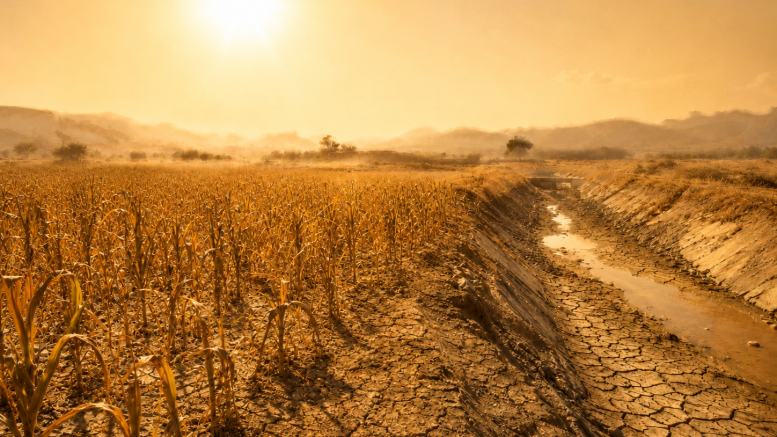
The May heatwave increased climate risks for agricultural production in Mexico. The country was identified by the World Meteorological Organization as having the fastest warming rate between 1991 and 2025 in Latin America. The National Meteorological Service reported that heat affected 27 states in early May and still covered 24 states by mid-month, with temperatures reaching 40 °C to 45 °C in some areas. The country alternated between severe drought and extreme rainfall in 2025, putting pressure on crops, reservoirs and water security. (OMM; Conagua)
The Secretariat of Agriculture and the Sonora Government reinforced a crop conversion strategy for the State’s agricultural sector. In the 2025/26 fall-winter season, more than 32 thousand hectares of alternative crops such as safflower, canola and sunflower were established in response to lower water availability and the need to preserve income for farmers. (Secretariat of Agriculture)


The climate outlook for the 2026/27 crop season requires monitoring, but does not yet confirm a “Super El Niño” weather event. The Paraguayan Chamber of Exporters and Traders of Grains and Oilseeds estimates that the potential development of El Niño is expected to be slow and its effects would be more likely from spring onward. (Capeco)

The blueberry market is entering a restructuring phase as premium varieties lose differentiation. According to Agrovalue, 51% of Peru’s planted area is already made up of premium varieties, reducing price premiums and putting pressure on farmers that still pay high royalties or genetic fees. The trend could accelerate the replacement of traditional varieties and increase the importance of genetics, commercial scale, financing and direct access to international markets. (Agrovalue)
Japan and Mercosur continue discussions under the Japan-Mercosur Strategic Partnership Framework, launched in December 2025. For Uruguay, the issue is relevant because of its potential impact on beef exports: Japan is a high-value meat market, but Uruguayan beef faces a 38.5% tariff and lacks a specific access quota. A trade rapprochement could improve Uruguay’s competitiveness in beef and meat byproducts in the Japanese market. (Japan’s Ministry of Foreign Affairs; National Meat Institute)

Japan and Mercosur continue discussions under the Japan-Mercosur Strategic Partnership Framework, launched in December 2025. For Uruguay, the issue is relevant because of its potential impact on beef exports: Japan is a high-value meat market, but Uruguayan beef faces a 38.5% tariff and lacks a specific access quota. A trade rapprochement could improve Uruguay’s competitiveness in beef and meat byproducts in the Japanese market. (Japan’s Ministry of Foreign Affairs; National Meat Institute)
Plaza Rural sold 6,178 cattle on a single day of auction, equivalent to 91.78% of the offering. Calves totaled 3,719 head, with an average price of US$ 4.10/kg and an average lot value of US$ 731.84. Sales continue on Wednesday, May 27th, with sheep, steers, cull cows for fattening, heifers, pregnant cows, mated cows and cow-calf pairs, with financing from Banco de la República Oriental del Uruguay. (Plaza Rural)

READ MORE: