
“Productivity alone is no longer enough in an increasingly polarized environment…”
Ana Paula Repezza is the president of CropLife Brasil. She holds a degree in Business Administration from UFMG, an MBA from Fundação Getulio Vargas and a master’s degree from the University of London.

Ana Paula Repezza, president of CropLife Brasil
AgriBrasilis – Is agribusiness communication with society effective?
Ana Repezza – Agribusiness represents approximately 30% of Brazil’s economy, with a GDP of US$ 638.7 billion in 2025, according to Cepea/CNA data. Despite this relevance, communication with society remains a challenge. The sector has advanced in transparency, digital presence, technology, dialogue with other sectors and legal certainty, but it still often communicates “internally,” using technical language that remains distant from end consumers.
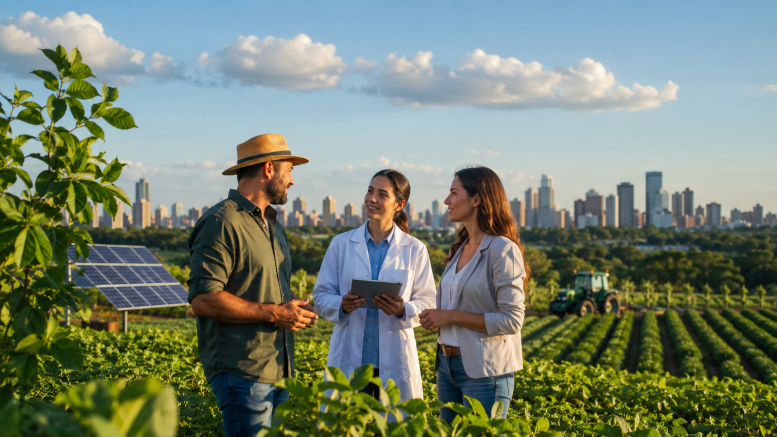
Communicating agribusiness requires translating production, trends and impacts into terms society can understand. In an increasingly polarized environment, it is no longer enough to talk about productivity, harvests and crops. It is necessary to demonstrate the sector’s relationship with science, innovation, sustainability, food security and job creation.
The industry must bring rural production closer to everyday life, showing how agribusiness is present in food, energy, transportation, industry and urban routines. Communication must be grounded in facts, results and responsibility: how the sector modernizes itself, responds to environmental and sanitary requirements and prepares for future challenges.
AgriBrasilis – How are biological inputs transforming the crop protection industry?
Ana Repezza – Biological inputs contribute significantly to both production efficiency and sustainability in agriculture. Today, biological technology is already a reality in the field — a viable and strategic solution for integrated pest management and increased productivity. In 2025, the biological inputs market reached a record US$ 1.24 billion, a 15% increase compared to the previous year. Biological products covered 194 million hectares, up 28% from 2024 and nearly 70% growth over the past three years.
The sector’s maturation is marked by the complementarity between biological and synthetic technologies, reducing dependencies and resistance over time. Market growth is also driven by the arrival of new players through company creation, mergers and acquisitions. Increased adoption is linked to improved product quality, broader portfolios and greater producer confidence in nature-based products.
AgriBrasilis – Is regulation an obstacle to innovation in agribusiness?
Ana Repezza – In tropical agriculture, innovation is indispensable for maintaining productivity and competitiveness. Therefore, it is essential for the country to have solid and updated legislative frameworks. One of the main challenges in creating a safe business environment — both for investors and for farmers using agricultural solutions — is advancing sector regulations and modernizing legal frameworks.
Brazil’s Biological Inputs Law (Law No. 15.070/24), a global pioneer, represented important progress by establishing specific rules for the production, registration and commercialization of these products, which had previously been regulated generically under other laws and complementary regulations. However, the sector still awaits the publication of final implementing regulations to detail registration procedures, harmonize practices among states and ensure predictability and competitiveness in the global market.
Meanwhile, the Pesticides Law (Law No. 14.785/23), which improved governance on the subject, focuses on implementing traceability and risk assessment processes.
In the seed segment, the challenge lies in modernizing the Cultivar Protection Law (Law No. 9.456/1997), which governs intellectual property protection for plant varieties and compensation for plant breeders in Brazil. In this context, CropLife has contributed data, research and evidence to policymakers. The goal is to demonstrate that greater legal certainty, stronger intellectual property mechanisms and alignment with international standards can create a more attractive environment for investment and innovation in cultivars.
AgriBrasilis – You have highlighted the lack of regulatory alignment between Brazil and its trading partners. Where does this mismatch weigh most heavily?
Ana Repezza – It is essential for Brazil to advance regulatory convergence with its main markets, especially China, its largest trading partner. Differences in procedures, requirements and approval timelines can delay the arrival of new technologies to the field and affect multiple stages of agricultural production. Greater regulatory alignment tends to make the development of new products more efficient, increase legal certainty, attract investment and accelerate producers’ access to solutions that enable higher productivity on less land while ensuring greater consumer safety.
AgriBrasilis – What is Brazil getting right and where does it still fall short in traceability and sustainability?
Ana Repezza – Brazil has advanced in both areas, balancing industrial-scale innovation, environmental conservation and productivity in the field. CropLife Brasil recognizes the importance of mechanisms that enhance transparency, data integrity and monitoring capacity throughout the production, distribution and use chain of crop protection products. These are important issues for refining sector governance and strengthening data- and risk-based public policies for agribusiness.
When discussing traceability in Brazil, there is clear convergence regarding the goals and benefits associated with tracking agricultural inputs. The sector’s concerns focus on the implementation model currently proposed by the Ministry of Agriculture (MAPA), which compromises principles such as predictability, stakeholder participation, economic rationality and implementation and operational costs across the supply chain.
The organization supports models based on technological neutrality and interoperability, using different solutions — such as 2D codes, QR codes and integrated digital platforms — as long as they ensure identification, registration and auditing of movements.
Regarding sustainability, a holistic approach is needed, connecting legal frameworks for the proper and safe use of technologies, good agricultural practices and workforce training — both in the field and within industry. This agenda is a permanent commitment at CropLife Brasil, which institutionally incorporates these issues into its chambers and executive committees, technical opinions and regulatory contributions, while also promoting awareness campaigns and offering free training programs for all links in the supply chain, including its member companies.
AgriBrasilis – What does CropData reveal about productivity, input use and safety in agriculture?
Ana Repezza – Our data platform brings together information on germplasm, biological inputs, crop protection products and biotechnology. The portal aims to support the creation of referenced, structured and simplified content accessible to all audiences.
CropData compiles external information, refined datasets and sector data from consulting firms, enabling users to visualize market indicators, foreign trade, pesticide use and registration, ESG indicators, jobs and wages. The entire information hub undergoes technical auditing by our team to ensure reliability and credibility.
AgriBrasilis – What is the focus of your leadership at CropLife Brasil?
Ana Repezza – My focus will be reinforcing recognition of Brazilian agribusiness as a sector driven by high technology, tropical science and high productivity. Our commitment is to expand institutional dialogue, advance priority regulatory agendas and position the sector within international debates on agricultural innovation. I will also seek to strengthen relationships with government authorities in both the Executive and Legislative branches.
In 2026, management efforts will focus on:
- chemicals, including import parity and regulatory efficiency under the Pesticides Law;
- biologicals, through progress in implementing the Biological Inputs Legal Framework;
- seeds, through modernization of the Cultivar Protection Law and international regulatory convergence.
The challenge will be translating the complexity of tropical agriculture, its economic impacts and its sustainability gains to urban society and international markets, reinforcing Brazil’s role as a global reference in innovation and sustainable agricultural production.