
Argentina Prepares First Corn Shipment To China In More Than 15 Years

The World Bank considered Argentina the main positive exception in Latin America and the Caribbean in 2026, amid a regional backdrop of still-limited growth. According to the institution, macroeconomic stabilization and reforms have improved the country’s expectations and financial conditions, while Brazil and Mexico continue to face weakening momentum. (World Bank)
Poverty decreased to 28.2% of the population in the 2H25, down 3.4 percentage points from the first half of the same year and marking the lowest level since the 1H18. (Indec)
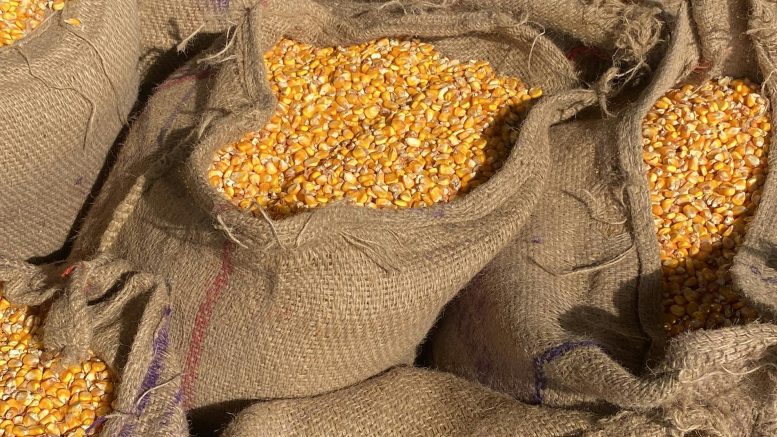
Argentina is preparing the first corn shipment to China in more than 15 years, with about 34,000 tonnes being loaded at Cofco’s terminal in Timbúes. The operation follows China’s approval of Argentine corn imports in 2024 and signals closer agricultural trade ties between the two countries, as China seeks to diversify feed grain supply origins. (Cofco International)
Favorable rainfall improved soybean and corn conditions over the past week. Crop estimates for the 2025/26 season are at 48.5 million tonnes for soybeans and 57 million tonnes for corn, while the share of soybean area with adequate to optimal moisture rose to 88% and corn reached 94.9%. (Buenos Aires Grain Exchange)

Brazil’s coffee production is projected to reach 75.3 million bags of 60 kg in the 2026/27 season, up 20.8% from the previous cycle, driven by recovery from last season’s weather impacts and by structural production growth, especially in robusta coffee. The increase in Brazilian supply is one of the main factors behind the projected global surplus and is expected to support the rebuilding of global inventories, which remains concentrated in only a few countries. (StoneX)
Harvester sales decreased 49.5% in February of 2026 compared to the same month in 2025 and 17% from January. A total of 142 units were sold in February. According to the National Federation of Motor Vehicle Distribution, the decline reflects high interest rates, rising costs, and greater caution among farmers, in addition to the growing adoption of machine leasing as an alternative to preserve cash flow. In the first two months of the year, sales dropped 42.4%, totaling 313 units. (Fenabrave)
Brazil could reach a record wheat import in the 2026/27 season, close to 8 million tonnes, amid reduced planted area and a projected drop in domestic production to around 7.2 million tonnes. The greater reliance on foreign supply is expected to leave Brazil’s milling industry more exposed to swings in prices, quality and wheat availability. (Moatrigo; Sinditrigo-PR)
Agribusiness led bankruptcy protection requests (similar to US’ Chapter 11) in Brazil in 2025, according to an updated report released by Serasa Experian. The sector accounted for 30.1% of all companies under bankruptcy protection, totaling 743, the highest share among all segments of the economy. Brazil recorded 977 cases overall, the highest since 2016. According to the analysis, climate risks, commodity price volatility, dollar-linked inputs and the sector’s longer financial cycle help explain the financial pressure in the agricultural sector. (Serasa Experian)
Court of the State of Minas Gerais approved the bankruptcy protection (similar to US’ Chapter 11) of Aliança Agrícola do Cerrado, suspending legal actions and debt enforcement measures against the company for 180 days. The trading company, controlled by Russia’s Sodrugestvo group, is seeking to renegotiate debts exceeding US$ 310 million. According to the company, the crisis was driven by lower soybean prices, volatility in the trading market and higher financial costs. As part of its restructuring, the company signed a tolling agreement with ADM do Brasil to support cash generation and maintain operations. (10th Civil Court of the Uberlândia District)
The Agricultural Research and Rural Extension Company of the State of Santa Catarina approved the Café+SC project to generate technical data on specialty coffee production in the State, focusing on sustainability and income generation for family farming. The initiative is centered on shaded cultivation and will evaluate Coffea arabica varieties under agroforestry and full-sun farming systems to support crop planning in the State of Santa Catarina. (Epagri)
Frísia Agricultural Cooperative will invest about US$ 19.57 million in the construction of a new grain handling facility in Pium, State of Tocantins, to expand grain receiving, processing and storage capacity. The unit is expected to strengthen support for cooperative members and keep pace with the expansion of agricultural production in the State. (Frísia)
The National Agricultural Aviation Companies Union warned about fuel cost pressure after a study showed a 67.3% increase in aviation gasoline and a 51.6% rise in aviation kerosene. According to the entity, the increase raised companies’ operating costs by between 14% and 40%, averaging 25%, and may require service price adjustments of more than 10%. (Sindag)
The Federal Government and the Senate discussed measures to ease agribusiness debt amid climate-related losses, high interest rates and falling commodity prices. Among the proposals under review is the use of resources from the Pre-Salt Social Fund to finance debts of farmers affected by climate events. (Government of Brazil)


Frutas de Chile association, focused on the fruit sector, presented the new Minister of Agriculture, Jaime Campos Quiroga, with a six-point agenda aimed at raising the sector’s exports to US$ 10 billion by 2028. Priorities include modernizing the Agricultural and Livestock Service, resuming negotiations to restore zero tariffs for all Chilean fruit in the USA, opening new markets, advancing water and logistics infrastructure, as well as speeding up visa processing for seasonal workers. (Frutas de Chile)

Colombian Sugarcane Farmers Association warned that the sharp 385% increase in sugar imports from Bolivia is putting pressure on the local sugar industry. According to them, the rise in external purchases comes without trade reciprocity and adds to other pressures, such as tariffs in Ecuador and growing ethanol imports from the USA. In response, the Association called on the Colombian government to establish clearer sugar trade rules and measures to protect domestic production, as well as the 286,000 jobs linked to the sector. (Asocaña)
The National Land Agency officialized 126,000 hectares for indigenous communities in the Colombian Amazon and Pacific regions, benefiting 1,345 families. The measure includes the establishment and expansion of indigenous reserves in Guainía, Vichada, Guaviare and Nariño, aiming to strengthen territorial control and environmental conservation. (National Land Agency)
Procaña, a sugarcane farmers’ association linked to Colombia’s agroindustrial sector, denounced the new property valuations carried out by the Agustín Codazzi Geographic Institute are “suffocating” agricultural production in the country. According to the entity, the values ignore the real productive capacity of rural properties and, in some cases, show increases of up to 2,505,119%, making property taxes unaffordable for many farmers. (Procaña)


Mexico and the USA strengthened cooperation on agrifood safety for fresh and minimally processed foods, focusing on laboratory surveillance, traceability and rapid outbreak response. The coordination among Mexican agencies and the Food and Drug Administration comes as bilateral agrifood trade increased from US$ 50 billion to US$ 73 billion over the past five years. (Senasica; Cofepris; FDA)

The Paraguayan Chamber of Exporters and Traders of Cereals and Oilseeds reelected José Berea as president for the 2026–2028 term and renewed its Board of Directors during the Ordinary General Assembly held on March 24. Wilfrido Hempel was elected vice president. (Capeco)

Bloom Fresh has stepped up enforcement actions against the illegal use of protected table grape varieties, filing new complaints against unauthorized farmers and strengthening export supply chain monitoring. The company is also investigating more than 15 nurseries suspected of propagating plant material without a license and has warned importers about cases of possible relabeling to conceal the fruits’s origin. According to the company, the measures are intended to protect licensed growers and curb further intellectual property violations in the sector. (Bloom Fresh)
Ecosac Agrícola refinanced US$ 215 million in debt to strengthen its financial structure and support expansion plans in Peru. The operation was structured by international and local banks, following the entry of Spain’s Atitlan group as a majority shareholder. (Ecosac Agrícola)
Olive exports surpassed US$ 100 million in 2025 and continued to grow in 2026. In February of 2026, shipments totaled US$ 5.1 million, up 30% from the same month in 2025, while export volume increased by about 51%, reaching 2,689 tonnes. This performance supports expectations of growth for the sector, driven by market expansion and a more diversified export supply. (Fresh Fruit)

Higher oil prices and logistical difficulties in transporting fuels and fertilizers are accelerating the expansion of oilseed crops such as canola, Brassica carinata, camelina and sunflower. Growing demand for energy use is positioning these crops as increasingly relevant alternatives to fossil fuels. (Blasina y Asociados)

Read more: