

“A significant portion of the population does not have enough income to purchase the food it needs…”
José Graziano da Silva is a former Director-General of the Food and Agriculture Organization (FAO), emeritus professor at Unicamp and director-general of the Instituto Fome Zero.
Da Silva holds a degree in agronomy, a master’s in economics and rural sociology from USP and a PhD in economics from Unicamp, with postdoctoral studies at the University of London.
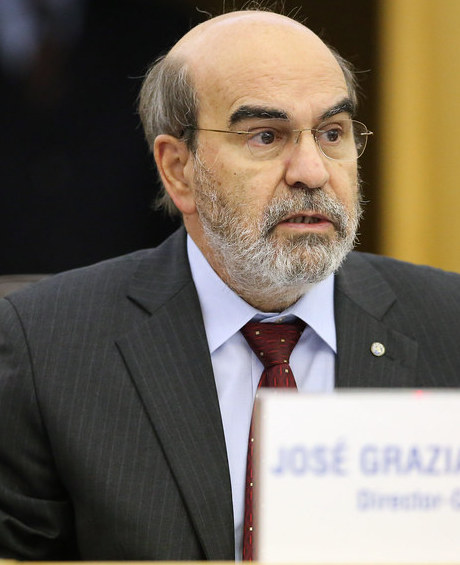
José Graziano da Silva, Zero Hunger Institute.
AgriBrasilis – How can we explain the contradiction between the success of agribusiness and food insecurity in Brazil?
José Graziano – This apparent contradiction can only be understood when we recognize that the problem is not the lack of food, but access to it. A significant portion of the population does not have sufficient income to purchase the food it needs. The FAO estimates that a healthy food basket, including fruits and vegetables, is out of reach for nearly a quarter of Brazilians. Hunger stems mainly from low purchasing power among the poorest segments, driven by income inequality, unemployment, job insecurity and the rising cost of living.
It is important to avoid a simplistic interpretation that pits agribusiness against family farming, as if the issue were merely a dispute between two production models. Agribusiness plays an important role in Brazil’s economy, exports and various supply chains; family farming plays a key role in the production of fruits, vegetables and regional products. Even so, this does not guarantee food security. Food security requires higher incomes, access to the domestic market, public regulation through food stocks and consistent social policies.
Family farming deserves special attention not because it represents the “opposite side” of agribusiness, but because it plays a strategic role in domestic supply and in providing a diverse food supply, sustaining local economies. At the same time, it is one of the most vulnerable sectors to price shocks, extreme climate events and rising production costs. Therefore, policies such as Bolsa Família, the Food Acquisition Program and the National School Feeding Program show that addressing food insecurity depends less on producing more and more on ensuring access, income and protection for both farmers and consumers.
AgriBrasilis – Why is the Amazon the region with the highest concentration of hunger?
José Graziano – The Amazon region has the highest incidence of hunger in Brazil because multiple inequalities are more intensely concentrated there. It is not a matter of lack of natural resources, water or productive potential. The contradiction lies in combining immense environmental wealth with difficulties in regular access to healthy food.
The region suffers from territorial isolation, poor infrastructure and heavy reliance on river transport. When rivers dry up, as occurred dramatically in 2023 and 2024, communities become more isolated, supply chains are disrupted, prices rise and food insecurity worsens. In the Amazon, hunger is also a logistical and territorial issue, aggravated by climate change.
Despite its central role in emissions from deforestation and land-use change, the Amazon contributes little to national GDP and reproduces a model based on monocultures, extensive livestock farming and predatory exploitation. This model does not strengthen diversified food production for local populations nor distribute income in a way that ensures access to adequate food.
Hunger disproportionately affects Indigenous peoples, quilombolas, riverine communities, family farmers, women, Black and mixed-race populations and families with lower education and income. These are historically marginalized groups with less access to public policies, markets, credit and services.
The region is undergoing rapid urbanization associated with deforestation and the expansion of mining. In many areas, traditional foods such as fish, fruits and cassava are being replaced by ultra-processed foods with low nutritional value. Combating hunger in the Amazon requires more than emergency aid—it demands territorial justice, strengthening of family farming, support for traditional food systems and climate adaptation.
AgriBrasilis – Which public policies have had the greatest impact on combating food insecurity?
José Graziano – The most impactful policies are those that simultaneously address income, access to food and institutional coordination. Brazil’s exit from the Hunger Map in 2024 resulted from a combination of minimum wage increases, job creation, Bolsa Família and Food and Nutrition Security policies.
Raising the minimum wage, alongside better job creation, played a central role. Bolsa Família immediately increased the purchasing power of the poorest families. Income transfers remain an essential tool to reduce hunger and stabilize food consumption, reinforced by labor income.
Another key axis was strengthening the Food Acquisition Program (PAA) and the National School Feeding Program (PNAE). These policies connect production and consumption, strengthen family farming and expand the supply of healthy food. In the case of the PAA, the impact is twofold: it combats hunger in cities and supports income in rural areas.
The foundation of this framework lies in the Fome Zero Program, designed at Instituto Cidadania and implemented in 2003. Its merit was scaling up existing initiatives, such as school feeding, public procurement, support for family farming and food banks, by integrating them into a national Food and Nutrition Security strategy combined with income and employment policies.
These results depend on strong institutions. The reactivation of the National Food and Nutrition Security System (SISAN), the National Council (Consea) and the Interministerial Chamber (CAISAN) was crucial in bringing hunger back to the center of government action. The lesson is clear: when this system is dismantled, hunger returns; when it is strengthened, food security advances.
AgriBrasilis – What is the role of family farming?
José Graziano – Family farming plays a decisive role in food security due to its contribution to the supply of diverse and healthy foods and to the economic vitality of rural territories. Its importance lies not only in volume, but in how it integrates into the food system.
It sustains the production of everyday foods, especially fruits and vegetables, and helps structure short supply chains, strengthening local economies. It also generates jobs, keeps people in rural areas and preserves traditional production and food knowledge.
At the same time, it is particularly vulnerable to economic and climate shocks. Rising input and transport costs, as well as extreme weather events, affect small farmers more strongly. Therefore, strengthening the sector requires public policies focused on credit, technical assistance, commercialization, insurance and social protection.
AgriBrasilis – Can Brazil achieve its targets for reducing food insecurity?
José Graziano – Yes, because it has already shown that this is possible by combining employment growth, income increases and consistent public policies. Brazil’s exit from the Hunger Map, according to SOFI 2025, indicates that the prevalence of undernourishment fell below 2.5% in the 2022–2024 period.
This does not mean the problem is solved. About 8 million Brazilians still face severe food insecurity, and 24% of the population cannot afford a healthy diet, around 50 million people.
The country faces a double burden of malnutrition: less extreme hunger, but more overweight and obesity. Progress in reducing hunger has not been matched by improvements in diet quality, with worsening indicators, especially among children.
Brazil can move forward, but this requires going beyond leaving the Hunger Map: consolidating Food and Nutrition Security as a state policy, strengthening SISAN, increasing income, supporting family farming and addressing the cost of healthy food and the expansion of ultra-processed foods.
AgriBrasilis – How can Brazil avoid returning to the Hunger Map?
José Graziano – Hunger returns quickly when public policies are dismantled.
It is also necessary to address the new face of malnutrition. Brazilians are eating increasingly poorly, with growing consumption of ultra-processed foods across all social classes. Avoiding setbacks requires making healthy foods more affordable, taxing sugary drinks and ultra-processed products, expanding front-of-package labeling, restricting advertising to children and strengthening food education.
Leaving the Hunger Map is not enough. It is essential to ensure the country does not return to it with changes in government. This requires transforming Food and Nutrition Security into a permanent state policy, with institutional continuity, stable funding, coordination among federal, state and local governments and social participation through Consea and CAISAN.
The path forward is to institutionalize the legacy of Fome Zero: protect income, strengthen SISAN, support family farming and treat adequate and healthy food as a permanent right.
Read more: