
Brazil Tests Seaweed-Based Biostimulants to Boost Crop Drought Tolerance
Brasil
The Ministry of Agrarian Development signed a Protocol of Intentions with Embrapa and other research institutions to establish a research, development, innovation and technology transfer network for bioinputs focused on family farming. The agreement will remain in force for 24 months and may be extended. (Official Gazette of Brazil, Extract of Protocol of Intentions No. 2/2026 from 3/13/26, MDA)
The National Association for the Promotion and Innovation of the Biological Industry organized the 3rd Bioinputs Market Intelligence Workshop on March 17th and 18th in Campinas, State of São Paulo, focusing on market trends, data and projections for the sector in Brazil and abroad. The event will also be open to non-member professionals, subject to prior registration. (ANPII Bio)
As the 2025/26 soybean harvest approaches its final stage in the State of Mato Grosso, specialists warn that proper pre-harvest desiccation management is essential to standardize crop drying, reduce losses, improve grain quality and speed up harvesting, especially ahead of the second corn crop. Recommendations include applying only at physiological maturity, with careful attention to herbicide choice, weather conditions, application technology and the use of adjuvants to improve operational efficiency. (Sell Agro)
The Ministry of Agriculture published 93 requests for the registration of formulated pesticides and announced the approval of 36 registrations of formulated products. (Official Gazette of Brazil, Acts No. 11 and 12 from 3/12/26, MAPA)
The National Institute for Processing of Empty Pesticide Packages highlighted the trajectory of its president, Marcelo Okamura and reiterated the 2026 target of receiving 87,800 tonnes of packages through the Campo Limpo System, up 15% from 2025. The Institute said Brazil has already reached the milestone of 900,000 tonnes of properly disposed packages and described the system as a benchmark in reverse logistics and circular economy in agribusiness. (CropLife Brasil; Inpev)
Conflicts in the Middle East have increased concern over the fertilizer market, especially due to the region’s importance in nitrogen fertilizer supply and global maritime logistics. According to the State of Mato Grosso’s Institute of Agricultural Economics, Brazil remains exposed to external influences, with risks of higher prices, rising freight costs and pressure on production costs, particularly since a significant share of fertilizer purchases for the upcoming crops has not yet been completed. (Imea)
Rising fertilizer and crop protection prices increased agricultural production costs at the beginning of 2026. According to the Agriculture and Livestock Federation of the State of São Paulo, the formulated fertilizer 20-05-20 rose 16.5% in January and 20-00-00 increased 11.4%, while crop protection products also showed sharp annual increases, including glyphosate (+108.3%) and imidacloprid (+134.6%). (Faesp)
The National Association for the Promotion and Innovation of the Biological Industry outlined five regulatory pillars as essential for the regulation of Brazil’s Bioinputs Law, including rules for multifunctional and hybrid products, harmonization of terminology, objective review timelines, criteria for on-farm production and stricter quality control and innovation safeguards. According to the association, the decree will be decisive for preserving Brazil’s leadership in bioinputs with legal certainty and competitiveness. (ANPII Bio)
Syngenta appointed Brazilian executive Gustavo Almeida to a global leadership role in commercial digital technologies, based in Basel, Switzerland. He will lead the company’s commercial platforms, engineering and global technology architecture for the commercial business. (Syngenta)
Cotrisul, an agricultural cooperative based in the State of Rio Grande do Sul, surpassed the US$ 380 million mark in gross revenue in 2025, with agricultural inputs standing out in its revenue mix. According to the disclosed figures, crop protection products accounted for 4.36% of revenue, fertilizers for 4.23%. Soybean operations are 77.81% of the total. (Cotrisul)
Brazil’s fertilizer imports totaled 5.26 million tonnes in the first two months of 2026, close to the 5.30 million tonnes recorded in the same period of 2025, but the value of purchases increased 6.1% to US$1.75 billion due to higher prices. Russia remains the main supplier, accounting for 22.1% of Brazil’s imports, while Canada recorded the largest growth in fertilizer exports to the country during the period. (Comex)
Ministry of Agriculture and Livestock seized more than 1 tonne of irregular pesticides and 200 liters of expired products during Operation Terra Prometida in Patrocínio, State of Minas Gerais. The inspection also led to the shutdown of a fertilizer plant, where 10 tonnes of finished products were found, along with 320 kg and 416 liters of irregular raw materials. The estimated value of the seized goods reaches US$ 214 thousand and the person responsible was caught in the act and arrested. (MAPA)
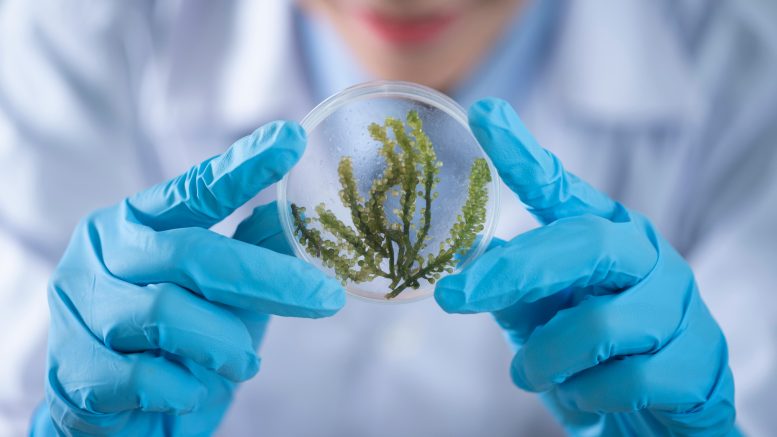
Researchers from the Brazilian Agricultural Research Corporation evaluated the use of Brazilian seaweed as a biostimulant to increase crop tolerance to water stress. Greenhouse tests with canola and wheat grown in the Cerrado biome recorded up to a 160% increase in silique formation in canola and up to 12% root growth in wheat. (Embrapa)
Syngenta announced a partnership with the quantum computing hub QuantumBasel to explore the use of quantum computing in agricultural research. The initiative aims to improve the understanding of complex molecular interactions in the development of new crop protection solutions, accelerating product discovery. (Syngenta)
In compliance with court decisions, Anvisa approved toxicological evaluations for 2,4-D (Zhongshan), dicamba (Agrobeats), myclobutanil (AllierBrasil), thiamethoxam (Agrocare), fomesafen (Solus) and glufosinate (Syncrom). The agency also published the withdrawal of evaluation requests for picoxystrobin + cyproconazole (CropChem), technical lambda-cyhalothrin (GSP) and thiamethoxam (UPL). (Official Gazette of Brazil, Res. No. 1,001–1,003 from 3/13/26, Anvisa)
Researchers from the University of Campinas developed an electrochemical process to produce green ammonia from nitrate present in wastewater. The technology uses renewable electricity to convert the pollutant into ammonia, the main input for nitrogen fertilizers, reducing reliance on the energy-intensive industrial process. The innovation has been patented and licensed to the startup BGEnergy and is still in the research and development stage. (São Paulo Research Foundation)

Latin America
Argentina published Resolution 255/2026, updating the regulatory framework for genetically modified organisms used in agriculture, food and agroindustry. The measure reorganizes authorization procedures according to the type of organism and its intended use, maintains biosafety, food safety and market impact assessments, sets review deadlines and repeals Resolution 763/2011. (Ministry of Economy)
Francila Calica, Bayer’s Director of Sustainability and Agricultural Affairs for Latin America, was appointed vice president of the Brazilian Agribusiness Association for the 2026–2027 term. (Bayer; ABAG)
The Ministry of Agriculture of Chile reported that 50% of the outbreaks of the Mediterranean fruit fly recorded in the 2025–2026 season have already been eradicated under the National Plan for Control and Eradication of the pest. Of the 66 outbreaks identified since October 2025, 33 have been eliminated and 33 remain under control. Measures include surveillance, internal quarantine, the release of sterile insects and strengthened border controls coordinated by the Agricultural and Livestock Service. (SAG Chile)
Researchers from Paraguay and Japan jointly identified multiple fungicide resistance profiles in Asian soybean rust in soybean areas in Paraguay, involving DMI, SDHI and QoI fungicides. The study found mutations associated with reduced sensitivity in the CYP51, SDH-C and CYTB genes and underscored the need for molecular surveillance and adjustments in disease management. (Pest Management Science)
International Finance Corporation announced financing for the Villeta Green Fertilizer Project, an initiative led by ATOME PLC that aims to build Paraguay’s first green fertilizer plant. The project will use hydrogen produced from renewable hydropower to manufacture low-carbon nitrogen fertilizer. The initiative also seeks to reduce Mercosur’s dependence on imported fertilizers. (IFC; Atome PLC)
The government of U.S.A. authorized American companies to purchase fertilizers from Venezuela, easing part of the sanctions on the country. The measure aims to increase the supply of agricultural inputs following the global rise in prices, including urea, whose value has increased since the start of the conflict with Iran. (U.S. Government)
Read more:
Brazil Seeks to Lead the Carbon Market and Attract Green Investments