
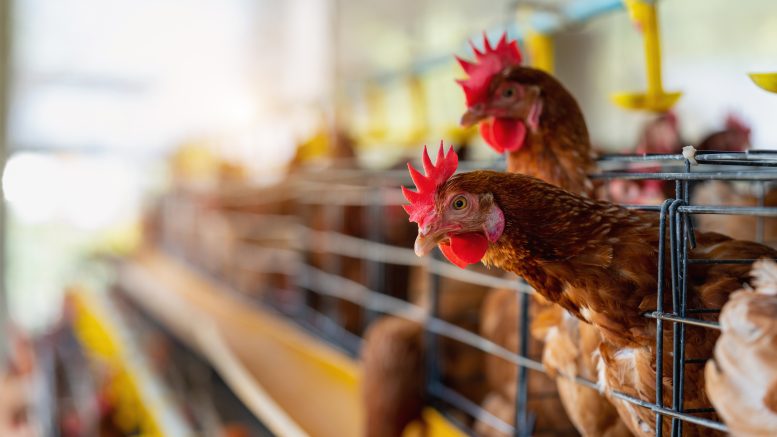
Uruguay Declares Nationwide Sanitary Emergency After Detection of Highly Pathogenic Avian Influenza

The government confirmed a second case of highly pathogenic avian influenza, H5, in commercial poultry in Buenos Aires province and activated containment measures, including the interdiction of the facility and the establishment of a sanitary control zone. Following confirmation of the first outbreak, the country temporarily lost its disease-free status and suspended exports to around 40 destinations, while maintaining shipments to more than 35 markets under regionalization agreements. (Senasa)
In 2026, the National Soybean Cultivar Evaluation Network (RECSO) will expand to become a regional network integrated by Argentina, Uruguay, Paraguay, Colombia and Peru, with unified experimental protocols and the use of predictive models to evaluate and compare the performance of soybean varieties across different environments. The initiative will help to identify more productive cultivars and reduce the gap between potential and actual yields. (INTA Argentina)
The USDA February report raised the 2025/26 wheat crop forecast to 27.8 million tonnes, a new record, and revised exports to 18 million tonnes. (U.S. Department of Agriculture)

Brazilian coffee exporters ended 2025 with a logistical loss of US$ 12.7 million due to the strain on port infrastructure, according to the Detention Zero Bulletin prepared in partnership by the Brazilian Coffee Exporters Council and the startup ElloX Digital. In December, 52% of vessels scheduled to export coffee experienced delays or changes in their routes at major Brazilian ports, with the Port of Santos recording waiting times of up to 82 days. (Cecafé; DTZ Bulletin)
The Ministry of Agriculture participated in the inauguration of the first office of the Brazilian Trade and Investment Promotion Agency in India, in New Delhi, during an official mission that strengthens Brazil’s institutional presence and expands bilateral trade opportunities. (MAPA)
Brazil ships first cargo of DDG to China, a co-product of corn ethanol production. The first vessel departed from the Port of Imbituba, State of Santa Catarina, with around 62 thousand tonnes destined for the Chinese market. (MAPA)
The Government of the USA revoked executive measures that imposed specific tariffs against Brazil and other countries and issued a new measure establishing a global 10% tariff on most products, with certain exceptions. (Government of the United States of America)
In the State of Mato Grosso, the soybean harvest for the 2025/26 crop reached 65.75% of the planned area as of February 23, according to a report from the Mato Grosso Institute of Agricultural Economics. The Institute also highlighted that heavy rainfall in the previous weeks increased humidity levels and the incidence of damaged grains in part of the state, which may lead to price discounts during commercialization. Meanwhile, corn planting for the 2025/26 crop reached 66.33% of the estimated area as of February 20. For the coming week, the forecast of 65 to 85 mm of rainfall is expected to benefit already planted areas. (IMEA)
The Ministry of Agriculture ordered the immediate and temporary suspension of imports of fermented and dried cocoa beans from Côte d’Ivoire, citing a phytosanitary risk related to possible cargo triangulation. The measure will remain in effect until the African country provides formal clarification and sanitary guarantees regarding the origin of the products exported to Brazil. (Official Gazette of Brazil, Decision Order No. 446 from 02/23/2026)
The Federation of Rice Growers Associations of the State of Rio Grande do Sul has put its legal department on an on-call basis for an indefinite period to assist farmers facing financial difficulties in the 2025/2026 harvest, including high levels of debt, credit restrictions and production costs above market prices. Support will be provided via email and phone. (Federarroz)
Embrapa presents BRS Pérola, a new seedless white grape variety resulting from 18 years of research, with an yield potential of up to 30 t/ha and easy management under plastic cover. The cultivar stands out for its elongated, crisp berries with balanced flavor, as well as looser clusters, facilitating thinning and reducing labor. It is recommended for cultivation in the Serra Gaúcha region. (Embrapa Uva e Vinho)
The Trade and Productive Integration signed an agreement between Brazil and South Korea establishing a permanent institutional framework to strengthen cooperation in agribusiness, focusing on enhancing sanitary and phytosanitary measures and the integration of the bioeconomy. In 2025, bilateral trade reached US$ 11 billion, with Brazilian exports totaling US$ 5.5 billion, significantly driven by products from the soy complex and meats. Including joint actions in mushroom research and the development of cultivars adapted to Brazil. (MDIC, Embrapa)
The Agriculture Committee of the Brazilian Lawer House of Congress approved Bill 4552/24, which establishes permanent guidelines for rural credit aimed at small farmers with an annual gross income of up to US$ 96.9 thousand. The proposal ensures reduced interest rates, extended terms and automatic renegotiation in the event of climate crises, in addition to authorizing the creation of a unified electronic system to facilitate access. (Agência Câmara de Notícias)
The Deliberative Council of Sudam approved the financial programming of the Constitutional Financing Fund of the North for 2026, allocating US$ 407.2 million specifically to National Program for Strengthening Family Farming. The focus of the investment is the strengthening of rural microcredit and the vertical integration of productive chains in underserved regions, with projects aimed at strengthening crops such as acai, cocoa and Brazil nuts, for example. Additionally, the plan unlocks resources for research and development applied to the agricultural sector. (Secretariat of Funds)
The Conab – National Supply Company, reported a decline in prices for most of the fruits traded in the Brazilian Wholesale Market Centers in January, with highlights including watermelon (-29.96%), papaya (-11.04%), bananas (-8.99%) and oranges (-4.83%), as well as decreases in potatoes (-11.75%) and onions (-11.01%). The trend was influenced by higher supply in some cases and lower demand in others, according to the 2nd Prohort Bulletin. (Conab)
The excessive moisture in the soil caused by frequent and heavy rainfall in the States of Goiás and Minas Gerais, is slowing down corn planting and compromising the quality of the bean. Water saturation is restricting the entry of machinery into the fields, delaying essential crop management and increasing the risk of grain deterioration during the harvest phase, with forecasts of accumulated rainfall exceeding 200 mm by the end of February. (National Institute of Meteorology)
The State of Mato Grosso do Sul has consolidated the rank as Brazil’s second-largest peanut producer with the announcement of its first processing and industrialization plant, the result of a US$ 5.8 million investment by the company “MS Grãos Nuts”. The new facility completes the state’s production cycle, integrating cultivation in sugarcane renewal areas with the final processing of derivatives for both domestic and international markets. The initiative is part of a state strategy for agricultural diversification and value addition which, in the 2023/2024 harvest, already surpassed 170 thousand tonnes produced. (Government of the State of Mato Grosso do Sul)


The Agricultural and Livestock Service declared the communes of Chaitén, Palena and Futaleufú, in the Los Lagos region, as a Zone Free of American Foulbrood, European Foulbrood and Acarapisosis, apicultural diseases of high sanitary relevance that affect bee colonies. (SAG)
According to the fruit bulletin elaborated by the Office of Agricultural Studies and Policies in February 2026, the country exported US$ 5.189 billion in fruit between September 2025 and January 2026, an increase of 10% compared to the same period of the previous season. Fresh fruit accounted for 72% of the total export value, with cherries as the leading product in the sector, followed by blueberries and avocados. (Odepa; Minagri)

The government reported that the Secretariat of Agriculture and Rural Development received 8,062 payment requests for incentives for white corn for the Spring–Summer 2025 cycle, with 4,548 new applications registered on the second day of territorial operations in the states of Campeche, Guanajuato, Jalisco, Michoacán, Querétaro and Tlaxcala. The initiative has already processed 2,994 payments. (Ministry of Agriculture and Rural Development)

The Ministry of Agriculture and Livestock announced an investment of US$ 222 thousand for the department of Caazapá, including machinery and equipment aimed at strengthening family farming. The actions include the delivery of tractors, seeders and agricultural implements, as well as the signing of a cooperation agreement with the local municipality. (MAG)


The President of Peru, José María Balcázar Zelada, appointed Felipe César Meza Millán as the new Minister of the Ministry of Agrarian Development and Irrigation during a ceremony held at the Government Palace. (Midagri)
The Ministry of Agrarian Development and Irrigation informed that farmers affected by floods in the Tumbes region will be compensated through the Agricultural Insurance SAC 2025–2026, a free mechanism fully funded by the State that covers crop losses caused by natural events. The program provides compensation of up to US$ 300 per hectare. (Midagri)
SynergiaBIO and Global Plant Genetics have entered into a new genetics partnership to develop and commercialize new raspberry and blackberry varieties in South and Central America. The collaboration expands an existing cooperation with The James Hutton Institute and includes joint variety development, regional trials and breeding strategies adapted to the region’s climatic conditions. (SynergiaBIO; Global Plant Genetics)
INIA identifies the coffee genotypes INIA-46 and INIA-53, tolerant to yellow rust and scoring above 83 points on the Specialty Coffee Association scale, which evaluates the flavor and aroma of specialty coffees, as a result of multilocation trials conducted at different altitudes in Peru. The new lines move to the next stage of participatory selection with farmers. (INIA Peru)

The Ministry of Livestock, Agriculture and Fisheries declared an Agricultural Emergency due to water deficit for 90 days in several departments of the country, covering the livestock, dairy, agriculture and poultry sectors. The measure was recommended by the Agricultural Emergency Commission based on technical monitoring of climate indicators, due to the worsening drought conditions in the affected areas. A national sanitary emergency was also declared throughout the country following the detection of highly pathogenic avian influenza (H5) in wild birds in the departments of Maldonado, Rocha and Canelones. The measure includes restrictions on the movement of birds, suspension of poultry fairs and events and the strengthening of biosecurity regulations nationwide. (MGAP)

READ MORE:
Weakening of Brazil’s Soy Moratorium Raises Deforestation Concerns