
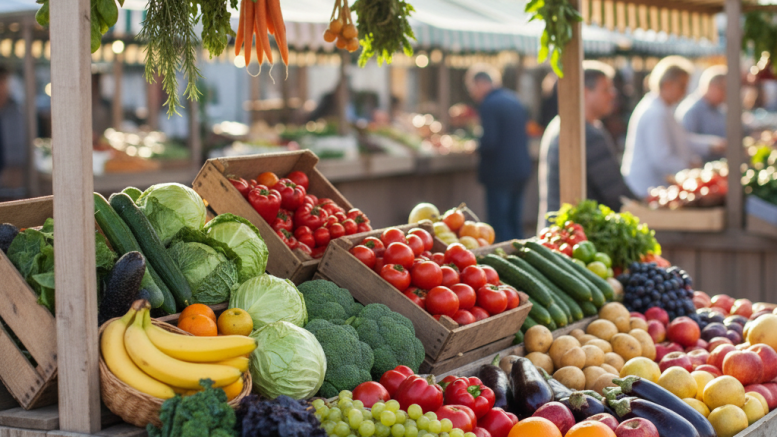
Peru Exports Nearly US$ 7 Billion in Fruits and Vegetables

In 2025, a high level of compliance with agro-industrial export quotas was achieved in strategic markets, with records in sugar, canned peaches and meats. This performance reflects the combination of favorable prices and government measures that facilitated the international integration of the agro-industry, increasing the country’s competitiveness in global trade. (Secretaría de Agricultura, Ganadería y Pesca)
A preliminary quality report indicates low protein levels in the 2025/26 wheat crop in Córdoba, with an average of 8.9% and a test weight of 79.48 kg/hl, according to the Córdoba Chamber of Commerce and Cereal Market. More than half of the samples fell below 9% protein and 94.1% were below 11%, the threshold at which penalties begin. The average wet gluten was 18.3%, with good binding capacity, but 31.9% of the analyzed volume fell outside commercial standards. (Cámara de Comercio y Mercado de Cereales de Córdoba)
The National Agricultural Technology Institute (INTA) is developing new cassava cultivars aimed at both fresh consumption and industrial use, focusing on adaptation to local conditions in Misiones and increasing the competitiveness of the production chain. The program evaluates 20 varieties, including materials with higher starch content and strong agronomic performance. (INTA)
Government of Santa Fe has driven a record investment of over US$ 520 million in regional port infrastructure, consolidating the terminals of Rosario, Villa Constitución and Timbúes as strategic hubs for agro-industrial exports. The province unlocked resources through the first investment guarantee scheme (RIGI) and private concessions, resulting in the handling of 3.7 million tonnes in 2025 and the diversification of cargo, which includes traditional agribusiness products and cooperative honey, strengthening agricultural export competitiveness and the economic development of the country’s interior. (Government of Santa Fe)
A market has been opened for fresh bananas from Peru, becoming the product’s first destination in 2026, following the completion of a technical phytosanitary process conducted by the Peruvian National Agricultural Health Service. The agreement expands market diversification, reinforces international confidence in Peru’s agricultural health and creates new commercial opportunities. (Ministry of Agrarian Development and Irrigation; Senasa)

Funds raised through Rural Product Certificates (CPRs) to finance the 2025/26 crop reached US$ 22.9 billion between July and December 2025, a 30% increase compared to the same period a year earlier. CPRs’ share of rural credit rose from 34% to 45%, while credit for agro-industrial processing grew 43%. (MAPA)
Itaú BBA’s January 2026 Agro Monthly report indicates that above-average rainfall in December, exceeding 150 mm in several regions, supported the development of soybean and corn crops. The report cautions, however, that excessive precipitation is beginning to hinder field operations. (Itaú BBA)
Brazilian coffee exports declined in 2025, with shipments totaling 40 million bags (-20.8% year over year), reflecting lower availability after the previous year’s record crop, climatic impacts and logistical constraints. Despite the drop in volume, foreign exchange revenue reached a historic high of US$ 15.6 billion, supported by higher international prices and increased appreciation of Brazilian coffee, including differentiated products. (Brazilian Coffee Exporters Council)
2025/26 cotton planting is progressing at an accelerated pace in the country, favored by a faster soybean harvest, despite an estimated 5.5% reduction in area to 2.05 million hectares. The first crop report indicates firm exports, with a record 452.5 thousand tonnes shipped in December 2025 and a projection of 3.2 million tonnes for the season, in addition to rising ending stocks, estimated at 835 thousand tonnes in July 2026. (Brazilian Association of Cotton farmers)
The resumption of the Family Farming Harvest Plan in 2023 directed over U$$ 42,4 billion in subsidized credit to 2 million farmers. By reducing interest rates and creating specific lines to diversify the production of essential foods, the initiative promoted a decrease in consumer prices and was decisive in Brazil’s exit from the UN Hunger Map in 2025. (Ministry of Agrarian Development)
Muhammad Ibrahim assumes leadership as Director-General of the Inter-American Institute for Cooperation on Agriculture. (Federal Government)
The signing of the MERCOSUR-European Union Partnership Agreement in Asunción consolidates one of the world’s largest free trade areas, with a GDP of over US$ 22 trillion. The treaty reflects the Brazilian government’s strategy to diversify markets and boost economic development, in addition to other recent agreements. (MAPA)
The Port of Santos achieved an annual record, closing 2025 with 186.4 million tonnes handled, a growth of 3.6% compared to 2024. Sugar and corn showed decreases of 10.8% and 4.6%, respectively, while the soybean complex showed a positive variation for shipments. Regarding landings, fertilizer experienced a negative variation compared to 2024. (Porto de Santos)


Progress in the phytosanitary certification of fresh blueberry exports, with the Agricultural and Livestock Service (SAG) validating shipments from Gorbea, in the Araucanía region, to markets such as the United States, Europe and Asia. The initiative ensures compliance with international sanitary requirements through pre-shipment programs and certification at the source, securing access to key destinations. (SAG)
The Natural Resources Information Center (Ciren) presented a project in the Los Ríos Region that integrates drones, satellite imagery and artificial intelligence to monitor the quality and productivity of pastures. The initiative offers a free tool for small and medium-sized farmers, optimizing decisions on fertilization and soil management, with a direct impact on cost reduction, increased productivity and the sustainability of regional livestock farming. (Ciren)
Experts from the Institute for Agricultural Research (INIA) La Platina conducted a mission to Rapa Nui to investigate damage to Syrah and Petit Syrah grape clusters, identifying the presence of beetles from the Nitidulidae family. Although the insects were detected on the berries, laboratory analysis ruled them out as the primary cause of the problem, leading researchers to focus on new lines of investigation to establish an integrated and preventive management plan. (INIA)

A meeting between Cleber Soares, Deputy Executive Secretary of the Ministry of Agriculture and Livestock, and Fernando Vargas, Vice Minister of Agriculture of Costa Rica, addressed sustainability, bio-inputs, technological innovation, digital agriculture, exchange of genetic material, sanitary protocols, and low-carbon agriculture financing, with Costa Rica highlighting its interest in the Brazilian experience regarding bio-inputs and the ABC Program (Low Carbon Agriculture). (MAPA)

The Ministry of Agrarian Development and Irrigation (MIDAGRI), through Agromercado, has launched a specialized digital platform that centralizes technical and commercial information for the agricultural sector, bringing together market studies, commercial fact sheets and consumption trend analyses. The tool aims to reduce information asymmetries, support decision-making for farmers and marketers and strengthen the competitiveness of productive chains. (Midagri)
Nearly US$ 7 billion in fruits and vegetables were exported between January and November 2025, consolidating the country’s position as one of the world’s leading food suppliers and accounting for more than 60% of its non-traditional agro-industrial exports. This growth was driven by increased demand from the United States, Europe and Asia, as well as strong expansion in the jungle and highland regions. (Midagri)
Peru’s Agrobanco disbursed over US$ 428.4 million in rural credits in 2025, benefiting approximately 127,000 small-scale farmer across the country. The credit expansion, supported by its own resources and the Agroperú Fund, increased financial inclusion in rural areas and reinforced the government’s strategy to boost productive and social development in the countryside. (Agrobanco)
Coffee exports hit a historic record of US$ 1.8 billion in 2025, a 54% surge driven by high global prices and crop failures in major competitors. The country leads the world in organic coffee production and maintains its position as the 9th largest global exporter. (Federal Government)


The National Executive Directorate for Irrigation Technology (TNR) and the Agricultural Bank of the Dominican Republic have launched the schedule for the National Irrigation System Technology Promotion Fund, which will provide over US$ 1.6 million in 2026 to modernize the country’s water infrastructure. The initiative offers financial incentives of up to 35% for the transition from flood irrigation to pressurized systems, aiming to increase productive efficiency across approximately 33 thousand hectares. (TNR; Agricultural Bank)

The trade agreement between Mercosur and the European Union projects a 1.5% increase in the country’s GDP, strengthening the export of agro-industrial products such as beef, rice, soybeans, wool and wood. With the elimination of tariffs for more than 90% of bilateral trade, the treaty enhances Uruguayan competitiveness in a bloc that already imports more than US$ 1.8 billion from the country, reinforcing the flow of commodities and processed products under preferential conditions to the European market. (Uruguay XXI)

READ MORE:
Eight in Ten Farmers in Argentina Reported Damages Caused by Lepidopteran Insects in Bt corn