
Argentina Authorizes GMO Soybean Tolerant to Four Herbicide Modes of Action
Brazil
FMC announced commercial actions in Brazil, Argentina, the USA and Canada to lower prices of a some crop protection products held in channel inventories following market price declines and increased generic competition. Together with a change to its commercial model in the USA, the actions are expected to have a US$ 625 million to US$ 675 million impact on revenue and adjusted earnings before interest, taxes, depreciation and amortization (EBITDA) in 3Q26. The company expects quarterly revenue of US$ 65 million to US$ 125 million and adjusted EBITDA of negative US$ 565 million to negative US$ 510 million. (FMC)
The cotton crop protection market in Brazil reached a record of BRL 8.217 billion in the 2025/26 season, up 14%. In US dollars, the market increased 10% to US$ 1.478 billion. According to Kynetec, the average number of treatments increased from 95 to 107 (+13%) and average treatment cost rose 21% to R$ 4,209. Potential treated area, which combines all applications during the season, increased 6% to 209.07 million hectares. (Kynetec)
Urea imports into Brazil reached 710.1 K tonnes in September, the highest monthly volume of 2026, compared with 508.7 K tonnes in August. Despite the monthly recovery, purchases from January through September totaled 3.53 million tonnes, the lowest volume for the period since 2018. The average import price reached US$ 445.60/t year to date, up 14.7% from 2025 and the highest level since 2022. (Comex Stat/Ministry of Development, Industry, Trade and Services)
Urea prices increased 3% since early September to US$ 470/t cost and freight (CFR) Brazil, while monoammonium phosphate (MAP) declined 1.2% to US$ 830/t and potassium chloride (KCl) fell 5% to US$ 355/t. Imported sulfur reached US$ 1,161/t in September, more than three times the level recorded a year earlier. Fertilizer imports into Brazil totaled 28.5 million tonnes from January through September, down 15.7% from 2025. (Itaú BBA)
Oscarpes Fertilizantes submitted a project to the Municipal Economic Development Council of Campo Grande city, State of Mato Grosso do Sul, to establish a fertilizer plant with planned investment of R$ 5 million and 20 direct jobs. The proposal is linked to the Campo Grande Economic and Social Development Incentive Program (Prodes) and remains subject to approval and implementation stages. (Municipal Government of Campo Grande)
ARCHIMED acquired a majority stake in Genetica Bioscience, based in Chapecó, State of Santa Catarina, through its €650 million MED III fund, with Rise Investment as a minority co-investor. Genetica develops and manufactures microbial solutions and has growing operations in bio-based crop protection against pests, diseases and environmental stressors. ARCHIMED plans to increase research and development investment and expand the company in Brazil and international markets. The acquisition value was not disclosed. (ARCHIMED)
Unipar completed the second phase of its industrial project in Camaçari, State of Bahia, adding capacity to purify up to 15 K tonnes of chlorine/year with specifications required for applications that include the production of certain crop protection products. The facility has total annual chlorine production capacity of 20 K tonnes. (Unipar)
Forensic analysis by the Criminalistics Institute of the State of São Paulo confirmed the counterfeiting of crop protection products seized in Operation Pesticide, launched in December 2025 against an organization suspected of adulterating and marketing pesticides in the states of São Paulo and Minas Gerais. Of five samples tested, four did not contain the active ingredient indicated on the label and one contained different active ingredients. Proceedings related to the operation remain under way. (Criminalistics Institute of the State of São Paulo; Special Action Group to Combat Organized Crime)
The Soybean Farmers Association of Mato Grosso do Sul (Aprosoja/MS) warned about occurrences of Myochrous armatus at the beginning of the 2026/27 soybean season in Brazil, mainly in the central-northern region of the State of Mato Grosso do Sul, with reports also in the south. The insect attacks leaves and stems during early soybean development and severe infestations can cause plants to fall and die, requiring replanting. The critical period extends from emergence to approximately 25 days afterward. (Aprosoja/MS)
In the State of Rio Grande do Sul, Brazil, 127 farms in 35 municipalities received authorization for early planting of soybean, covering 20.46 K hectares. Planting was allowed as from 9/15/26, two weeks before the regular calendar, but each farmer was requested to present a management plan for Asian soybean rust (Phakopsora pachyrhizi). The State Plant Protection Department is monitoring disease occurrence in the municipalities involved. (Agriculture Secretariat of the State of Rio Grande do Sul)
The National Supply Company (Conab) of Brazil reported fungal disease pressure across several crops. Fusarium head blight and blast were recorded in wheat-producing regions, with blast contributing to below-expected yields in irrigated wheat in the State of Goiás and both diseases reducing yields in Mato Grosso do Sul. In Mato Grosso, third-crop dry beans showed increased incidence of Fusarium spp. Irrigated rice fields in the State of Maranhão recorded leafhoppers and fungal diseases, including blast, although occurrences remained under control. (Conab)
Rainbow Agro appointed Fernando Manzeppi as Southern Commercial Director in Brazil. The executive has more than 20 years of experience in agribusiness and has worked at Cropchem, Sumitomo Chemical and Nufarm. The company said the appointment is intended to strengthen its commercial structure in southern Brazil. (Rainbow Agro)
Cropchem created a national sales division and appointed Ricardo Chequim as Commercial Director, responsible for sales teams across the country. The restructuring eliminates the previous Southern and Northern commercial divisions. The company has operated in the crop protection market of Brazil for 26 years and has more than 90 registered products. (Cropchem)
The National Technical Biosafety Commission (CTNBio) opened a 30-day period for comments on a planned environmental release report for genetically modified sweet orange submitted by Fundecitrus. The process involves an experiment with genetically modified citrus and will be reviewed by the Commission before an opinion is issued. The publication concerns the assessment of a previously conducted planned release and does not represent a new authorization for environmental release. (CTNBio)
Switch Bioworks, which obtained approval from the National Technical Biosafety Commission of Brazil to advance genetically modified nitrogen-fixing microorganisms, established collaboration with Bayer Crop Science to develop biological inputs. Initial work will focus on biological nitrogen fixation. (Switch Bioworks)
A study by the Federal University of Mato Grosso projects a 29% to 39% increase of the demand in fertilizer in the State of Mato Grosso by 2034. Prepared with the State Secretariat for Economic Development and the Uniselva Foundation, the study proposes a fertilizer and plant nutrition research center at the Várzea Grande technology park. (Sedec-MT)
The Agricultural Defense Agency of the State of Paraná confirmed soybean planting windows for 2026/27 are in effect in three regions, with closing dates between December 31st, 2026 and January 20th, 2027. The calendar aims to limit soybean Asian rust (Phakopsora pachyrhizi), rationalize fungicide use and curb resistance. (Adapar)
The Federal Police and Border Police Battalion seized approximately 350 kg of pesticides from foreign origin in Guaíra, State of Paraná, on October 16th. The products were found in a vehicle leaving an clandestine river port and were transferred to the Federal Police for investigation. (Federal Police)
Anvisa approved, through lawsuit, the toxicological evaluation of chlorfenapyr and chlorantraniliprole from YONON. (DOU, Resolution-RE No. 4,112, of 10/15/26 – published on 10/19/26, Anvisa)

Latin America
The National Service for Agrifood Health and Quality (Senasa) of Argentina consolidated phytosanitary measures to prevent the introduction of Asian and Japanese forms of Lymantria dispar, quarantine pests absent in the country, into a single regulation. Vessels that have remained in areas of risk in northeastern and far eastern Asia during pest flight periods must carry a certificate showing absence of the insect, while maritime agents must provide at least 72 hours of advance notice. If the pest is detected, cleaning, treatment or denial of entry into ports may be required. (Senasa)
The National Service for Agrifood Health and Quality (Senasa) from Argentina consolidated and updated phytosanitary rules for wooden packaging and supporting materials used in imported goods. Wood must be debarked, free of live insects, larvae and signs of infestation and must have received treatment recognized under International Standard for Phytosanitary Measures No. 15. A risk matrix will determine which shipments undergo physical inspection. Non-compliant materials may be subject to quarantine treatment, fumigation, destruction or return to the exporting country. (Senasa)
The National Agri-Food Health and Quality Service of Argentina reviewed the program to prevent huanglongbing (HLB), a citrus disease. The proposal consolidates seven existing regulations, redefines area categories according to the disease and its vector, Diaphorina citri, and adjusts movement rules for citrus fruit and propagation material. (Senasa)
An INTA’s six-years trials in Argentina indicated up to 56% less cumulative of active ingredient of herbicides use after introducing cover crops into a soybean/corn rotation. Use declined from approximately 31 kg/ha to 13 kg/ha. Treatments also suppressed Amaranthus and Conyza, with soybean yields exceeding 5 K kg/ha in some cases. (INTA)
SACDE confirmed its participation in constructing the Pampa Energía granular urea plant in Bahía Blanca, Argentina. The US$ 2.7 billion investment had been announced previously. The plant is designed to produce 2.1 million tonnes annually, with operations expected to begin in late 2029. (SACDE; Pampa Energía)
Profertil selected Techint Engineering & Construction and Saipem to study the expansion of the fertilizer plant in Bahía Blanca, Argentina. The project includes a proposed plant with estimated capacity of 4,450 tonnes of urea per day. The technical phase is expected to last approximately 11 months, before a possible construction decision. (Techint)
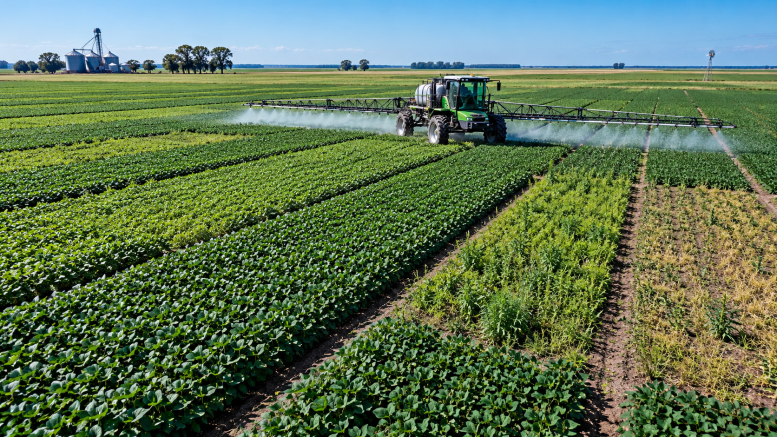
The Secretariat of Agriculture of Argentina authorized the Syngenta’s GMO soybean tolerant to glyphosate, glufosinate-ammonium, 2,4-D and HPPD-inhibiting herbicides for all uses. The authorization holder cannot market varieties containing the stacked events until it obtains the Chinese biosafety certificate for imports. (Official Gazette of Argentina, Resolution No. 200/2026)
In rice-corn systems in Argentina, INTA trials showed that Alexandrian clover used as a cover crop reduced phytotoxicity associated with residual herbicides by 21% in the top 30 cm of soil. Corn yields increased 35% in one hybrid and 11% in another compared with systems without cover crops. (INTA)
The National Economic Prosecutor’s Office (FNE), the authority in charge of competition in Chile, approved the acquisition of control of Nutrien AG Solutions Chile by CNA Chile and FertiAmerica. The transaction includes granular, soluble and liquid fertilizers, as well as adjuvants, biostimulants and nutritional amendments. According to the FNE, the combined company will account for 70%–80% of wholesale granular phosphorus sales, 50%–60% of soluble nitrogen and 30%–40% of granular potassium, although the authority concluded that the transaction would not substantially reduce competition. (FNE)
In the Valparaíso region of Chile, the Production Development Corporation (Corfo) launched a program to reduce synthetic fertilizer use across more than 2.1 K hectares in Hass avocado orchards. Twenty-two agricultural companies in 11 municipalities will participate for 12 months in activities involving bioinputs, organic matter, soil microbiome monitoring and regenerative practices. The area represents more than 10% of the region’s avocado acreage. (Corfo Valparaíso)
The Colombian Agricultural Institute (ICA) established nationwide phytosanitary measures for the prevention, surveillance and control of the Bactericera cockerelli and phytopathogenic microorganisms associated with Purple Top and Zebra Chip diseases in solanaceous crops in Colombia. The new regulation extends the measures throughout the country. The insect vectors pathogens capable of causing significant damage, particularly in potatoes and other solanaceous crops. (ICA)
The Agency for Phyto and Zoosanitary Regulation and Control (Agrocalidad) of Ecuador began electronically issuing phytosanitary certificates for agricultural exports to the EU. The ePhyto system replaces paper documents with electronic transmission standardized under the International Plant Protection Convention. The EU received more than US$ 3.39 billion in agricultural exports from Ecuador in 2025 and accounts for approximately 39 K certificates covering more than 5.7 K products. According to Agrocalidad, the change reduces port clearance time, documentary fraud risks and logistics costs without changing technical inspection requirements. (Agrocalidad)
The government of Ecuador distributed 50 ag input kits partially subsidized in Mejía, including 25 for potato crop protection. In Pichincha, the program has distributed 4,835 kits for cocoa, coffee, corn, potatoes, tomatoes and dragon fruit, with cumulative investment of US$ 827.34 K. (Ministry of Agriculture, Livestock and Fisheries)
The government of the State of Tamaulipas, Mexico, concluded the distribution of 662.5 tonnes of fertilizers to more than 2 K citrus farmers, with investment of US$ 814,600.. A total of 26.5 K bags were distributed for more than 3.3 K hectares in Güémez, Hidalgo, Llera, Padilla and Victoria. The final balance updates partial deliveries previously reported by the State. (Government of Tamaulipas)
A tender by the National Plant and Seed Health and Quality Service (Senave) of Paraguay to design and build a new crop protection product and fertilizer quality-control laboratory, estimated at US$ 3,59 millions, reached the bid submission and opening stage on 10/15/26. The laboratory will be built in San Lorenzo. The contract has not yet been awarded and a second bid opening is scheduled for 10/28/26. (National Public Procurement Directorate)
The National Plant and Seed Health and Quality Service (Senave) of Paraguay put into effect a new version of its inspection procedure for imports of crop protection products, fertilizers, soil amendments and related products. Version 04 of procedure PRO-DO-104 took effect on 10/14/26 and is scheduled to remain valid through October 2029. The agency also updated procedures for plant product import inspections, sampling and certification for exports and re-exports. (Senave)
Sumitomo Chemical began marketing a fungicide with the active ingredient metyltetraprole in Paraguay, the first commercialization outside Japan. The fungicide was registered for soybeans and targets diseases including target spot, Cercospora leaf blight, purple seed stain and Septoria brown spot. According to the company, the active ingredient has also shown activity against pathogens resistant to quinone outside inhibitor (QoI) fungicides. Registrations of metyltetraprole are under way in Brazil and Europe. (Sumitomo Chemical)
The National Agricultural Health Service (Senasa) of Peru adapted phytosanitary certification for ginger (Zingiber officinale) and turmeric (Curcuma longa) exports to new requirements of the EU that took effect on 10/15/26 to prevent the introduction of Ralstonia pseudosolanacearum. Shipments must demonstrate origin from a country or area free of the bacterium or comply with registration, supervision, inspection and molecular testing requirements at the production site. (Senasa; European Union)
High humidity conditions in Uruguay that favored Sclerotinia in canola and carinata have increased concern for the upcoming soybean season. According to Lallemand Uruguay, sclerotia may remain viable in soil for four to seven years and the disease can cause yield losses of 20%–25% under high incidence. The company recommends managing the disease across the entire crop rotation rather than only in the affected crop. (Lallemand Uruguay)

READ MORE: