
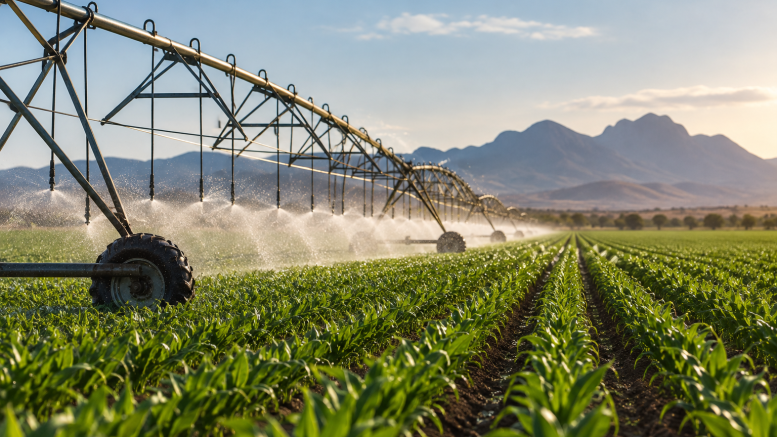
Mexico Plans More Than US$ 3.55 Billion in Irrigation Modernization Through 2030
Brazil
The Federal Government created four Sustainable Development Reserves in the State of Amazonas and expanded Sete Cidades National Park in the State of Piauí, adding approximately 676 K hectares to protected areas. The four reserves total approximately 669 K hectares in the BR-319 surrounding area, while the park was expanded by 7.2 K hectares to 13.5 K hectares. (MMA)
The Brazilian Forest Service signed 40-year contracts for the sustainable management of 162.7 K hectares of Humaitá National Forest in the State of Amazonas. The contracts include approximately US$ 47.2 million in investments, legal production of 2.54 million m³ of timber over 30 years and the creation of 339 direct and 678 indirect jobs. Federal forests under sustainable management contracts reached 1.75 million hectares. (SFB; MMA)
The Brazilian Development Bank announced approximately US$ 46.3 million for restoration and territorial management in the Amazon. The Climate Fund will provide approximately US$ 35.4 million to restore more than 10 K hectares in the Triunfo do Xingu Environmental Protection Area, State of Pará; the Amazon Fund will allocate approximately US$ 9.9 million to territorial and environmental management by quilombola communities [descendants of Afro-Brazilian communities]; and Floresta Viva will provide approximately US$ 1 million for restoration in the Xingu River Basin II in the States of Pará and Mato Grosso. (BNDES; MMA)
The National Institute of Amazonian Research, Coordination of Indigenous Organizations of the Brazilian Amazon and Manxinerune Tsihi Pukte Hajene, an Indigenous association based in the State of Acre, signed a cooperation agreement to begin an approximately US$ 432 K project to restore 79.87 hectares of degraded land and implement agroforestry systems in the Cabeceira do Rio Acre Indigenous Land. The project includes 25 K seedlings, eight community nurseries and training of 40 agroforestry agents and 40 Indigenous monitoring agents. (INPA; Coiab)
The Government of the State of Amapá started the second phase of Operation Amapá Verde on September 1st, mobilizing more than 750 military personnel through December 11th for forest fire prevention, suppression and enforcement. Approximately US$ 531 K is being invested in logistics, equipment and labor, while enforcement also targets deforestation and unauthorized burning. (Government of the State of Amapá)
The Brazilian Senate approved a bill establishing rules for environmental regularization of rural areas embargoed for violations involving native vegetation protection. Bill No. 6,531/2025 allows agreements to end violations and repair environmental damage. If the environmental authority does not respond to an agreement within 60 days, economic penalties, such as restrictions on rural credit, may be suspended. The bill was approved on September 2nd and sent to the Lower House of Congress on September 4th. (Brazilian Senate)
The Central Bank of Brazil established new disclosure rules for the Social, Environmental and Climate Risks and Opportunities Report for financial institutions in segments S1 through S4. BCB Resolution No. 586 replaces the current framework from January 1st, 2027, while BCB Normative Instruction No. 772 establishes new standardized disclosure tables. (BCB)
ONF Brasil, a forest conservation and project organization, reported the reforestation project in Cotriguaçu, State of Mato Grosso, surpassed 700 K tonnes of CO₂ equivalent removed from the atmosphere. The Carbon Sink project has planted more than 2.5 million trees from approximately 50 native species across nearly 2 K hectares and is projected to reach 1 million tonnes of CO₂ equivalent by 2038. (ONF Brasil)
Financing under RenovAgro, the federal program for sustainable farming systems, reached approximately US$ 81.2 million in the first two months of the 2026/27 crop season. The program finances the recovery of degraded pastures, crop-livestock-forest integration, environmental compliance, waste management and bioinputs. RenovAgro recorded the highest volume among investment programs using interest-rate-equalized resources during the period. (MAPA; BNDES)
National Agency of Petroleum, Natural Gas and Biofuels approved a 45-day public consultation and hearing on revisions to RenovaBio, the National Biofuels Policy, for new fuel distributors. The proposal updates criteria for setting and demonstrating compliance with mandatory emission-reduction targets during the first two years of operation. The agency recommends that the new resolution take effect on January 1st, 2027. (ANP)
Anater and the Ministry of Agrarian Development opened a call to provide technical assistance to 250 family farming units across 18 municipalities in the Pampa biome, State of Rio Grande do Sul. The initiative focuses on climate resilience, environmental conservation, productive inclusion and income generation. (MDA; Anater)

Latin America
The National Institute of Agricultural Technology identified in southwestern Chaco, Argentina, that tree and shrub shelterbelts in agroforestry systems reduced wind erosion, improved moisture retention and water-use efficiency and can increase productivity. According to the institute, the system represents a medium to long-term investment and can generate revenue from timber, firewood and charcoal. (INTA)
Ministry of Sustainable Production, Environment and Water in Bolivia and the Swiss Foundation for Technical Cooperation – Swisscontact signed an agreement to support sustainable industrial models, circular economy and green jobs. The first initiative will mobilize approximately US$ 201 K from 2026 through 2028 to support more than 70 sustainable businesses and ventures in La Paz, Cochabamba, Santa Cruz and Potosí, with cofinancing from the European Union. (Ministry of Sustainable Production)
MapBiomas Pampa, a collaborative land-use mapping network with experts from Brazil, Argentina and Uruguay, estimated that the South American Pampas biome region lost 11.3 million hectares of natural vegetation from 1985 through 2024, including 10.5 million hectares of natural grasslands. Cropland, mainly grains, increased 33%, while planted forests expanded 503%. In Brazil, natural vegetation declined 30%, mainly because of soybean expansion. (MapBiomas Pampa)
The National Irrigation Commission opened an approximately US$ 696 K funding call, including approximately US$ 214 K to improve irrigation water quality in Atacama and Coquimbo, Chile. Funds will finance infrastructure and technologies to reduce contaminants and improve water-use efficiency on farms and within water-user organizations. (CNR)
The Agricultural Development Institute – Indap, a public agency under the Ministry of Agriculture in Chile focused on family farming, and the Municipality of Mariquina allocated approximately US$ 457 K to more than 1.1 K rural families. Funds finance technology, equipment, working capital and forage capacity to increase resilience to heavy rainfall, frost, high temperatures and low precipitation. (Indap)
The Atacama Regional Council approved more than US$ 2.1 million to restore irrigation canals in the Huasco River basin, Chile, damaged by heavy rainfall. The funds will be transferred to the water-user organization and will support restoration of 100% of affected canals, reduce overflow and flood risks and support agricultural recovery. (Atacama Regional Government)
The fiscal council of Bogotá approved approximately US$ 7.1 billion in future budget commitments to support construction and operation of the Canoas Wastewater Treatment Plant in Colombia through 2050. The facility will treat 70% of wastewater from Bogotá and 100% from the urban area of Soacha and will include biogas-based power cogeneration, treated-water reuse and biosolids drying. The Bogotá River irrigates approximately 195 K hectares of crops. (Bogotá City Government; EAAB)
The Ministry of Agriculture of Colombia, National Federation of Cacao Farmers and the Howard G. Buffett Foundation advanced an alliance to formalize 3 K property titles and replace coca crops with cacao. A pilot project provides for 1 K hectares of cacao in Catatumbo, while the Howard G. Buffett Foundation will provide 95% of resources for project operations. (Ministry of Agriculture)
National Biodiversity Institute in Ecuador launched a roadmap to incorporate biodiversity conservation into economic transformation. The document identifies opportunities in sectors including medicine, cosmetics, textiles and nutraceuticals and was developed with support from the United Nations Development Programme and the UN Environment Programme World Conservation Monitoring Centre under a program funded by the United Kingdom government. (Inabio)
The National Water Commission reported on September 4th that implementation of the National Irrigation Modernization Program in Mexico is advancing, with plans to modernize more than 250 K hectares across 18 irrigation districts and 15 states by 2030. The program provides for more than US$ 3.55 billion in investment over the current government term to upgrade canals and on-farm irrigation systems, increase agricultural output with lower water use and redirect saved volumes to human consumption. (Conagua)
The Secretariat of Environment and Natural Resources, National Forestry Commission, communities and the private sector signed a national agreement in Mexico for conservation and restoration of forests, jungles and mangroves and to combat illegal logging. The agreement includes a commitment to promote deforestation-free exports of avocado, agave and tequila. According to Semarnat, approximately 17 K Indigenous and Afro-Mexican communities participate in the protection of 60% of the country’s ecosystems. Jalisco, the first state to join, set a target of 250 K new plants. (Semarnat; Conafor)
Facilities in Yucatán, Mexico, have capacity to transform up to 20 K tonnes of sargassum and other organic matter into bioinputs and water-treatment systems. The state government is also evaluating the use of sargassum-based liquid biofertilizer by citrus farmers, while Semarnat announced a meeting with an avocado farmers association as a potential buyer of the product. (Semarnat)
The Government of Mexico and FAO signed a 2026–2031 cooperation framework with an approximately US$ 140 million portfolio for agrifood system transformation. Approximately US$ 54 million already has identified funding, while another US$ 86 million is expected to be mobilized through international cooperation, climate and environmental funds, public resources, development banks and private partnerships. (FAO; Government of Mexico)
The Ministry of Environment in Paraguay and representatives of New Zealand discussed a proposed cooperation agreement covering measurement of methane emissions from livestock, Paris Agreement Article 6 mechanisms, greenhouse gas inventories and renewable energy. Discussions also included dairy-sector exchanges and training for Paraguayan farmers. (Mades)
Livestock and dairy farmers in Uruguay were allowed to receive approximately US$ 9.7 K per project to reduce impacts on waterways in the Casupá and La Virgen sub-basins. For family farms, support may cover up to 80% of investments in water-protection and ecosystem-conservation measures. (Ministry of Environment)
The Ministry of Livestock, Agriculture and Fisheries in Uruguay announced approximately US$ 4.44 million for 306 farmers affected by a severe weather event in Salto. Support includes non-repayable assistance of up to US$ 12 K per farmer and, for higher losses, additional assistance of up to US$ 40 K. (MGAP)

READ MORE: