

Beef exports increased 11.1% in the 1H26, when compared to the 1H25, reaching 280.1 K tonnes, with a record revenue of US$ 2.17 billion (+45.9%). Cattle slaughter fell 12.2% in July 2026, when compared to the same month of 2025, reaching 1.095 million head. (CICCRA)
Molinos Agro reported a 20% increase in net profit in the quarter ended June, reaching approximately US$ 30.4 million, supported by above-average soybean and sunflower crushing margins and full-capacity industrial operations. The company is also moving forward with preparations for the previously announced US$ 500 million soybean crushing project with the Argentine Agricultural Cooperatives Association in Timbúes. (Molinos Agro; CNV)
Corn planted area is to remain stable at 8.4 million hectares in the 2026/27 season, above the five-year average. Improved soil moisture associated with El Niño supports planting, but high costs, excessive rainfall and the risk posed by the corn leafhopper (Dalbulus maidis) are expected to limit expansion. (Buenos Aires Grain Exchange)
Outstanding bank loans to cattle-raising companies in Argentina reached US$ 1.56 billion in June, the highest level in 20 years (+47% when compared to June 2025). Foreign-currency loans accounted for 43% of the total, compared with 30% a year earlier. (Rosario Board of Trade/Rosgan; Central Bank)
Agricultural land prices in the central region of Argentina reached a nominal record, averaging US$ 17.9 K/hectare from January through July, compared with the previous peak of US$ 17.35 K/hectare in 2012. Adjusted for US inflation, prices remain 28.5% below the 2012 high. (Rosario Board of Trade)
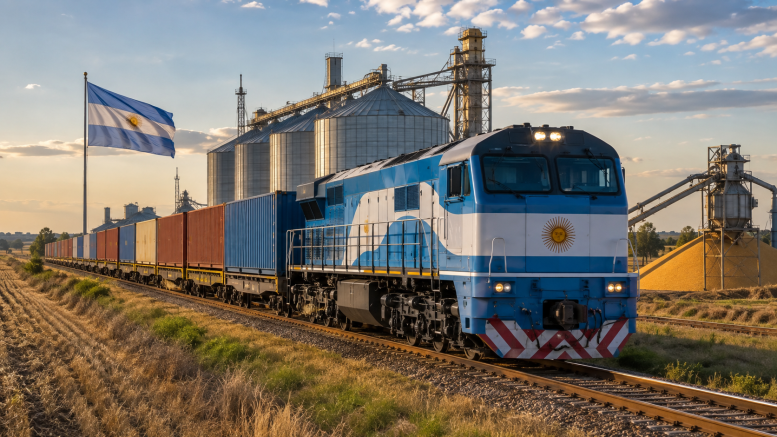
Government has launched a public tender for 50-year concessions for the Belgrano, San Martín and Urquiza freight railway lines, three major freight rail networks in Argentina spanning 7,594 km and connecting production regions to ports and international borders. Contracts will require infrastructure works during the first five years and private capital investment. (Ministry of Economy)
Agroindustrial exports reached a record of 74.3 million tonnes from January through July (+13%), with revenue of US$ 32.51 billion (+15%). Products were shipped to 133 destinations. (Agriculture Secretariat)

The State of Pará Soybean and Corn Farmers Association expects that lower-productivity areas may be left out of soybean planting in the 2026/27 season due to tight margins. The gap between spot and forward soybean prices is also slowing sales. (Aprosoja Pará)
Brazil and the USA will resume negotiations on tariffs imposed on Brazilian products, including ethanol. Development, Industry, Trade and Services Minister Márcio Elias Rosa and representatives of the Ministry of Foreign Affairs are expected to meet US Trade Representative Jamieson Greer. Coffee, beef and orange juice are among the products exempt from the additional 25% tariff. (MDIC; USTR)
The Government of Brazil authorized approximately US$ 1.36 billion in extraordinary credit to finance exporters and their suppliers covered by the Brasil Soberano plan, created in response to trade barriers and international trade disruptions. Resources will be provided through the Export Guarantee Fund. (Official Gazette, Provisional Measure No. 1387/2026 – published August 25th, 2026)
COFCO International loaded approximately 69 K tonnes of sorghum at the Port of Santos, State of São Paulo, in the first large-scale shipment from Brazil to China. The operation opened a new trade flow after final phytosanitary clearance from the Brazilian MoA. (COFCO International)
Restricted paddy rice supply in the State of Rio Grande do Sul led mills to raise purchase prices. According to the Center for Advanced Studies on Applied Economics at the University of São Paulo, farmers are withholding sales while awaiting higher prices and, in isolated cases, mills temporarily suspended milled rice sales because of insufficient raw material. (Cepea)
Embrapa warns of different El Niño-related risks to soybean farming during the 2026/27 season: above-normal rainfall in the South and lower, more irregular rainfall in the North and Northeast. Recommendations include following agricultural climate-risk zoning, maintaining soil cover and staggering sowing dates to reduce drought and excessive rainfall risks. (Embrapa)
Sanitary authorities from Costa Rica, Malaysia and Nigeria approved requirements to import wheat seeds, dried clove flowers and apples, respectively, from Brazil. (MAPA)
Embrapa introduced BRS Áurea, the first pear cultivar developed by the breeding program in the State of Rio Grande do Sul. Adapted to southern Brazil, it has yield potential of 25–30 tonnes/ha, early harvest and resistance to entomosporium leaf spot and pear scab. (Embrapa)
A joint inspection by the MoA and the Paraná State Civil Police seized 14.6 K liters of wine without registration in Campo Largo, State of Paraná. The products lacked manufacturer, origin and traceability information and were labeled at the establishment. (MAPA)
Restricted spot wheat supply continues to support prices in Brazil. Buyers are already shifting purchases to the new crop, while farmers remain cautious; liquidity is expected to increase as harvesting advances and will depend on grain quality. (Cepea)
Agrovale completed approximately US$ 38.9 million in seven-year financing structured by Itaú BBA to recover degraded sugarcane fields and install drip irrigation in Juazeiro, State of Bahia. The project is expected to raise production by approximately 223% compared with conventional irrigation systems and generate approximately US$ 252.5 million in revenue during implementation. (Agrovale; Itaú BBA)
Serasa Experian’s Soybean Map found that soybean cultivation identified in the financed areas was consistent with the stated purpose of the rural credit in 82.6% of the 42.7 K soybean financing operations analyzed in Brazil in the 2025/26 crop season. Operations with discrepancies above 10% totaled approximately US$ 427 million, or approximately 25% of the financial volume analyzed. The company noted that remote-sensing indicators alone do not prove the existence of irregularities. (Serasa Experian)
Coamo reported investments of approximately US$ 19 million per unit to expand grain infrastructure in the State of Mato Grosso do Sul, Brazil, including Itahum, Amambai and a new facility in Sidrolândia. The projects include grain receiving, drying and storage infrastructure, with the Sidrolândia unit expected to start operations in the next summer crop season. (Coamo)
Banco do Brasil started renegotiating rural debts involving approximately 113 K clients, with up to approximately US$ 19.4 billion in operations potentially eligible under Provisional Measure No. 1,376/2026. The program covers farmers and ag cooperatives affected by climate or market-related losses in at least two crop seasons between 2019 and 2025. (Banco do Brasil; Presidency of the Republic)


The Government has begun an inter-agency coordination to assist more than 900 families affected by heavy snowfall in Cocapata, Cochabamba. Almost 15 K camelids were affected, putting the livelihoods of rural people at risk. (Ministry of Sustainable Production, Environment and Water)

Corficolombiana expects food prices in Colombia to rise 0.25% in August, driven by perishables (+1.10%), particularly fresh fruit, vegetables and potatoes, amid lower agricultural supplies. (Corficolombiana)
La Fazenda, a unit of Agropecuaria Aliar, reported that the integrated corn, soybean, pork and dairy operation in Puerto Gaitán generates more than US$ 360 million in annual revenues. The company employs more than 3 K people and reuses 5 K tonnes/day of swine effluent for fertilizer production and fertigation. (La Fazenda)

The USA reopened the Douglas, Arizona port to cattle imports from Mexico on August 24th, the first step in a phased resumption of trade. The USDA will inspect every animal for signs of New World screwworm; other southern border ports remain closed to cattle imports. (USDA)
FONDO, a public trust that is part of the Trust Funds for Rural Development, a Mexican development finance institution for the agricultural and rural sectors, raised approximately US$ 265 million in the first long-term public bond issuance on the Mexican Stock Exchange. Proceeds will expand financing for agricultural and rural projects in Mexico. The transaction comprised three issuances, including a social bond. (FONDO; Mexican Stock Exchange)

The board of Panama’s Agricultural Development Bank approved a request for up to US$ 20 million as additional funding from the Ministry of Economy to cover approved loans for small-sized farmers and finance wells and windmills for water extraction amid El Niño. (Ministry of Agricultural Development)


Soybean complex exports reached US$ 3.51 billion between January and July (+40% when compared to the same period of 2025). Soybean shipments reached 6.8 million tonnes, up 1.9 million tonnes from the same period in 2025. (Capeco)
Grupo Sarabia opened up the Amaru, a new agricultural diagnostics center in Ciudad del Este following six years of development. The facility will provide soil, plant nutrition, nematology, phytopathology, water and seed analyses and use artificial intelligence for quality control and result validation. (Grupo Sarabia)

The Government intends to supply more than US$ 298 million in agricultural financing in 2026 through the Agroperú Fund and Agrobanco. It also plans to resume 75 irrigation projects, representing approximately US$ 184.5 million in investment, and expand measures against El Niño impacts. (Midagri)
The National Institute for Agricultural Innovation transferred management technologies of the INIA 105–Donajus garlic variety to farmers in Arequipa. High-quality seeds combined with the new practices could increase yields by at least 35% and reduce pest and disease losses by up to 33%. (INIA)

Livestock Services in Uruguay authorized cattle grazing along public roads for 60 days in areas of seven departments affected by adverse weather conditions. The measure seeks to reduce livestock losses amid lower feed availability while maintaining animal health controls. (MGAP)
Meat exports surpassed US$ 2 billion from January through August 15th (+3.4% when compared to the same period of 2025), despite a 10% decline in volume to 382.4 K tonnes. The average export price increased 15% to US$ 5,248/tonne. Beef accounted for 84.2% of revenue, totaling US$ 1.69 billion (+4.2%). (INAC)

READ MORE: