
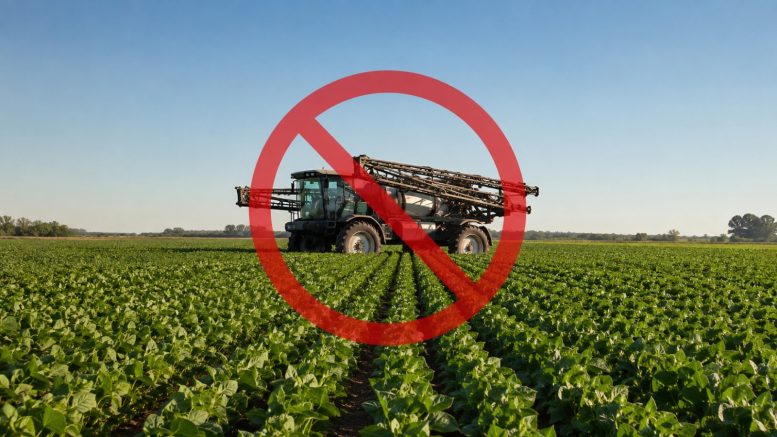
Seasonal Ban on The Use of 2,4-D in Córdoba, Argentina
Brazil
Anvisa approved, in compliance with court decisions, the toxicological assessments of fluazinam (Zhongshan); isocycloseram + ethiprole (Syngenta); bifenthrin + ethiprole (UPL); and haloxyfop-P-methyl (Agrobeats). (Official Gazette of Brazil, Res. 3113 to 3116 – published on 08/10/26, Anvisa)
Mosaic had a net loss of US$ 273 million in the 2Q26, compared with a net loss of US$ 258 million in the 1Q26 and net income of US$ 411 million in the 2Q25. Revenue fell to US$ 2.8 billion (-6.7%), from US$ 3 billion in both comparison periods. The company began idling commodity fertilizer production in Brazil because of limited sulfur availability and high costs. (The Mosaic Company)
Court ruled against the State of Maranhão and the Association of Agricultural Input Retailers of Balsas over irregularities in the disposal of empty pesticide packages. The decision requires the packages to be sent exclusively through the reverse logistics system managed by the National Institute for Processing Empty Containers. The state and the association must also jointly pay approximately US$ 19.6 thousand in collective non-material damages. (Public Prosecutor’s Office of the State of Maranhão)
The Legislative Assembly of the State of Ceará approved a bill establishing the State Policy on Agroecology and Organic Production. An amendment provides for the creation of Pesticide-Free Zones, which may restrict pesticide application and storage and establish buffer zones against spray drift. (Alece)
ICL plans to invest approximately US$ 17 million in Brazil in 2026, including approximately US$ 6.5 million in automation, packaging and microgranulation at the factory in Suzano, State of São Paulo. The Israeli fertilizer manufacturer also opened the 14th distribution center in the country in July, in Rio Verde, State of Goiás. In 2Q26, global sales rose 17% to US$ 2.1 billion and adjusted net income reached US$ 149 million (+35%). Potash segment sales increased 22% to US$ 468 million, while EBITDA reached US$ 154 million (+34%). Sales volume rose to 1.081 million tonnes, with higher shipments to China, India and Brazil, while the average price reached US$ 376 per tonne CIF (+13%). (ICL)
The Ministry of Agriculture authorized Rogério Pereira da Silva, head of the Formulated Products Registration Division, to attend the 57th Session of the Codex Committee on Pesticide Residues in Beijing, China, from September 3rd to 13th, 2026. (Official Gazette, Orders dated August 4th, published on August 5th, 2026, MAPA)
Delivery of fertilizers in Brazil totaled 15.46 million tonnes from January to May 2026 (-2.2%). In May, deliveries fell 14.7% to 3.16 million tonnes. Domestic production of intermediate fertilizers dropped 17.1% to 2.41 million tonnes, while imports fell 2.7% to 14.52 million tonnes. (ANDA)
Victor Scotton Leal was appointed as Chief Sales Officer at EuroChem Brasil and will lead sales and marketing after 16 years at ICL South America. (EuroChem Brasil)
Yara and Grupo Bananas Corrêa signed an agreement to use lower-carbon fertilizers in banana farms in Registro, State of São Paulo, beginning in August. According to Yara, manufacturing technologies reduce the fertilizer carbon footprint by 60% to 90%, depending on the process and raw material origin. This is the first company initiative in the fresh fruit sector. (Yara Brasil; Grupo Bananas Corrêa)
UPL reported a 10% increase in revenue and a 15% increase in EBITDA in the fiscal quarter ended June 2026. Crop protection revenue grew 7%, while revenue in Latin America rose 8%, led by Brazil. For FY27, the company expects revenue growth of 7% to 11% and EBITDA growth of 10% to 14%. (UPL)
A court in the State of Goiás authorized bankruptcy protection (similar to US Chapter 11th) proceedings for Grupo Campo Verde, an agricultural input distributor based in Luziânia, State of Goiás. Total debt reached approximately US$ 30.3 million, including approximately US$ 26 million subject to the proceeding. Banco do Brasil and Syngenta are among the largest creditors, with claims of approximately US$ 8.9 million and US$ 3.7 million, respectively. (Court of Justice of the State of Goiás, case No. 5311486-75.2026.8.09.0100)
Tylenchorhynchus annulatus was identified for the first time infecting flood-irrigated rice roots in Brazil, in Formoso do Araguaia, State of Tocantins. Symptomatic areas yielded 4,425 kg/ha, 16.5% less than adjacent areas without the nematode. Greenhouse tests confirmed pathogenicity. Available at: Journal of Phytopathology. (Journal of Phytopathology; Federal University of Tocantins; University of Brasília; Federal University of Rio Grande do Norte)
Study published in March 2026 found aluminum-cross-linked carboxymethylcellulose microbeads preserved 85% viability of Beauveria bassiana after five months at -18°C, compared with 69% for non-encapsulated conidia. Results were obtained in the laboratory and still require field trials and tests under regular storage conditions. Available at: ACS Omega. (University of Araraquara; University of Ribeirão Preto; Biological Institute/APTA)
Brazilian populations of tomato leafminer (Phthorimaea absoluta, formerly Tuta absoluta) showed high susceptibility to insecticides of the IRAC Groups 30 and 21 and reduced susceptibility to Groups 6, 2B and 22A. Results are included in Technical Bulletin 0003/2026 and reinforce the need to rotate modes of action. Available at: Technical Bulletin 0003/2026. (IRAC-BR; Federal Rural University of Pernambuco; Eduardo Mondlane University)
The University of Campinas and TMG, a seed genetics company, developed an RNA interference (RNAi) technology to suppress essential genes in the brown stink bug (Euschistus heros) in soybean. The patented technology, licensed to TMG, does not require genetic modification and could be integrated into pest management programs. (Unicamp; TMG)
Golmar Beppler Neto left BASF after eight years and became Marketing, Market Development and Portfolio Leader at Viter, an agricultural input brand of Votorantim Cimentos. (Viter)
CropLife Brasil and the Brazilian Trade and Investment Promotion Agency presented the Renera – Brazilian Bioinputs Hub internationally during the 30th Session of the Committee on Agriculture of FAO, in Rome. The platform combines trade promotion, market intelligence, technical cooperation and regulatory dialogue to expand bioinput exports from Brazil. (CropLife Brasil; ApexBrasil; Renera)
Phosphate and specialty fertilizer company Itafos reached a net loss of US$ 5.6 million in the 2Q26, compared with net income of US$ 24.8 million in the 2Q25. Revenue rose 13.6% to US$ 144 million, while adjusted EBITDA fell 44% to US$ 17.8 million, mainly because of higher sulfur and sulfuric acid costs. At the unit in the State of Tocantins, phosphate fertilizer production increased 62% to 16,494 tonnes of P₂O₅. (Itafos)
Brazilian seed company Sementes Estrela will invest approximately US$ 9.8 million in a new storage and distribution complex in Tupanciretã, State of Rio Grande do Sul. The facility will store more than 1.5 million bags of soybean seeds and include a seed treatment center with capacity exceeding 40 tonnes/hour. The company invested approximately US$ 5.9 million in the local unit over the previous two years. (Sementes Estrela)
Thirty-five agricultural associations requested the Brazilian Office of the Chief of Staff for prior access to the draft decree regulating Bioinputs Law No. 15070/2024. The organizations questioned a possible requirement for every new strain, isolate or microorganism to undergo joint assessment by the Ministry of Agriculture (MAPA), Anvisa and Ibama, which could increase registration time and costs. The bioinputs market in Brazil reached approximately US$ 1.2 billion in 2025.(Abbins)
Expanded bioinput use in Brazil could add approximately US$ 3.1 billion to GDP from 2030 to 2035 and generate a 79:1 return on investments in rice, corn, sugarcane and soybean. The study also projects 160.5 thousand new jobs and reduced pressure to clear 9.2 million hectares. (FGV Bioeconomy Observatory; Instituto Equilíbrio; Agni)
A survey by Brazilian bioinput manufacturer Vitalforce identified Pratylenchus brachyurus in 87.5% of samples collected from 24 farms in 12 municipalities across the states of Mato Grosso, Mato Grosso do Sul and Goiás. The nematode was found in all seven agricultural regions assessed and in 94.4% of corn samples (34 of 36) and cotton samples (17 of 18). The company did not disclose the sampling period or the criteria used to select the farms. (Vitalforce)
Brazil’s Superior Court of Justice confirmed that a pesticide manufacturer must pay approximately US$ 343,800 in damages for changing the formulations of “PODOS” and “NAJA” and manufacturing Lactofen Técnico with a lower purity than registered, without prior approval from Anvisa. The products were marketed throughout Brazil for more than three years. The court concluded that the violations affected rights and interests shared by society as a whole, including the environment, public health and consumers. (STJ)
Latin America
Syngenta and Groundwork BioAg established a partnership to market mycorrhiza-based biological products and soil carbon solutions in Latin America and Europe. The initial offer will cover corn, soybean, cereals and sunflower and include a carbon credit program for farmers. Groundwork will handle manufacturing, supply, digital tools and program development. (Syngenta; Groundwork BioAg)
The workshop “Management of Peri-urban Areas: Building Trust between Farming and Communities” held on August 5th at the Argentine No-Till Farmers Association Congress in Argentina, brought together officials from the provinces of Santa Fe, Córdoba and Entre Ríos and the mayor of Cañada Rosquín. The workshop covered controls, technology, monitoring and access to information to prevent disputes over crop protection product applications from resulting in litigation. (Aapresid)
Ministry of Bioagroindustry of Córdoba extended a seasonal prohibition on the use and application of 2,4-D in the ethylhexyl ester formulation to the entire province in Argentina. The restriction will happen from August 1st through March 31st of each crop cycle and covers aerial, ground, mechanical and manual applications. For sales, it is required that buyers declare the product will not be used during the restricted period. (Ministry of Bioagroindustry of Córdoba, Resolution No. 275/2026)
Pampa Energía, from Argentina, reached a revenue of US$ 746 million (+53%) and record adjusted EBITDA of US$ 415 million (+75%) in the 2Q26. In July, the company approved the final investment decision for a US$ 2.7 billion granular urea plant with an annual capacity of 2.1 million tonnes in Bahía Blanca. Operations are expected to begin in 2029 and Brazil is expected to be the main market. (Pampa Energía)
The annual depreciation rate of the peso against the US dollar implied by the futures market, at 23.5% to 24%, should serve as a benchmark for financing seeds, fertilizers, pesticides and fuel for the 2026/27 season in Argentina, according to AZ-Group. The consultancy estimates that peso-denominated loans with interest rates near this level are equivalent to near-zero financing costs in US dollars. (AZ-Group)
Graciela Ávila Quezada, a researcher at the Autonomous University of Chihuahua in Mexico, is studying nanosensors for early plant pathogen detection and “smart fungicides” based on silver, chitosan and mesoporous silica nanoparticles. The technology could release active ingredients in response to pathogen signals but still requires field validation, safety assessment and regulation. (Autonomous University of Chihuahua)
The estimated time for registration evaluation of pesticides in Paraguay is 12 to 15 months, according to María Fernanda Cáceres Sanabria, regulatory leader at Registros Paraguay S.R.L. She presented the regulatory framework at the 17th Brasil AgrochemShow, held on August 3rd and 4th, 2026, in São Paulo. Senave grants experimental, temporary, definitive and export-only registrations. The assessment covers chemical pesticides, equivalent products and biologicals. (Senave; Registros Paraguay; 17th Brasil AgrochemShow)

READ MORE: