
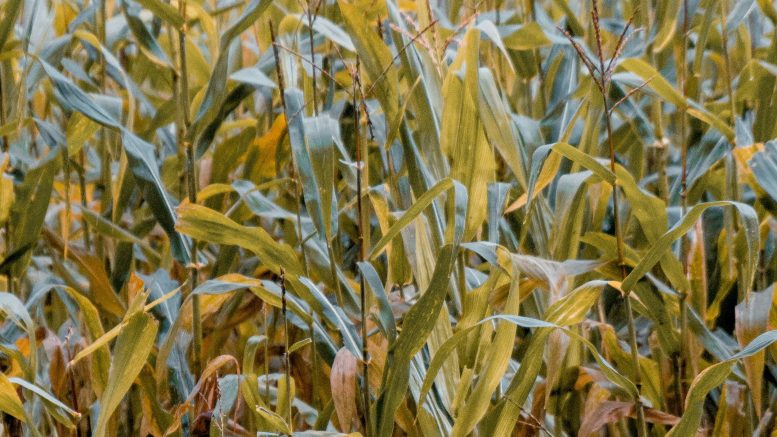
Study Highlights Low Carbon Footprint of Brazil’s Second Corn Crop
Brazil
Federal court orders emergency measures after an illegal mining disaster in the State of Amapá. Following a request by the Federal Public Prosecutor’s Office, the ruling requires the Federal Government, State authorities, the National Mining Agency and the city of Pedra Branca do Amapari to take immediate action to contain environmental damage caused by the rupture of a clandestine tailings dam at the São Domingos illegal mining site, in the Igarapé Água Preta area, a tributary of the Cupixi River. Measures include removing eight illegal structures, monitoring water quality and preparing an environmental recovery plan for the Cupixi River basin, which has been contaminated over more than 100 km and put approximately 17 thousand people at risk. (MPF)
Partnership between the State Secretariat for Environment, Climate and Sustainability, the Pará Land Institute and the Federation of Industries of the State of Pará is part of the “Regulariza Pará” [State of Pará Regularization] program and aims to speed up land and environmental regularization processes for farmers, initially focusing on the palm oil supply chain. The initiative seeks to strengthen land tenure security in rural areas, improve production traceability and facilitate access to credit and markets with stricter environmental standards. (Semas-PA)
New digital system modernizes the management of Private Natural Heritage Reserves in Brazil. The Ministry of Environment and Climate Change and the Chico Mendes Institute for Biodiversity Conservation have launched the SIMRPPN platform, which centralizes data and integrates federal, state and municipal environmental agencies. The tool enables the digital creation and management of management plans and improves monitoring of privately protected areas, which are considered important for biodiversity conservation. (MMA)
The Ministry of the Environment and Climate Change has updated the Official National List of Threatened Fauna Species. The new ordinance includes 790 species and nine extinct species of mammals, birds, reptiles, amphibians and terrestrial invertebrates and serves as a basis for public policies and conservation actions. The update also incorporates new scientific assessments conducted by the Chico Mendes Institute for Biodiversity Conservation and includes species such as the hyacinth macaw, now reclassified as Vulnerable. (MMA)
According to Gustavo Spadotti, head of Embrapa’s Territorial Unit, Brazil is among the countries with the largest areas of preserved native vegetation in the world. Spadotti stated that agriculture and livestock occupy about 11% of the national territory, while much of the country’s native vegetation is located on rural properties. Spadotti defended the sector and criticized narratives linking agricultural production to environmental destruction. (Embrapa)
The State of Rio Grande do Sul launched its Just Energy Transition Plan, which sets guidelines to gradually reduce the use of coal in coal-mining regions and move toward a low-carbon economy by 2050. The initiative, coordinated by the Secretariat for Environment and Infrastructure, includes measures to protect affected workers and communities, as well as to promote regional economic diversification. (SEMA)
Second-crop corn in Brazil has a low carbon footprint and reduces pressure for the expansion of new agricultural areas. The research shows the cultivation system after soybean increases production without significant expansion of the agricultural frontier, contributing to the preservation of native vegetation and the reduction of greenhouse gas emissions. The study also highlights that corn ethanol produced under this model has lower carbon intensity. (npj Sustainable Agriculture)
Research from The University of Brasilia and Embrapa used AI and satellite imagery to map abandoned agricultural areas in the Cerrado biome and identified more than 13 thousand hectares with no productive use in Buritizeiro, State of Minas Gerais, between 2018 and 2022, with 87% of these areas previously occupied by eucalyptus farms. The study indicates that factors such as falling charcoal prices and production costs may have contributed to the abandonment and suggests that these areas could be used for environmental restoration and sustainable land use projects. (UnB; Embrapa)
Ecological IBS could nearly double transfers to municipalities that adopt environmental criteria, rising from approximately US$ 1.02 billion to approximately US$ 1.99 billion per year after the implementation of the tax reform. The model will replace the Ecological ICMS and standardize the allocation of 5% of the municipal share based on environmental performance, strengthening environmental federalism and encouraging preservation and sustainable management actions in municipalities. (IPEA)
Survey with 34 companies shows an increase in regulatory uncertainty after the Brazilian Securities and Exchange Commission removed the obligation to disclose sustainability reports under ISSB standards. According to a CBPS Hub and CBARI survey, 38% of companies cite uncertainty as the main impact of the decision, while 53% are still assessing how they will proceed with ESG reporting. The change has reignited the debate over sustainability disclosure rules in the Brazilian capital markets. (CBPS Hub; CBARI)
Nescafé announced a partnership with the International Labour Organization in Brazil to strengthen human rights, income and working conditions in the coffee supply chain. The initiative is part of the Nescafé Plan, Nestlé’s global strategy to expand regenerative agriculture practices, increase productivity, reduce emissions and improve farmer resilience. According to the company, 53% of the coffee consumed globally already comes from farms adopting regenerative practices. (Nescafé)
An investigation by the British NGO Earthsight indicates that timber extracted from a forest concession in the Amazon, suspected of irregularities, may have reached the European market and been used in infrastructure and landscaping projects in the Netherlands. The report highlights failures in certification systems and enforcement across the global timber supply chain, as well as possible fraud and environmental violations involving the company Samise, which has accumulated fines and is under investigation in Brazil. The NGO calls for stronger control rules and the new European deforestation regulation scheduled for 2026. (Earthsight)
The Ministry of Agriculture of Brazil presented the Caminho Verde Brasil Program during the International Agribusiness Forum in the State of Mato Grosso do Sul, focusing on the recovery of degraded areas and the expansion of sustainable production. The initiative aims to restore up to 40 million hectares, with public and private support financing and including goals such as zero deforestation, carbon monitoring and the adoption of sustainable practices by farmers. (MAPA)
Soybean production under sustainability criteria continues to expand in Brazil. According to the Round Table on Responsible Soybean, the country surpassed 2 million hectares certified by the entity in 2025, a 28% increase compared to the previous year. The State of Mato Grosso leads certification, with more than 4.9 million tonnes harvested in certified areas and 1.2 million hectares audited, followed by the States of Maranhão, Piauí, Goiás and Bahia. (RTRS)

Latin America
Report by the Ellen MacArthur Foundation, under the Circular Economy Coalition for Latin America and the Caribbean, analyzed public policies on circular economy and biomaterials across 12 countries and found that these materials are still treated in a fragmented way, which limits their potential within circular models. The study calls for policy integration to expand environmental and economic benefits, such as emissions reduction, soil regeneration, innovation and job creation throughout the production chain. (Ellen MacArthur Foundation)
The University of Antofagasta, Chile, launched a scientific project aimed at optimizing the use of water in agriculture through a system based on vertical aeroponics, microbial biostimulants and water treatment using the Downflow Hanging Sponge system. The initiative seeks to produce more food with less water consumption in desert regions such as northern Chile, in response to water scarcity and the impacts of climate change. The project involves cooperation with international universities and institutions and support from companies in the sector. (University of Antofagasta)
Colombia still faces gaps in complying with the EU’s Deforestation Regulation, which will enter into force for general operators on December 31st, 2026. A study by Solidaridad, supported by the European TRACECOL program, assessed 120 organizations in the coffee, cocoa and palm oil chains and showed more than half of exporters already have complete action plans. Among farmers, however, less than 25% have plans to meet the new requirements. (Solidaridad; TRACECOL)
The Development Bank of Ecuador carried out the country’s first green bond issuance by a public institution, with support from the EU and the United Nations Development Programme. The funds will be allocated to projects involving water and sanitation, renewable energy, energy efficiency, resilient infrastructure and low-emission transportation, with a focus on sustainable financing and climate change adaptation. (European Union Delegation to Ecuador)
The Ministry of Environment and Natural Resources of Mexico and the Department for Energy Security and Net Zero of the UK signed a Memorandum of Understanding to strengthen bilateral cooperation on climate, energy and biodiversity issues. The agreement establishes six priority areas of collaboration, including climate ambition, clean energy, nature conservation, water management, industrial decarbonization and sustainable finance. It also provides for technical exchange, joint research and capacity building. (Semarnat)
Small cocoa farmers in the province of Monte Plata, Dominican Republic, are being trained under the Cacao Trace project, which involves almost 700 farmers, to comply with the requirements of the European “deforestation-free cocoa” market under EU Regulation 2023/1115. The initiative promotes sustainable agricultural practices, forest conservation and traceability systems to ensure product origin. The program is implemented by the Dominican Agribusiness Board in partnership with the Codespa Foundation and is funded by the European Union. (JAD; Codespa)
The National Water Authority is carrying out cleaning, desilting and riverbank reinforcement works in critical areas of Piura and Tumbes, Peru, to reduce risks from rainfall and flooding. The interventions are expected to protect more than 6,600 agricultural hectares and benefit more than 18 thousand farmers. In Piura, works cover 9.52 km of riverbeds and ravines, while in Tumbes works on the Tumbes River protect 2.5 thousand hectares of banana crops. (Midagri; ANA)

READ MORE: