
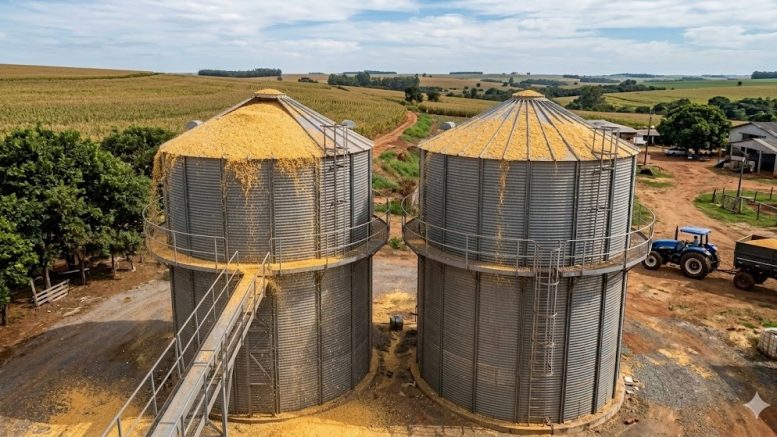
Storage Deficit in the State of Mato Grosso, Brazil

Kepler Weber ended 2025 with a 21.5% drop in net income, pressured by tighter margins, restricted credit, and weaker investment appetite in Brazilian agribusiness, but found in Argentina a key growth driver. In Argentine, the company’s revenue jumped from about US$ 957.2 thousand in 2024 to roughly US$ 9,5 million in 2025, making the country one of the main engines of its international expansion. (Kepler Weber)
Argentine equities have lost momentum in 2026 and fallen behind the broader Latin American stock market rally, as early enthusiasm over Javier Milei’s economic adjustment has given way to disappointment with weak corporate earnings, stretched valuations, and softer capital inflows. Even with inflation easing and fiscal progress, profit recovery and economic growth have not gained enough traction to support further upside, while investors have shifted toward larger and more liquid markets such as Brazil and Mexico. (MSCI)
In January 2026, the Central Bank of Argentine and the National Treasury made net foreign-exchange purchases of US$ 1.158 billion and US$ 265 million, respectively, while BCRA international reserves increased by US$ 3.336 billion and ended the month at US$ 44.503 billion. In the same period, individuals were the largest net buyers of foreign currency, totaling US$ 3.146 billion, mainly driven by banknote purchases. (Central Bank of the Argentine Republic)

Brazil’s 2025/26 corn harvest was revised down to 141.71 million tonnes, about 1 million tonnes below the previous estimate, after a cut in the outlook for the second crop, which accounts for the largest share of national production. The reduction reflects a lower expected average yield for the safrinha, now estimated at 6,417 kg/ha, although total output may still exceed the previous harvest of 140.05 million tonnes. (Safras & Mercado)
Citi sees Brazil as an exception in Latin America’s still-pressured inflation landscape in 2026, projecting inflation to ease to 3.6%, supported by the appreciation of the real and a more favorable monetary outlook. By contrast, Mexico and Colombia are expected to continue facing persistent inflation, driven by wages, fiscal policy, and other domestic factors, reinforcing the divergence in inflation and interest-rate cycles across the region. (Citi Brasil)
According to Hang Tung, a trading company, Brazil’s sorghum exports are expected to remain limited in the 1H2026 due to tight supply and competition from the feed and grain-ethanol sectors, but they should increase in the 2H as the second crop reaches the market. As China recently opened to Brazilian sorghum and a 2025/26 harvest estimated at 6.7 million tonnes, the grain may gain liquidity and expand its presence in exports. (Hang Tung)
In Brazil’s mission to India and South Korea, agribusiness advanced on two strategic fronts. In India, a memorandum was signed between the Brazilian Sugarcane and Bioenergy Industry Association and the Indian Sugar & Bio-Energy Manufacturers Association to expand cooperation in ethanol, sustainable aviation fuel, biogas, and other low-carbon solutions. In South Korea, the main advancement was the commitment to carry out audits at Brazilian meatpacking plants, a prior step toward opening the market to Brazilian beef. (ApexBrasil; CNI; Ministry of Foreign Affairs)
Cargill has resumed operations at its terminal in Santarém, State of Pará, after indigenous protesters left the site, in a move aimed at reducing disruptions to grain shipments through Brazil’s Northern Arc. The company said it is focused on restoring activities and did not disclose either the losses caused by the interruption or a timeline for full normalization. (Cargill)
Despite the scenario of high tariffs in 2025, Brazilian agribusiness keeps the USA as a strategic and sophisticated destination, standing out in exports of coffee, fruit juices, and cocoa derivatives. The ApexBrasil diagnosis points out that, beyond raw commodities, there is a growing potential for processed foods, organics, and natural products with higher added value. To consolidate this presence against competition from countries with preferential agreements, the agency focuses on technical support for regulatory compliance and the insertion of Brazil into global sustainable consumption chains. (ApexBrasil)
The storage deficit in the State of Mato Grosso, which currently accommodates only 50% of production, compromises farmers’ profitability by forcing the immediate sale of the harvest during periods of low prices and high logistical pressure. According to Aprosoja MT, this structural bottleneck is worsened by high interest rates, a shortage of credit lines, and the precariousness of rural electricity, which strips the farmer of commercial autonomy and increases operational costs with drying and moisture discounts. The expansion of static capacity on properties is identified as essential to ensuring food security. (Aprosoja MT)
The meteorological analysis from the the State of Mato Grosso do Sul Weather and Climate Monitoring Center points to a critical alert for water scarcity in the southern and southwestern regions of the State, due to below-average rainfall recorded since the beginning of 2026. The situation tends to worsen with the Onset of the El Niño phenomenon starting in May, which will bring above-normal temperatures and reduced precipitation, leading the state government to intensify forest fire prevention actions through the State of Mato Grosso do Sul Integrated Command and Control Center. (Semadesc)
The Brazilian GDP grew by 2.3% in 2025, predominantly driven by agribusiness, which recorded a significant expansion of 11.7% for the year and 12.1% in the 4Q compared to the same period in 2024. This historical performance was sustained by record harvests of corn and soybean, in addition to positive results in livestock and crops such as tobacco and orange, consolidating the sector as the main driver of growth for the national Value Added. Despite the slowdown in family spending and the decline in industrial segments, the strength of agribusiness exports and high productivity in the field secured a GDP of US$ 2.4 trillion. (IBGE)
State of Mato Grosso do Sul consolidated itself as the leading growth powerhouse of Brazilian agribusiness in 2025, recording an 18.6% increase in the sector’s GDP driven by technological modernization, professional management, and productive diversification. The state’s success is exemplified by the adoption of crop-livestock integration and genetic improvement in soils previously considered challenging. This expansion scenario strengthens the legacy of farmers and positions the region as a national reference in productive efficiency and sustainability. (State of Mato Grosso do Sul News Agency)
State of Mato Grosso Institute of Agricultural Economics projects a historic soybean harvest in the State of Mato Grosso in 2025/26, with a record production of 51.41 million tonnes driven by an average productivity of 65.87 bags of 60 kg/ha. In the by-products market, while international oil and meal prices rose in Chicago due to new biofuel targets in the US, local prices in State of Mato Grosso fell due to a temporary decline in demand from the biodiesel sector and a drop in biofuel production in January. However, the expectation of increasing the mandatory blend to B16 in Brazil and the record supply projected for March signal a potential strengthening of domestic demand and the state’s consolidation as a production leader. (IMEA)
In January 2026, Brazilian all types of coffee exports fell 30.8% in volume and 11.7% in revenue compared to the same month in 2025, impacted by the off-season of limited Arabica stocks and the retention of canephora for the domestic market. According to Cecafé, the decline of the dollar and the expectation of a record harvest for 2026/27 slowed down international business. Despite the monthly decline across all segments, the accumulated 2025/26 harvest still shows an 8.1% growth in foreign exchange revenue, with Germany and the USA leading as the main destinations. (Cecafé)
The Scanntech Monthly Radar revealed an acute crisis in the rice chain, which leads the decline in basic groceries with a 36.4% drop in revenue and a decrease in both prices and units sold. Given this scenario, the Rice Industry Union of the State of Santa Catarina warns the revenue of industries in Santa Catarina fell by more than 40%, pressured by changes in consumption habits, especially among young people, and the maintenance of high fixed costs. (SindArroz-SC)
Raízen released an announcement in response to the Securities and Exchange Commission of Brazil inquiry, clarifying news regarding a standoff between its controlling shareholders (Shell and Cosan) and Financiers to avoid bankruptcy protection amid debts exceeding US$ 10.5 billion. While Shell proposes a capital injection of US$ 3.5 billion while maintaining the integrated structure, Cosan and BTG Pactual suggest spinning off the company into separate production and distribution units with smaller contributions, leading to disagreements that are delaying a financial solution. (Raízen)


Chile and New Zealand have signed a Strategic Agricultural Agreement for the 2026-2030 period, aiming to expand bilateral cooperation in agriculture, forestry, and livestock through innovation and sustainable trade. Signed by Ministers Ignacia Fernández and Todd McClay, the treaty prioritizes the reduction of trade barriers and technical exchange. The partnership reaffirms a mutual commitment to transparent and resilient agrifood systems. (Office of Agricultural Studies and Policies)

The National Federation of Cereal, Legume and Soybean Farmers of Colombia warned the country imports about 85% of the 260 million bags of grains it consumes each year, raising concerns over food security and sovereignty amid declining domestic production of corn, beans, and soybeans. According to the association, this external dependence is putting pressure on local growers and calls for measures to strengthen competitiveness, expand infrastructure, and improve conditions for domestic production. (Fenalce)
Colombia’s National Land Agency defended the direct purchase of land to relocate families affected by the rains, stating the measure is not an expropriation, but a mechanism already provided for under risk-management legislation. According to the agency, the model can reduce acquisition times to about 30 days, compared with four to five months under the ordinary process, and is part of a strategy that already includes around 28 thousand hectares preselected and a budget close to 500 billion Colombian pesos. (ANT)
The Colombian Federation of Cattle Ranchers warned that Decree 0174 of 2026 and Resolution 2057 of 2025 could weaken legal certainty in rural areas by shifting agrarian process powers from the judiciary to administrative authorities. According to the association, the rules may allow evictions without prior judicial intervention, shorten defense deadlines, and increase the risk of land invasions, while also adding pressure on the sector through rural cadastral increases of more than 1,000%. (Fedegán)

The spread of New World screwworm in Mexico is pressuring the livestock sector on several fronts: in Guerrero, the state has 74 active cases and 529 cumulative cases, with the highest concentration in Acapulco and Chilpancingo; in Oaxaca, there have been 2,779 cattle cases reported over the past three months, of which 183 remain active, in addition to four human myiasis cases; and in Jalisco, newly confirmed outbreaks show that the pest has also moved further west. In response, authorities have expanded sanitary brigades, trapping efforts, and sterile-fly releases, while the United States Department of Agriculture (USDA) forecasts that Mexican cattle exports will fall to zero in 2026 after the sanitary crisis disrupted trade flows and kept shipment restrictions in place. (USDA)


The Ministry of Agricultural Development has intensified sanitary surveillance and traceability actions in Bocas del Toro, focusing on the control of tuberculosis, brucellosis, and the screwworm fly. During a seven-day operation, the technical team conducted exams on hundreds of animals and implemented the official identification of hundreds of buffaloes in the Chiriquí Grande district. (MIDA)

Led by Minister Felipe Meza, the Ministry of Agriculture has intensified emergency actions in Lambayeque to protect family farming and prevent flooding, mobilizing machinery for desilting and dike construction in the Motupe, La Leche, and Chancay-Lambayeque rivers. In addition to structural interventions that have already benefited thousands of residents and protected over 1,600 hectares of crops in 2025, the ministry activated the Agricultural Insurance to compensate farmers affected by the rains. (Midagri)

Uruguay was the first Mercosur country to complete parliamentary approval of the agreement with the European Union, which creates a free trade area covering about 750 million people. Argentina completed the same step a few hours later, but Javier Milei moved ahead in formally enacting the treaty by promulgating it the same day through Decree 111/2026. (Government of Uruguay)

READ MORE:
Environmental Requirements, Trade Barriers and Risks for Brazilian Agribusiness